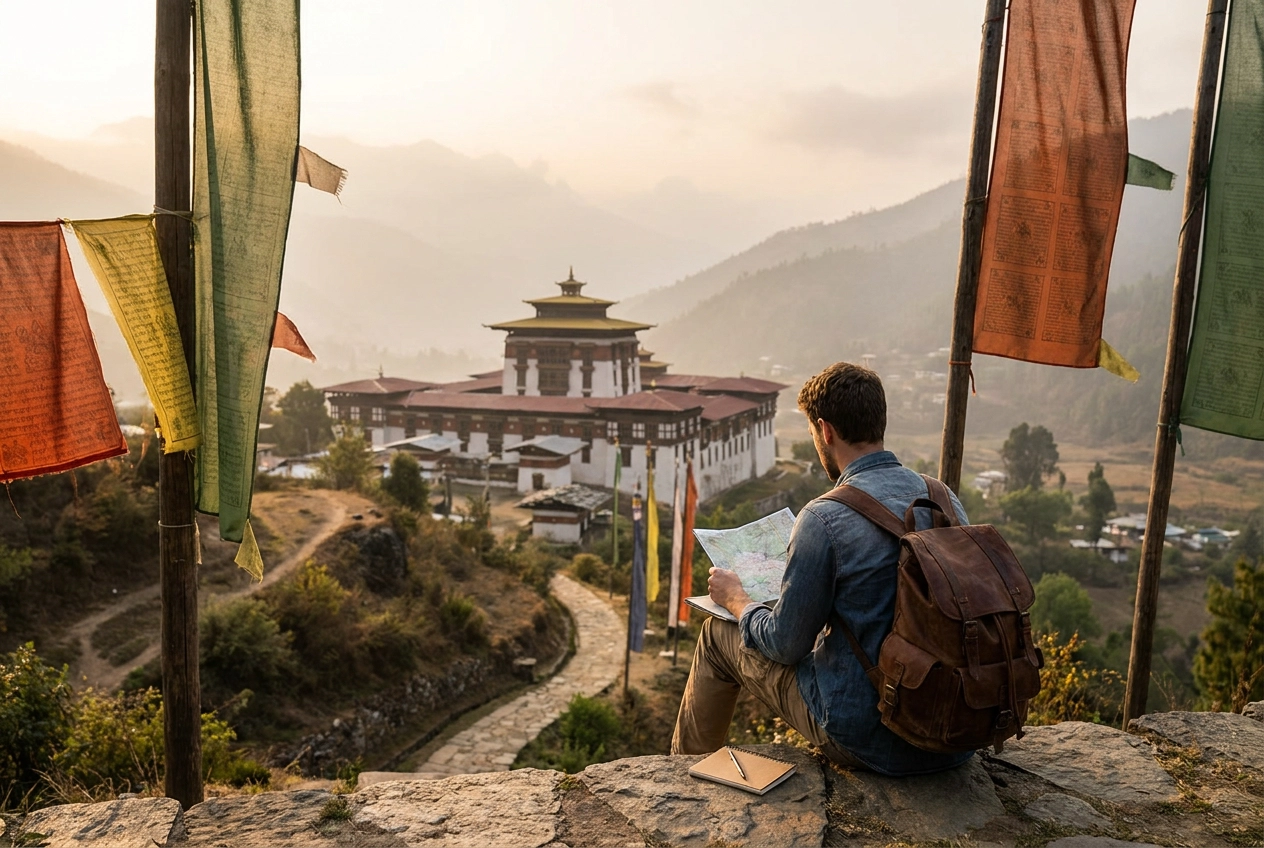
Bhutan is one of the most extraordinary destinations on earth, and for Australians ready to make the journey, the experience promises to be genuinely life-changing. But here is the truth most travellers discover too late: the quality of your trip depends almost entirely on who you book it through. Choosing the best tour operator for Bhutan is not simply a matter of finding the lowest price or the most polished website. It requires careful consideration of licensing, local expertise, itinerary flexibility, and genuine cultural understanding.
Bhutan's unique tourism model mandates that all international visitors book through a licensed operator, which means this decision is both compulsory and consequential. With dozens of agencies competing for your attention, knowing how to separate the exceptional from the merely adequate is essential.
This guide is designed specifically for Australian travellers who want to make an informed, confident choice. You will learn the key factors to evaluate, the questions worth asking before you commit, and the red flags that signal an operator is not worth your time or money. Let's get into it.
Why Bhutan Requires a Licensed Tour Operator
Travelling to Bhutan is unlike planning a trip anywhere else in the world, and understanding why begins with one foundational fact: Bhutan does not operate an open-door tourism model. International visitors are required to enter the country through a licensed Bhutanese tour operator, which handles visa authorisation, guide assignment, transport, accommodation and the collection of the country's Sustainable Development Fee. While regulations were partially relaxed in September 2023, allowing some flexibility for movement between major hubs, a licensed guide remains compulsory for visiting dzongs, monasteries, museums and all trekking routes. In practice, meaningful independent travel remains extremely difficult; public transport for international visitors is virtually non-existent, and navigating permits without an operator is a significant undertaking. This is not a bureaucratic inconvenience. It is a deliberate design.
The Sustainable Development Fee and What It Stands For
Central to Bhutan's model is the Sustainable Development Fee (SDF), currently set at USD $100 per person per night (reduced from USD $200 in 2023 — travellers should verify the current rate with the Tourism Council of Bhutan before booking). This fee is collected and remitted through your licensed operator; it is not paid separately on arrival. The SDF directly funds Bhutan's conservation programmes, free public healthcare, free education, and the infrastructure underpinning its status as the world's only carbon-negative country. When you travel to Bhutan, your visit is actively financing the systems that keep the country extraordinary. That reframing matters: the SDF is an investment, not a surcharge.
High Value, Low Volume: A Philosophy Worth Protecting
Bhutan opened to international tourism in approximately 1974, making it barely fifty years old as a visitor destination. In that time, it has intentionally kept visitor numbers low, guided by a High Value, Low Volume tourism philosophy that prioritises cultural integrity and environmental sustainability over mass footfall. The country's Department of Tourism actively promotes this framework and, as recently as April 2025, introduced a Mandatory Competency Assessment for all licensed tourist guides, signalling ongoing commitment to professional standards and visitor experience quality. Bhutan has watched what unchecked tourism does to fragile destinations and has chosen a different path deliberately.
For travellers, this context is reassuring. Your visit to Bhutan is entering a carefully protected system, and the rarity you sense there is real and intentional.
The practical implication of all this is significant: because you must work through an operator regardless, the quality of the operator you choose shapes everything. Guide knowledge, itinerary depth, accommodation selection, access to restricted cultural sites, and the coherence of your entire experience are all downstream decisions made by the operator you engage. Choosing well is not a nice-to-have; it is the single most consequential decision you will make about your Bhutan journey.
What Makes a Bhutan Tour Operator Genuinely Excellent
Most comparison guides stop at name recognition. They list operators alphabetically, note whether departures are private or group, and move on. That approach tells you almost nothing useful, because in Bhutan, the gap between an adequate operator and an excellent one is felt in every single day of your journey. Given that every night carries a mandatory Sustainable Development Fee on top of your base tour costs, a journey that isn't properly calibrated to your interests and handled by people with genuine expertise represents a real waste, not just a missed opportunity. Here are the six criteria that actually matter.
1. Licensing and Local Partnerships
Because Bhutan requires all international visitors to book through a licensed operator, every international travel specialist you engage must work with a licensed Bhutanese ground partner. The ground operator is the entity that submits visa applications to the Tourism Council of Bhutan, remits the Sustainable Development Fee, assigns licensed guides, and manages internal logistics for the duration of your stay. What varies significantly is the quality and depth of that relationship. An excellent international operator maintains a single, long-term partnership with one trusted ground operator, rather than rotating between multiple local providers depending on availability or cost. This consistency matters enormously for permit reliability, contingency management when weather or festival crowds affect access, and the ability to request specific guides by name. Before committing, ask your operator directly: how long have you worked with your Bhutanese ground partner, and can you confirm their Tourism Council of Bhutan licence status?
2. Guide Expertise and Cultural Depth
All guides operating in Bhutan are licensed professionals. Licensure, however, establishes a floor, not a ceiling. The meaningful distinction is between a guide who narrates what you are looking at and one who contextualises why it matters. Bhutan's dzong architecture is not simply impressive stonework; it embodies a specific synthesis of monastic and administrative power that shaped the country's political history. The Tsechu festivals are not performances staged for visitors; they are living religious observances with precise iconographic meaning. And Gross National Happiness is not a charming national motto; it is a constitutional framework that shapes land use, media regulation, urban planning, and environmental policy in ways a culturally fluent guide can illuminate throughout your journey. A well-structured Bhutan travel guide will tell you what to see; an excellent guide transforms what you see into genuine understanding. Ask your operator how guides are selected beyond their licence, and whether the same guide stays with you for the full itinerary.
3. Accommodation Access and Knowledge
Bhutan has a small but genuinely exceptional portfolio of premium lodges, and your operator's familiarity with that portfolio is a direct credibility signal. The properties worth knowing include Amankora across Paro and Punakha, Six Senses in Paro and Gangtey, COMO Uma in Paro and Punakha, Gangtey Lodge, The Postcard Dewa in Thimphu, and Pemako Thimphu. These properties are not simply comfortable places to sleep; they are positioned within the landscape deliberately, and the best operators understand how sequencing them across your itinerary shapes the rhythm of the whole journey. Operators without established relationships with these properties will either be unable to book them, or will book them as an afterthought rather than as an integral part of your experience design. Given limited inventory, especially during festival seasons, advance planning and genuine lodge relationships are essential.
4. Itinerary Personalisation
Private, tailor-made travel is the appropriate model for Bhutan, full stop. The country rewards slower attention, and a group departure scheduled around the median traveller's fitness level and interests will dilute the experience for everyone. Whether your priority is the Tiger's Nest hike at a considered pace, attendance at a specific Tsechu festival, extended time in the Phobjikha Valley during crane migration season, or a walking day along the restored Trans-Bhutan Trail network, the itinerary should be built around you specifically. Private vehicle arrangements, flexible daily scheduling, and interest-led routing across Paro, Thimphu, Punakha, and Bumthang change the quality of experience in ways that are difficult to overstate.
5. Destination Pairing Capability
Bhutan sits naturally within a broader Himalayan or Indian itinerary, and the best operators can build that continuity seamlessly. Only two airlines serve Bhutan internationally, Druk Air and Bhutan Airlines, with Bangkok and Kathmandu as the primary connection points. An operator experienced with India, Nepal, and Bhutan together can manage regional flight idiosyncrasies, sequence permits across borders, and maintain accommodation and guide quality throughout, without the coordination gaps that appear when travellers attempt to stitch together multiple providers independently. A well-designed journey might combine Rajasthan or Varanasi with Bhutan and Nepal, creating a coherent Himalayan arc rather than a series of separate trips.
6. Proximity and Planning Support
This criterion is rarely discussed, yet it is one of the most practical. An Australian-based specialist brings advantages that no UK or US operator can genuinely replicate. Planning conversations happen in AEST-compatible hours, without the lag of overnight email exchanges. Pricing discussions happen in AUD, with an understanding of how currency movement against the USD affects total journey costs. School holiday windows, long-haul routing from Sydney or Melbourne through Bangkok or Kathmandu, and Australian travel insurance considerations including DFAT travel advisory status and altitude-related policy conditions are all navigated as routine matters, not exceptions. For a destination as carefully regulated and logistically specific as Bhutan, that local expertise in the planning phase is not a small thing.
Planning Your Bhutan Trip from Australia
Getting to Bhutan from Australia
From any Australian capital city, reaching Paro requires a connecting flight through one of three primary hubs: Singapore Changi, Bangkok Suvarnabhumi, or Delhi Indira Gandhi International. Bhutan's national carrier operates all international services into Paro, and because these flights are not bookable as standard open tickets through most Australian travel portals, your tour operator handles the scheduling and seat allocation as part of the overall itinerary. The approach into Paro is genuinely remarkable, threading through narrow Himalayan valleys at altitude, with only a small number of specially certified pilots authorised to fly the route. Total travel time from Sydney or Melbourne typically runs to 14 or more hours depending on connection timing, which is precisely why most experienced travellers choose to combine Bhutan with another destination rather than making it a standalone trip.
Timing Your Visit Around the Australian Calendar
Bhutan's two peak seasons map well onto the Australian travel year. Spring, running from March through May, coincides with the Easter long weekend and the April school holiday fortnight observed across most states, making it a natural window for families and couples. Autumn, from September through November, aligns with the October school holiday break and the early November long weekend clusters in Victoria and other states. Both seasons offer clear skies, manageable temperatures, and the country's most vivid natural colour. The monsoon months from June through August and the colder December to February period are generally considered off-peak, though a well-designed itinerary can find purpose in those quieter windows too.
The Tsechu Festivals and Why They Require Early Action
If there is a single compelling reason to plan a Bhutan trip 12 months or more in advance, it is the Tsechu festival calendar. The Paro Tsechu, held in March or April according to the lunar calendar, and the Thimphu Tsechu, falling in September or October, are among the most significant cultural events in the Himalayan world. Monks perform elaborate masked Cham dances, each costume and gesture carrying layers of iconographic meaning refined over centuries of Buddhist practice. On the final morning, a vast silk thongdrel, an appliqué religious scroll of extraordinary scale, is unfurled before dawn; viewing it is considered an act of profound merit, and thousands of Bhutanese gather in their finest traditional dress for the occasion. These are not performances staged for visitors but living communal rituals that offer rare and genuine cultural access. Hotel stock in Paro and Thimphu is finite, and operators secure their allocations well ahead of the festival dates. Australian travellers aiming for a festival departure should begin the planning conversation no later than 12 months before travel.
How Long to Spend in Bhutan
Seven days is widely regarded as the practical minimum for a coherent visit, typically covering Paro and Thimphu with a day excursion to Punakha via the Dochula Pass. It is enough to appreciate the country's scale and atmosphere, but it leaves little room for the kind of stillness that Bhutan rewards. A 10 to 14 day itinerary changes the experience entirely. At this length, you can travel into Punakha for an overnight stay alongside the dzong at the confluence of two rivers, into the Gangtey valley to walk the wetlands and watch for black-necked cranes, and into Bumthang, the spiritual heartland of central Bhutan, where some of the country's oldest temples sit in quiet highland valleys. The further east you venture, the more the country opens up.
Practical Notes for Australian Travellers
Bhutan requires all international visitors to travel through a licensed operator recognised by the Tourism Council of Bhutan; there is no independent visa pathway. Your operator manages the visa processing, entry permits, and the Sustainable Development Fee levied per night of your stay, all folded into the tour arrangement. Bhutan Standard Time sits roughly four to six hours behind Australian Eastern time depending on daylight saving, so pre-departure communications are straightforward to manage. The more significant consideration for most Australians is the long-haul investment. Combining Bhutan with Nepal, India, or a Southeast Asian stopover not only justifies the travel time but creates a richer overall journey. Taj Voyages designs exactly these kinds of multi-country Bhutan itineraries, drawing on deep regional expertise across the Himalayan corridor and beyond. If you are ready to begin the conversation, the easiest first step is to reach out to our team directly.
Combining Bhutan with India or Nepal: Why It Makes Sense
There is a quiet geographic logic to pairing Bhutan with either India or Nepal, and once you see it, single-destination planning starts to feel like a missed opportunity. All three countries share the Himalayan spine, deep Buddhist cultural roots and well-established gateway infrastructure. The thematic continuity across them means a multi-country itinerary feels purposeful and cohesive rather than artificially stitched together. Moving from the ancient temples of Rajasthan to the fortress monasteries of Bhutan, or from Kathmandu's living heritage streets to Paro's dzong valleys, you are following a single cultural thread rather than switching channels entirely.
India as Your Gateway
The India entry point you choose shapes the entire character of your journey. Kolkata is the natural staging city for a Bhutan-focused trip that incorporates Northeast India. It sits closest to Bhutan's primary air gateway at Paro, and the surrounding Bengal and Assam region adds its own layer of interest: tea estates, river wildlife and some of India's most distinctive colonial-era architecture. For travellers whose primary draw is Bhutan, this northeast routing keeps the itinerary tightly focused on Himalayan and Buddhist heritage from the outset.
Delhi, by contrast, works beautifully as the anchor for a Rajasthan-first journey that transitions into Bhutan. A classic routing moves through the Golden Triangle, into the desert palaces of Rajasthan, then northward and eastward toward Paro, finishing the journey in a completely different register, from Mughal grandeur to Himalayan stillness. Taj Voyages has deep expertise across North, Northeast and Central India, which means this kind of multi-region routing is a natural extension of what the team designs every day, not a workaround.
Nepal as the Ideal Himalayan Companion
The Bhutan and Nepal pairing has gained real momentum among discerning travellers, and it is easy to understand why. A well-structured itinerary typically moves through Kathmandu's UNESCO-listed temple squares, then out to Pokhara and the Annapurna foothills, before crossing into Bhutan for the dzong valleys of Punakha, the monastery walks of Gangtey and the iconic Tiger's Nest hike above Paro. The contrast between Nepal's vibrant, layered urban culture and Bhutan's contemplative mountain stillness makes each destination feel richer by comparison. Explore Taj Voyages' Nepal destination page for more on how this pairing can be structured around your travel dates and interests.
The Case for a Single Specialist
Multi-country Himalayan itineraries carry genuine coordination complexity: domestic flight sequencing, cross-border permits, accommodation hand-offs between providers, and the subtle but important question of consistent service standards throughout. When different operators manage different legs, the risk of fragmented communication and mismatched expectations is real. Having one specialist manage the full journey, from a first hotel check-in in Delhi or Kathmandu through to your final morning in Paro, eliminates those transition points as sources of uncertainty.
This is precisely where Taj Voyages' integrated approach makes a material difference. Rather than patching together providers across three countries, every element of your itinerary is designed, booked and managed under a single point of contact who knows the full picture. Reach out through the Taj Voyages enquiry page to start exploring how a combined India, Nepal and Bhutan journey might be shaped around your interests, travel style and preferred timing.
Signature Bhutan Experiences Worth Planning Around
Tiger's Nest (Taktsang) Monastery
No single image defines Bhutan more completely than Taktsang Monastery, perched on a sheer granite cliff face some 900 metres above the Paro Valley floor. Founded in 1692 around a sacred cave where Guru Rinpoche is said to have meditated in the 8th century, the monastery carries centuries of unbroken spiritual weight. The hike to reach it takes roughly four hours return, ascending through blue pine and rhododendron forest before the full cliff-face view reveals itself. Physically, it is manageable for most reasonably fit travellers, though the altitude requires a considered pace. What distinguishes the experience is how a knowledgeable guide frames what you are walking towards: the legend, the lineage, the reason monks still live and practice there. Without that context, it is a beautiful building on a cliff. With it, it becomes something that stays with you.
Punakha Dzong
Positioned at the confluence of the Pho Chhu (Father River) and Mo Chhu (Mother River), Punakha Dzong is widely regarded as the most beautiful fortress monastery in Bhutan. Built in 1637, it served as the country's administrative and religious capital for centuries and remains the winter seat of Bhutan's Je Khenpo, the Chief Abbot. Visit in late February or early March and the riverside approach is lined with jacaranda trees in full bloom, their violet flowers reflected in the river below. It is the kind of scene that rewards travellers who have planned their timing carefully, and that is exactly the sort of detail your operator should be building into your itinerary rather than leaving to chance.
The Trans-Bhutan Trail
The Trans-Bhutan Trail is a restored network of ancient pathways stretching roughly 250 miles across Bhutan from east to west, reopened to walkers in 2022 after decades of dormancy. For travellers who want to move through the landscape rather than simply observe it, multi-day sections of this trail offer something genuinely different from the standard circuit. Walking between villages, dzongs and monasteries at a measured pace, with lodge accommodation arranged ahead, is among the most immersive ways to experience Bhutan. A specialist operator will know how to incorporate trail stages into a broader itinerary without overcomplicating logistics.
Tsechu Festivals
Tsechu festivals are among the most culturally vivid experiences available anywhere in Asia. Paro Tsechu, held in spring (typically late March or April), and Thimphu Tsechu in autumn (September 2026 falls on 21 to 23 September) both draw locals from across the country in traditional dress to witness sacred cham dances performed by monks in ornate masks. These are not performances staged for visitors; they are living religious observances that travellers are privileged to witness. Timing your trip around a Tsechu adds a dimension that no amount of extra sightseeing days can replicate, and it requires an operator who knows the festival calendar intimately and plans accordingly.
Valleys and Experiences Beyond the Main Circuit
Bhutan rewards travellers whose operators think beyond the standard Paro-Thimphu-Punakha triangle. Gangtey Valley, in the high central region, draws one of nature's quieter spectacles from October through February: the annual migration of the endangered black-necked crane from the Tibetan Plateau. Watching these birds settle into the valley at dusk, against a backdrop of forested hills and the ancient Gangtey Gonpa monastery, is a singular experience. Bumthang, often described as Bhutan's spiritual heartland, holds some of the country's oldest temples and rewards slower, more contemplative itineraries for travellers drawn to Buddhist history and practice. The Paro Valley itself, often treated merely as an arrival point, is a strong base for high-altitude day walks and acclimatisation hikes beyond Tiger's Nest. These are all experiences your operator should know how to weave into a coherent journey rather than list as optional extras. Speaking with a Bhutan travel specialist is the most direct way to understand how these elements can be shaped around your travel dates, interests and pace.
Why Australian Travellers Choose Taj Voyages for Bhutan
Planning a Bhutan journey from Australia comes with a particular set of practical realities that most international operators simply don't account for. Taj Voyages is an Australian-based premium travel specialist, which means conversations happen in your time zone, pricing is discussed in familiar terms, and the planning process is structured around how Australians actually travel. That includes aligning departures with school holiday windows, accounting for the long-haul journey from Sydney, Melbourne, Perth or Brisbane through connecting hubs, and building itineraries that justify the travel time with substance rather than padding.
What genuinely sets Taj Voyages apart, though, is the breadth of regional knowledge that surrounds its Bhutan expertise. Rather than treating Bhutan as a standalone destination bolted onto a generic Asia portfolio, Taj Voyages understands it as part of a connected Himalayan and South Asian region alongside India and Nepal. That integrated knowledge matters enormously when you're considering a multi-country journey: understanding how Rajasthan flows into Kathmandu, and Kathmandu into Paro, requires fluency across all three destinations simultaneously, not just familiarity with each one in isolation.
Taj Voyages does not sell fixed group tours. Every itinerary is designed around the individual traveller: their interests, their pace, their travel dates and what they actually hope to feel when they're there. That might mean a focused cultural week centred on Paro and Punakha, or a broader Himalayan circuit weaving through Rajasthan, Nepal and Bhutan over three weeks. The starting point is always a conversation, not a catalogue.
From there, Taj Voyages manages every element end-to-end: itinerary design, accommodation selection across Bhutan's premium lodge portfolio, transport, visa support and on-ground coordination throughout the journey. For Australian travellers who find Bhutan logistically daunting to plan from the other side of the world, that full-service approach removes the complexity entirely.
If Bhutan is calling, the best next step is simply a conversation. Explore Taj Voyages' Bhutan journeys or reach out to begin planning yours.
Ready to Start Planning Your Bhutan Journey?
Every decision you make about your Bhutan journey flows from one choice: the operator you trust to design and deliver it. As this guide has explored, the criteria that matter most, from licensing and guide calibre to accommodation relationships, personalisation depth, and Australian-based support, are not peripheral considerations. They are the trip itself.
If Bhutan is calling to you, whether as a standalone journey or woven into a broader Himalayan itinerary alongside India or Nepal, explore Taj Voyages' Bhutan travel page or get in touch to share what's drawing you there. There's no obligation, just a genuine conversation with a specialist who understands the destination and the particular practicalities of getting there from Australia.
One genuinely useful piece of planning advice: if the Paro Tsechu (late March to early April) or Thimphu Tsechu (late September) is on your radar, start conversations early. The best lodge options in Bhutan, particularly in Paro and Punakha, confirm well ahead of festival periods, and the most thoughtfully constructed festival itineraries tend to come together months before departure. Thinking ahead simply gives you better options.
Frequently Asked Questions
Do you have to book Bhutan through a tour operator?
Yes. International visitors must travel through a licensed Bhutanese operator, who arranges your visa, guide, transport and the Sustainable Development Fee. Meaningful independent travel isn't possible, so the operator you choose shapes the entire experience.
What is the Bhutan Sustainable Development Fee?
A government levy, currently USD 100 per person per night for most visitors (verify the current rate before booking). It's collected through your operator and funds Bhutan's free healthcare, education and conservation — not a surcharge but an investment in what keeps the country extraordinary.
When should I start planning a Bhutan trip?
For a standard trip, a few months ahead is fine. For a Tsechu festival departure (Paro in spring, Thimphu in autumn), begin at least 12 months out — lodge inventory in Paro and Punakha is limited and confirms early.
Can I combine Bhutan with India or Nepal?
Yes, and it's often the better choice given the long-haul journey. Bhutan pairs naturally with a Rajasthan or Northeast India itinerary, or with Kathmandu and Pokhara in Nepal, coordinated as a single journey through one specialist.
Conclusion
Choosing the right tour operator is the single most important decision you will make for your Bhutan journey. To recap the essentials: verify that your operator holds a valid Tourism Council of Bhutan licence, prioritise those with genuine on-the-ground local expertise, and insist on itinerary flexibility that suits your interests and pace. Price matters, but value matters far more.
Australians travelling this far deserve an experience that goes beyond ticking off landmarks. The right operator will immerse you in Bhutan's living culture, connect you with authentic moments, and handle every logistical detail with confidence.
Start your research early, ask the hard questions, and trust your instincts when operators respond. Your dream Bhutan itinerary is waiting. All that stands between you and an extraordinary adventure is choosing the right partner to get you there.