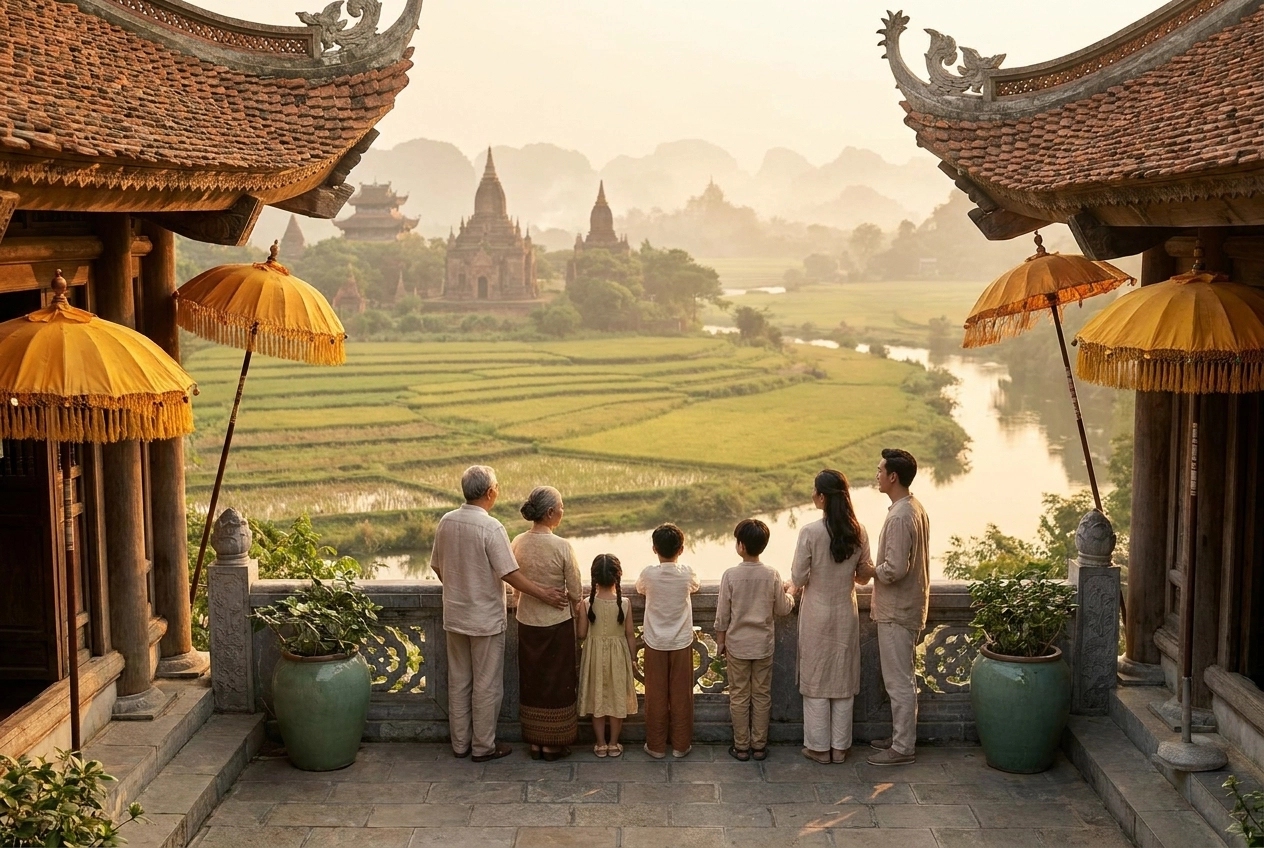
Planning a trip with the whole family sounds exciting until the logistics kick in. Flights, accommodation, activities for different age groups, dietary needs, and budget constraints all collide at once. That is exactly why more families are turning to curated family holiday packages to take the stress out of travel planning and make every moment count.
From the vibrant chaos of India's golden triangle to the serene beaches of Sri Lanka, South Asia offers some of the most rewarding family travel experiences in the world. But knowing where to start, which destinations suit young children versus teenagers, and how to balance sightseeing with downtime requires more than a quick Google search.
In this guide, we have put together a carefully selected list of family holiday packages covering India, Sri Lanka, and neighbouring destinations that consistently deliver on experience, value, and convenience. Whether you are travelling with toddlers or teens, first-timers or seasoned explorers, you will find practical options and honest insights to help you book with confidence. Let us get into it.
What Actually Makes a Family Holiday Work
Not all family holidays are created equal, and the difference between a stressful trip and a genuinely memorable one often comes down to how the itinerary was built in the first place. A standard group tour offers a fixed price and a fixed programme, but it was designed for the average traveller rather than your specific family. When you're travelling with a mix of ages, interests, and energy levels, that compromise becomes visible very quickly: a rigid morning departure that clashes with a toddler's routine, a pace that leaves grandparents exhausted by day three, or a set of included experiences that captivate one generation and bore another.
Privately guided, tailor-made travel removes those compromises entirely. Your itinerary is built around your family's composition, not a coach schedule designed to move twenty strangers efficiently between landmarks. If your teenagers want to spend an extra hour at a temple complex while older family members rest at the hotel, that's entirely possible. If a younger child needs an unscheduled afternoon at the pool, the day adjusts. Research on multi-generational travel consistently finds that the most commonly cited planning mistake for family groups is mismatching pace to the group; experts advise calibrating the programme to the least mobile or most easily fatigued member and building from there. Private guiding makes this the default, not an exception you have to negotiate.
Accommodation deserves more thought than most families give it. The right property functions as a private family base, not merely a place to sleep. Interconnecting rooms eliminate the anxiety of children in a separate corridor. Heritage properties with enclosed gardens and pools give younger travellers space to decompress between sightseeing. In-house dining that can accommodate children's preferences, and proximity to the experiences on your itinerary rather than a highway interchange, all reduce friction at the start and end of each day. As current thinking on luxury family travel notes, the shift among sophisticated family travellers is clearly away from standard hotel rooms toward accommodation that functions as a private, communal hub for the whole group.
The value of working with a specialist comes into sharpest focus in the planning conversation itself. A good specialist will ask about the ages and mobility of every traveller in your group, the interests that matter most, the experiences that are non-negotiable, and the pace that will actually sustain everyone across two or three weeks. That information is translated into an itinerary calibrated to your family rather than a catalogue of highlights arranged in geographical order. Industry specialists working with multi-generational families consistently describe these as the most complex bookings to execute well, precisely because the variables multiply with every additional generation.
End-to-end coordination matters most when the itinerary spans multiple countries. For Australian families travelling across India, Nepal, Bhutan or Sri Lanka, the logistics involved, visas, border crossings with children's documentation, advance permits for restricted sites, private transfers timed around long-haul connections, are genuinely complex to manage independently. When a specialist handles each of those elements as part of a single, coordinated programme, the planning burden lifts entirely. You arrive knowing every detail has been arranged, briefed and confirmed, which is precisely where a well-designed family holiday begins.
Matching Your Family to the Right Destination
No two families travel the same way, and the destinations and experiences that resonate most deeply depend almost entirely on who is in your group, how they move through the world, and what they each need to feel genuinely engaged rather than merely accommodated.
Families with Younger Children (Ages 5–12)
For families with children in this age group, the most successful itineraries share a common thread: immediate sensory impact, manageable days, and cultural encounters that don't require sitting still. Rajasthan delivers this in abundance. The forts of Jaisalmer and Jodhpur feel genuinely ancient and alive, puppet shows and folk performances hold children's attention, and the coloured facades of the Blue City create a backdrop that feels almost impossibly vivid. Sri Lanka works beautifully as a combination itinerary: a few days on the south or east coast followed by a wildlife safari in Yala or Udawalawe gives younger children the variety they need, alternating between beach freedom and genuine wildlife encounters. In Vietnam, Hoi An's lantern-lit Ancient Town offers cultural access at a walkable, gentle scale. Lantern-making workshops and boat rides on the Thu Bon River sit within easy reach, without the sensory overload of a large city. What unites these destinations for this age group is the quality of the experience within each day, not the distance covered.
Families with Teenagers
Teenagers travel better when they have genuine agency and when the itinerary doesn't feel sanitised. The Himalayan foothills of Nepal offer real physical challenge at accessible altitudes, particularly around the Annapurna circuit entry points and the Langtang Valley, where shorter trekking days reward effort with landscapes that are genuinely difficult to forget. Hoi An's cooking classes give teenagers a participatory, skill-based experience they can claim as their own. Kerala's backwater houseboats offer something harder to manufacture: a slow intimacy, shared close quarters, and the kind of unplanned conversation that rarely happens at a resort pool. Bhutan, with its dramatic dzong trails, sacred monasteries, and a national philosophy built around wellbeing rather than consumption, tends to connect with teenagers who are already alert to authenticity and meaning.
Multi-Generational Groups
A growing majority of parents are now planning multigenerational trips that include grandparents. Industry trend reporting has identified this "generation permutations" pattern as one of the defining travel formats of the year. Designing an itinerary that genuinely works across three generations requires deliberate pacing: two substantive activity windows per day at most, with a guaranteed rest period built in rather than treated as optional. Accommodation matters enormously here. Private villas or interconnected suites allow the group to share meals and evenings together while still giving each generation space to retreat. A well-structured day in Rajasthan might include a heritage fort visit that engages everyone, a leisurely lunch that suits grandparents perfectly, and an optional afternoon camel ride or cooking class for younger members. No one is forced into an unsuitable activity, and the itinerary holds together as a shared experience rather than fragmenting into separate programmes.
Adult Families (Grown Children Travelling with Parents)
When adult children travel with their parents, the priorities shift considerably. This group doesn't need kids' clubs or theme-park energy. They want long lunches, guide-led heritage walks, and evenings that allow real conversation. Rajasthan's heritage hotels, Kolkata's layered culinary and colonial history, and the river life of the Mekong Delta all suit this profile well: places with genuine depth, where the pleasure comes from understanding what you're looking at rather than simply moving past it.
Why Bespoke Matters for Every Family Type
No single off-the-shelf itinerary reliably serves all of these groups, and the attempt to make one do so usually results in compromises that serve no one well. The first conversation with a specialist isn't a booking call; it's a discovery conversation. The questions that shape a genuinely successful family holiday are practical and specific: who is the oldest traveller, and what are their comfort needs? Who is the youngest, and what holds their attention? What does success look like for each person on this trip? Starting there, rather than from a pre-built package, is what makes the difference.
India Family Holiday Packages: Rajasthan, Kerala and Beyond
Few destinations in Asia reward family travel quite as generously as India, and the depth of that reward depends enormously on how the journey is designed from the outset.
Rajasthan: Where Heritage Feels Alive
Rajasthan remains one of the most consistently compelling family destinations in Asia precisely because its highlights are both accessible and genuinely extraordinary. The heritage circuit connecting Jaipur, Jodhpur, Udaipur and Jaisalmer is compact enough to navigate without exhausting younger travellers, yet layered with experiences that hold the attention of every generation. Palace hotels here are not merely places to sleep; they are living monuments where children grasp history in a way no classroom can replicate. Ethical elephant conservation encounters outside Jaipur, where families observe and interact with rescued elephants in sanctuary settings rather than riding them, have become a deeply meaningful inclusion in well-designed itineraries. Add a camel ride at dusk along the Thar Desert's amber dunes, and Rajasthan delivers the kind of sensory memory that families carry for decades.
Kerala: Slow, Lush and Perfectly Paced
Kerala offers something quite different, and the contrast is exactly what makes it such a natural southern complement to Rajasthan's grandeur. An overnight houseboat journey through the Alleppey backwaters moves at a pace that feels restorative rather than idle, with paddy fields, coconut groves and village life drifting past the railings. Spice plantation walks in the Munnar or Thekkady highlands connect children to the origins of familiar flavours in a tangible, engaging way. Periyar Wildlife Reserve rewards patient families with elephant sightings, sambar deer and, occasionally, the elusive movement of a tiger reserve's larger residents during guided bamboo raft excursions. The journey finishes naturally at Kovalam, where the Arabian Sea provides unhurried beach time before the flight home.
North-East India: For Families Who Want Something Rarer
For families with older children or a genuine appetite for landscapes less travelled, North-East India offers a quietly spectacular alternative. Kaziranga National Park in Assam is one of the world's great wildlife experiences, with jeep safaris delivering close encounters with the Indian one-horned rhinoceros at remarkable frequency. Meghalaya's living root bridges near Cherrapunji, grown by the Khasi people over generations from rubber tree roots, are among the most astonishing natural and human achievements in all of Asia. The region's mist-covered hills, tea estates and unhurried rhythms contrast beautifully with Rajasthan's desert drama, and the October-to-May travel window aligns well with Australian school holiday calendars.
Designing the Itinerary: Sweep Without Exhaustion
Combining North and South India across 14 to 18 days is entirely achievable when the routing is handled with deliberate care. Short internal flight legs, such as Jaipur to Kochi or Kochi to Guwahati, eliminate the fatigue that overland connections create, while planned rest days in slower-paced destinations like Udaipur or Alleppey allow families to breathe between intense heritage experiences. The sequencing matters considerably: visiting Rajasthan and Kerala between October and March aligns both regions' best weather, avoiding Kerala's June-to-September monsoon entirely.
The cultural moments that bind an India itinerary together are often the quietest ones. A cooking class with a Jaipur family introduces children to spice grinding, bread-making and the rhythms of a home kitchen in ways that no restaurant visit can match. Puppet-making workshops in the old city give younger travellers something handmade to carry home. Arriving at Amber Fort at sunrise, before the first tour groups, allows families to move through illuminated sandstone corridors in near silence. And family tour packages in India that include private evening access to floodlit monuments, with a dedicated guide and no shared crowd, transform a standard sightseeing tick into something far more intimate and lasting.
A Different Kind of Family Adventure: Luxury Rail Journeys Through India
There is a different kind of family holiday altogether, one where the journey itself is the experience rather than merely the means of getting there. India's great luxury trains offer exactly this: a moving base that carries your family through royal cities, ancient landscapes and living culture without a single repeated check-in, airport transfer or logistical scramble. The train becomes the thread that holds everything together, and for many families, it becomes the memory they return to most vividly long after the trip ends. For multigenerational groups in particular, where comfort and pacing matter as much as the destination, this format is extraordinarily well-suited.
Palace on Wheels: Rajasthan Over Seven Nights
The Palace on Wheels remains India's most recognised luxury train, and its seven-night Rajasthan circuit is among the most cohesive family itineraries available in the country. Departing from Delhi, the train calls at Jaipur, Jodhpur, Udaipur, Jaisalmer and Agra, with each stop offering structured shore excursions to forts, palaces and wildlife encounters that engage travellers of every age. Onboard, families enjoy comfortable cabin accommodation, multi-cuisine dining and attentive service, removing the need for any independent logistical planning between cities. The rhythm of the journey suits families well: evenings are spent on the train, mornings bring new cities, and the pacing can be absorbed at a comfortable, unhurried tempo. Because the train itself is the accommodation, children settle into a consistent, familiar space each night regardless of how much ground has been covered during the day.
Maharaja Express: Asia's Finest Rail Experience
The Maharaja Express is widely regarded as the highest-rated luxury train in Asia, and its multi-day itineraries covering Rajasthan, Agra, Varanasi and beyond set a benchmark for onboard refinement. Cabin categories range from elegant junior suites to presidential suites with private living areas, and butler service is available throughout. What makes this train particularly well-suited to family groups is the flexibility it allows around excursions: while curated heritage visits to UNESCO World Heritage Sites are included at each stop, Taj Voyages can arrange supplementary private guide arrangements for family groups, allowing experiences to be shaped around the ages and interests of the children travelling. For a comprehensive overview of luxury rail journeys through India, the range of itinerary options is broader than many families initially realise.
Golden Chariot and Deccan Odyssey: Beyond Rajasthan
Families returning to India, or those drawn to less-travelled corners of the country, will find compelling alternatives in the Golden Chariot and the Deccan Odyssey. The Golden Chariot traverses South India through Karnataka's temple towns, wildlife sanctuaries and coastal heritage sites, offering a culturally distinct counterpoint to the Rajasthan royal circuit. The Deccan Odyssey follows the dramatic Konkan coast through Maharashtra, combining clifftop scenery with historic interiors that rarely feature in mainstream family itineraries. Both trains operate during India's cooler months, broadly October through April, and both reward families who have already explored the north or who are drawn to India's southern and western character.
A Complete Itinerary: Rail Plus City Stays
The most satisfying India family holidays combine a luxury rail journey with carefully chosen pre- or post-train stays in key cities. Taj Voyages designs these as cohesive, fully coordinated itineraries rather than separate bookings stitched together. A Palace on Wheels circuit, for example, pairs naturally with two or three nights in Delhi at the outset and a night in Agra at the conclusion, giving families time to absorb the Taj Mahal before departing. The Maharaja Express can be framed within a longer itinerary beginning in Mumbai or ending in Jaipur, depending on the route selected. For those exploring what a complete rail-anchored journey looks like across different circuits, our specialists can walk you through how these itineraries are typically structured. Taj Voyages handles the end-to-end coordination across every element, from arrival transfers and city hotels to onboard arrangements and excursion design, so the experience remains seamless from first arrival to final departure.
Sri Lanka Family Holiday Packages: Wildlife, Culture and Coast
Sri Lanka has a quality that few destinations in Asia can match for families: a natural itinerary shape that requires almost no forcing. The island's geography does the work for you. Begin in the north-central Cultural Triangle, where the ancient citadel of Sigiriya rises from the surrounding jungle on a column of volcanic rock. The climb to the summit is genuinely exhilarating, and older children in particular tend to find it far more engaging than a conventional museum visit. Nearby, the ruined city of Polonnaruwa and the cave temple complex at Dambulla add layers of history that even younger travellers absorb instinctively, surrounded as they are by extraordinary physical scale. From there, the route descends into the hill country around Kandy and Ella, where tea estates roll across mountain ridges and the famous train journey between the two towns ranks among the most beautiful rail experiences in Asia. The south coast then provides a natural exhale: long stretches of beach, warm water, and whale watching from Mirissa, where blue whales and sperm whales are sighted during the season that typically runs from November through to April.
Wildlife That Speaks to Every Age Group
Wildlife is often what families remember most vividly, long after the heritage sites have blurred together. Sri Lanka's national parks deliver sightings of extraordinary quality. Yala National Park, in the island's south-east, carries one of the highest densities of leopards in the world, and a game drive here has an entirely different quality to a safari where sightings are never guaranteed. Udawalawe National Park centres its experience on wild elephants, and the adjacent Elephant Transit Home offers families a rare chance to observe orphaned calves being rehabilitated before their return to the wild. It is the kind of encounter that leaves a lasting impression, without the ethical complications that come with captive elephant experiences elsewhere in Asia. In the dry season, typically from August through October, Minneriya National Park hosts what is known locally as The Gathering: hundreds of wild elephants converging around the reservoir as water levels drop. Seeing this with children beside you is something that resists straightforward description.
Why Sri Lanka Works Particularly Well for Australian Families
Sri Lanka sits in a practical sweet spot for Australian families considering Asia for the first time. The scale of the island means that a well-designed 10 to 12 day itinerary covers cultural, wildlife and coastal experiences without requiring long internal flights or exhausting transfers. English is widely spoken across hotels, restaurants and heritage sites, which reduces the daily friction that can accumulate on a demanding itinerary with children in tow. Direct flights from Sydney and Melbourne to Colombo take roughly 10 to 11 hours, making it a single overnight sector with no connection required for east-coast travellers. The accommodation landscape across the island has developed significantly, with a strong range of boutique properties and well-considered resort options that genuinely cater to families rather than simply tolerating them. The key to making all of this work smoothly is private guided transport throughout, which allows the pace to be adjusted around your family rather than a fixed group schedule.
Pairing Sri Lanka with India, and Timing Your Visit
For families who have already visited India, or who want to extend a more ambitious journey, Sri Lanka pairs naturally with a Rajasthan circuit or a South India itinerary as a three to four day extension. The combination works particularly well because the two destinations offer genuinely different textures; the grandeur of Rajasthan's forts and the intimate scale of Sri Lanka's wildlife parks balance each other in a way that sustains interest across a longer journey. Equally, a stand-alone Sri Lanka programme of 10 to 12 days is entirely self-sufficient and works well as a first South Asian family holiday without the broader India context.
For Australian families planning around school calendars, the April school holidays generally align reasonably well with the south coast and the Cultural Triangle. That said, April falls within a transitional period on the island, and conditions can vary from year to year. It is always worth seeking current seasonal guidance before committing your dates, and a specialist can help you read those conditions and adjust routing accordingly rather than discovering a timing mismatch after you have booked.
Vietnam Family Holiday Packages: North to South With Purpose
Vietnam travels in a straight line, and that geography is one of its greatest gifts to families. The country's elongated shape creates a natural north-to-south itinerary arc that moves through distinct cultural worlds, each one different enough to hold every member of the family's attention. A well-sequenced journey begins in Hanoi, where the Old Quarter's layered streets and the still surface of Hoan Kiem Lake introduce the country's rhythms at a manageable pace. From there, the route moves to the seascape of Ha Long Bay or the quieter waters of Lan Ha Bay, then south through the lantern-lit lanes of Hoi An, before completing the arc in Ho Chi Minh City's grand French-colonial boulevards. Each destination hands naturally to the next, and the variety ensures that no two days feel alike.
Ha Long Bay: Where Every Generation Finds Something
Ha Long Bay earns its reputation, and the right vessel transforms it from a scenic backdrop into the centrepiece of the trip. On a well-chosen private or boutique cruise, the programme extends well beyond sightseeing. Kayaking through limestone karsts brings genuine adventure for teenagers and energetic adults. Cave exploration adds a sense of discovery that younger travellers respond to immediately. Cooking demonstrations on deck connect the journey to Vietnamese culinary culture in a way that stays with families long after they return home. Onboard comfort matters enormously for multi-generational groups; cabins designed with families in mind, attentive service, and a pace set by your own group rather than a shared tour schedule make a meaningful difference. Lan Ha Bay, adjacent to Ha Long and noticeably quieter, is worth considering for families who want the same dramatic scenery with more space and tranquillity.
Hoi An: Craft, Culture and the Ideal Teenage Stop
Hoi An rewards families with older children and teenagers in ways that few other towns in Southeast Asia can match. The combination of genuine historical character, hands-on craft workshops and an unhurried pace creates exactly the conditions where curiosity flourishes. Lantern-making, pottery and cooking classes are not tourist add-ons here; they are woven into the town's living culture, and teenagers who might resist more passive sightseeing tend to engage fully when given something to make or do. The town is walkable, the streets feel safe and inviting after dark, and the tailoring culture adds an element of personalisation that many travellers find unexpectedly delightful.
Timing and Sequencing: Getting the Weather Right
Vietnam's north and south follow different weather cycles, and this is one of the most important planning considerations for any family itinerary. Hanoi and Ha Long Bay are best visited during the cooler, drier months from October through to April. Hoi An's wet season peaks between October and December, making January through August the more comfortable window for families. Ho Chi Minh City follows a tropical dry season from November through April. A specialist can sequence the journey to move with favourable conditions throughout, rather than working against them. This is not a minor detail; it shapes how the trip feels on the ground.
Duration and Combinations
For families with school holiday windows of two to three weeks, a 14-day Vietnam family itinerary from north to south covers all the key anchor points with enough time to breathe between them. A standalone Vietnam programme of 10 to 12 days works well for tighter schedules by focusing on the highlights and trimming travel between regions. For families who want to extend the journey, combining Vietnam with Cambodia adds Angkor Wat to the itinerary in a 14 to 17-day programme. The temples at Angkor are genuinely awe-inspiring for families across age groups, and the contrast between Vietnam's coastal energy and Cambodia's ancient monumentalism makes the combination feel complete rather than rushed. Both formats are established itinerary shapes, and the right one depends entirely on your family's timeframe and appetite.
Bhutan and Nepal: Family Holidays for the Curious and Adventurous
Of all the destinations in this part of the world, Bhutan holds a particular quality that families tend to feel almost immediately upon arrival. It is unhurried in a way that is structural rather than accidental. The country deliberately manages the pace and scale of tourism through its permit system, which means you will not find your family competing with crowds at its most significant sites. Dzongs, monasteries, valley viewpoints: these are experienced at your own rhythm, often with very few other visitors present. Set against the backdrop of extraordinary Himalayan scenery and a living Buddhist culture that permeates everyday architecture, dress, and ritual, Bhutan offers families something genuinely rare: a destination where curiosity is rewarded at every turn, and where even younger travellers have space to absorb rather than simply observe.
A Family Circuit Through Bhutan
A well-crafted family itinerary in Bhutan typically spans seven to eight days, covering three valleys that each offer something distinct. In Paro, the centrepiece is Tiger's Nest Monastery, the iconic cliff-face temple that rewards the effort of reaching it. The hike to the lower viewpoint takes roughly one to two hours at a gentle pace and delivers a dramatic perspective on the monastery without requiring the full two-and-a-half to three-hour ascent to the monastery itself, making it genuinely accessible for families travelling with younger children or older relatives. Archery lessons in Paro add an active cultural dimension that children respond to well. Thimphu, about an hour's drive from Paro, combines the texture of a weekend market with a relaxed pace suited to family exploration. Punakha, the most dramatic dzong in the country, sits at the confluence of two rivers and is one of those sites that simply stops people in their tracks.
Entry Requirements and How Taj Voyages Manages Them
Bhutan requires all Australian visitors to travel through a licensed tour operator and pay the Sustainable Development Fee, currently set at USD 100 per person per night for most international visitors, with discounts applying for children under specific age thresholds. All permits, including the tourist visa issued on arrival in-country, are arranged through the operator rather than independently. Taj Voyages manages the full permit process and fee structure on behalf of client families as an integral part of the itinerary design, so the administrative complexity is handled entirely before departure.
Nepal: The Natural Companion Destination
Nepal pairs with Bhutan in a way that feels entirely natural, both logistically and experientially. Kathmandu is one of the most practical gateways into Bhutan, with direct flights available via Druk Air and Bhutan Airlines, and it rewards time in its own right. The Boudhanath Stupa, one of the largest Buddhist stupas in the world, creates an immediate sense of arrival into something ancient and still very much alive. Pashupatinath, the great Hindu temple complex on the Bagmati River, offers families a window into living religious practice that is both accessible and deeply affecting. Pokhara, a lakeside city with direct views of the Annapurna range, provides a calmer contrast to Kathmandu's intensity and moves at a pace that suits families well. For wildlife, Chitwan National Park delivers jeep safaris and encounters with greater one-horned rhinoceroses and Asian elephants in a subtropical setting that requires no high-altitude trekking whatsoever.
A 14 to 18 Day Two-Country Circuit
Combining Bhutan and Nepal within a single family itinerary produces a journey that is genuinely greater than the sum of its parts. A 14 to 18 day circuit, using Kathmandu as both the regional hub and the Bhutan gateway, allows families to move between two distinct Himalayan cultures without the itinerary ever feeling rushed. This circuit connects naturally to or from India, particularly Delhi, Varanasi, or Rajasthan, for families who want to extend into a broader South Asian journey. Taj Voyages coordinates all inter-country logistics, including flights into Bhutan, permits, and the ground arrangements in both countries, so the family experiences two countries with the coherence and ease of a single well-managed journey. For families who want to see something of the world together, and to see it properly, this circuit is among the most rewarding available.
Multi-Generational Family Travel: How to Make It Work for Everyone
Multi-generational travel to Asia is growing with genuine momentum. Multi-generational travel is now one of the largest and fastest-growing segments of leisure travel, driven by affluent baby boomers seeking experiences that unite the whole family across generations. This is not a passing trend but a sustained shift in how families choose to travel together. For Australian families, the appeal is clear: a single well-designed journey can bring grandparents, adult children and grandchildren into shared experience in a way that no dinner table at home quite replicates.
The critical point, however, is that a multi-generational group is not simply a larger family group. It is a fundamentally different travel proposition. A holiday designed around parents and young children, built on high daily throughput and constant forward momentum, will exhaust a grandparent and frustrate a teenager in equal measure. The variable mobility levels, divergent energy reserves, differing dietary requirements and competing interests within a multi-generational group require explicit structural design, not improvisation. Getting this right from the outset is what separates a genuinely enjoyable journey from one that leaves everyone quietly relieved it is over.
Three Principles That Make the Difference
Effective multi-generational itineraries rest on three design principles that distinguish them from standard family travel. The first is built-in downtime that is genuinely optional: rest periods structured so that individuals can recharge without requiring the whole group to pause. The second is mixed-activity days, where each day offers engagement at multiple levels of mobility and energy, so no one feels over-stretched or left behind. The third is accommodation that creates genuine togetherness rather than isolated hotel rooms: properties with shared gardens, pools, dining terraces and communal spaces where the family naturally gravitates toward each other rather than retreating to separate corners of a building.
Pace, though, is the single most important variable of all. The instinct to cover as much ground as possible, visiting ten cities in twelve days, consistently produces the worst outcomes for multi-generational groups. A slower, more curated itinerary, with deeper time in fewer places, yields richer experiences across every age group and eliminates the cumulative exhaustion that derails older and younger travellers alike. Unhurried mornings, afternoons held lightly, and evenings that invite conversation rather than recovery: this is the rhythm a well-designed multi-generational journey should follow.
Destinations That Do the Work for You
Three destinations stand out as particularly well-suited to Australian multi-generational families travelling to Asia.
Rajasthan rewards curiosity at every age. The heritage properties here, with their expansive grounds, pools and layered history, give grandparents somewhere beautiful to sit while children explore fort battlements and adults wander bazaars. The cultural density means there is always something engaging nearby without any obligation to rush toward it.
Sri Lanka offers varied terrain within a compact geography, moving a group through coast, hill country and wildlife reserves without the exhaustion of vast distances. The island's resort infrastructure is well suited to multi-generational stays, with properties that accommodate different room configurations and shared outdoor spaces as a matter of course.
Hoi An, Vietnam is perhaps the most immediately accessible of the three for a multi-generationally diverse group. The town is flat and walkable, removing mobility barriers almost entirely. Its cultural richness rewards slow exploration, and its dining scene is celebrated across age groups, offering something for even the most particular eaters at the table.
Why a Specialist Makes All the Difference
The coordination burden of a multi-generational journey is unlike almost any other form of travel planning. Room configurations, accessibility requirements, dietary management across three generations, age-appropriate activity sequencing and variable fitness levels all need to be resolved within a single coherent itinerary rather than treated as separate problems. Families are increasingly turning to travel specialists precisely to absorb this complexity, and with good reason. This is exactly the kind of considered, end-to-end design that Taj Voyages is built to deliver, transforming what could be a logistical challenge into a journey that works beautifully for everyone travelling.
Planning Around Australian School Holidays: A Destination Guide
Most families focus on availability when they start thinking about school holiday travel. What dates are free? What's on offer? The question that matters just as much, and that's often overlooked until later in the planning process, is whether the destination's conditions actually align with those dates. Seasonal fit is as important as any other element of itinerary design, and matching the right destination to the right holiday window can transform the quality of your family's experience on the ground.
September to October: Term 3 Holidays and North India
The September to October window is one of the most rewarding periods to travel in Rajasthan and across North India, and it aligns neatly with Australian Term 3 school holidays. The monsoon retreats through September, and by October the landscape has greened without the heavy rains, temperatures begin to ease, and skies clear to the kind of deep blue that makes Rajasthan's forts and palaces look exactly as they should. For families considering India, this is consistently one of the finest windows of the year, and it deserves serious consideration when planning around the school calendar.
April: Term 1 Holidays and Southern Asia
April falls within the Australian Term 1 holiday period and offers a practical window for families looking at Sri Lanka or Southern Vietnam. Along Sri Lanka's south coast and through the Cultural Triangle, April generally brings settled, dry conditions that suit a well-paced ten-to-twelve-day family itinerary comfortably. Southern Vietnam and Hoi An are similarly well-suited during this period, with manageable temperatures and conditions that make both cultural and coastal experiences enjoyable for children and adults alike. It is a quieter window than the northern hemisphere summer, which can work in your family's favour for both pacing and access.
June to July: Mid-Year Holidays and Southeast Asia
The mid-year school holidays open up North Vietnam and Nepal particularly well. Hanoi, Ha Long Bay, and the Kathmandu and Pokhara regions of Nepal all offer appealing conditions during June and July, making this window worth exploring seriously. India during this period requires more careful planning; conditions vary significantly by region due to the monsoon, and thoughtful itinerary sequencing from a specialist who knows the subcontinent well is genuinely valuable here rather than optional.
Booking Lead Times and the Case for Planning Early
Across all of these windows, one practical reality applies consistently. Popular heritage properties in Rajasthan, Sri Lanka, and Bhutan, where inventory is limited by design, fill well in advance of Australian school holiday periods. Engaging a specialist early in the process means the best accommodation options remain available rather than requiring compromise later.
Taj Voyages works with families from the starting point of their actual school calendar, whether that follows the New South Wales, Victorian, Queensland or another state's term structure. Rather than fitting your family into a pre-set group departure, the approach here is to identify which destination aligns best with your specific window and then build the itinerary outward from there, with the right properties, pacing, and experiences selected for your group.
Visas, Permits and Logistics: What Australian Families Need to Know
Planning a family holiday across multiple Asian destinations is one of the most rewarding things you can do together as a family. It is also, logistically, one of the more complex undertakings in international travel. Each destination in your itinerary operates under a distinct entry framework, and understanding what is required, and when, is essential preparation before anyone packs a bag.
For Australian families, the documentation landscape across a combined India, Bhutan, Nepal and Sri Lanka itinerary looks something like this: India requires an e-visa applied online before departure, with processing times that can vary and should not be left to the last minute. Sri Lanka operates an Electronic Travel Authorisation (ETA) system for Australian passport holders, applied online prior to arrival. Nepal requires a tourist visa on arrival or in advance, and any trekking component adds another layer, with the Trekkers' Information Management System (TIMS) card and area-specific permits such as the Annapurna Conservation Area Permit required depending on the route. Bhutan is the most structured of all: every international visitor must pay the Sustainable Development Fee, a daily levy that contributes directly to the country's conservation and low-impact tourism model, and travel within certain regions requires a Restricted Area Permit arranged through a licensed Bhutanese operator. Each of these frameworks has its own application window, its own processing pathway, and its own timing requirements relative to your departure date.
Families travelling with children face an additional documentation layer that is easy to underestimate. Australian families where only one parent is travelling with children may be asked to provide a notarised letter of consent from the non-travelling parent at border crossings, particularly in destinations with stricter child-protection entry protocols. Passport validity is another consideration: most destinations require a minimum of six months' validity beyond your intended stay, and children's passports in Australia are issued for five years rather than ten, meaning a passport that seems current may not meet entry requirements. Birth certificates and, in some circumstances, custody documentation may also be required. Requirements in this area do change, and a specialist adviser who monitors current conditions across all your destinations will flag these requirements as part of the itinerary planning process, well before they become a problem at an airport.
This is precisely where end-to-end coordination makes a tangible difference. Working with a specialist means that visa guidance, permit applications, private airport transfers, accommodation confirmations and guide briefings are managed as a single, integrated process rather than a series of separate tasks that fall to you to track and sequence. Your family arrives at each destination with everything confirmed, everyone briefed, and nothing left to chance.
Internal transport within each destination adds another dimension worth understanding in advance. In India, private vehicle transfers work well for regional touring, while longer legs, such as Delhi to Varanasi or Kochi to the hill stations, are often better served by internal flights. In Sri Lanka, private vehicles, tuk-tuks and occasional private boat transfers form the natural rhythm of movement between coastal, cultural and wildlife zones. In Bhutan, a licensed local guide is not optional; it is a regulatory requirement for all international visitors, and that guide becomes an integral part of your family's experience on the ground.
For families specifically, the consequences of a documentation oversight or a missed transfer are not borne by one traveller. They ripple across an entire group. Having a specialist manage that complexity is not a convenience. It is the most sensible foundation for a holiday that works.
Why the Premium Approach Makes a Genuine Difference for Families
The distinction between a premium, tailor-made family holiday and a standard group package becomes clearest not in brochures, but in the moments that matter most on the ground. Here is why the approach genuinely changes the quality of a family trip.
Private Guiding: A Guide Who Travels at Your Family's Pace
A private guide does something no group tour can replicate: they read your family in real time. When your ten-year-old is transfixed by the intricate carvings in a Rajasthani haveli, a skilled guide deepens the story, drawing out the detail that holds the attention. When concentration fades after an hour, they move on without ceremony or delay. This responsiveness is what transforms a heritage site from an obligation into a genuine conversation. A guide who has been briefed on your family's interests, the ages of your children, and your collective curiosity arrives prepared rather than generic. The result is context delivered in a way that makes history and culture accessible and alive, rather than delivered as a lecture to a group of strangers with different priorities.
Accommodation That Works for Families, Not Just Travellers in General
Family-appropriate accommodation is a specific category, and the details matter considerably. Interconnecting rooms allow parents and children to maintain proximity without sacrificing space. Reliable air conditioning across all rooms is a practical non-negotiable in destinations like India and Vietnam. A swimming pool provides a natural reset after a long day of sightseeing, particularly for younger children who need physical release. In-house dining removes the pressure of navigating unfamiliar streets at the end of a tiring day. Attentive, child-aware staff and well-maintained grounds complete the picture. In a Taj Voyages itinerary, these qualities are verified through long-standing partner relationships and direct knowledge of each property. They are not assumed from a listing, and they are not crowdsourced from a review platform.
Pacing Built Around Your Family, Not an Average
Group tour schedules are engineered around consensus. They cannot account for a toddler who needs an afternoon rest, grandparents who prefer a slower morning start, or a spontaneous hour added to an elephant sanctuary because everyone simply does not want to leave. A tailor-made itinerary is designed with deliberate breathing room. By their nature, private tours deliver complete control over itinerary pace and departure times, a structural advantage that matters most when travelling with mixed ages and varying energy levels.
Ground Partners You Can Rely On
The consistency of your experience on the ground depends almost entirely on the quality of the operators and partners behind it. Taj Voyages works with trusted, long-standing ground partners across each destination, relationships built over years and grounded in shared standards. This means vehicles that arrive on time and are properly maintained, guides who have been selected and briefed rather than allocated by an algorithm, and clear lines of accountability if circumstances require an adjustment. This is the fundamental difference between a specialist who knows their partners personally and a booking aggregator matching supply to demand without direct knowledge of either.
Being Present, Rather Than Managing Logistics
Perhaps the most undervalued benefit of a fully coordinated itinerary is the mental freedom it creates. Navigating a multi-country family trip across India, Sri Lanka or Vietnam involves a considerable volume of moving parts: transfers, accommodation confirmations, permit timings, child documentation and contingency planning. When every element has been designed, confirmed and coordinated before departure, your family arrives with one task: to be present. There is no need to manage logistics from a hotel lobby or negotiate changes in an unfamiliar language. Travellers increasingly prioritise seamless, expertly managed experiences precisely because the complexity of international travel has grown. For families especially, that seamlessness is not a luxury add-on. It is the foundation on which a genuinely memorable trip is built.
How to Begin Planning Your Family Holiday Package
The most effective planning conversations begin not with a destination shortlist, but with the people making the journey. Before any itinerary takes shape, it is worth sitting with some honest questions: Who is travelling? What does each person genuinely look forward to? Are there any non-negotiables, whether that is a child who needs a pool at the end of each day, a grandparent with mobility considerations, or a teenager who will disengage entirely without something that feels genuinely adventurous? The destination that works best for your family is the one that answers those questions well. Choosing India, Sri Lanka or Vietnam first and building the family around it tends to produce itineraries that feel forced. Reversing that order produces ones that feel right.
Alongside the people, define your practical parameters early. Australian school holiday windows, specifically April, July, September-October and the December-January summer break, are the primary constraints for most families and they align directly with peak demand periods across South and Southeast Asia. Passport validity, any required visas for children, medical considerations and your preferred trip length all shape which destinations and itinerary structures are actually viable. These are not afterthoughts to sort before departure; they are the frame within which everything else is designed.
When you approach the planning conversation itself, think in experiences rather than place names. Describing what you want to feel and encounter is far more useful input than a list of cities. Watching your children learn to cook a regional dish, sitting quietly inside a working monastery, encountering wildlife at genuinely close range: these descriptions tell a specialist everything they need to design something meaningful. City names can follow.
Engaging a specialist early is not simply a convenience; it is structurally important. Premium properties in Rajasthan, Bhutan and Sri Lanka carry limited availability during Australian school holiday windows, and the itineraries worth building require adequate lead time to secure properly.
A first conversation with Taj Voyages is a consultative discussion, not a sales process. It covers your family's travel history, interests, ages, any specific preferences and your priorities for the journey. From that conversation, a draft proposal is shaped, then refined and confirmed entirely at your pace.
Frequently Asked Questions
What's the best age to take children to India, Sri Lanka or Vietnam?
There's no single right age, but many families find the 5–12 range works beautifully for sensory, activity-rich destinations like Rajasthan, Sri Lanka and Hoi An, while teenagers respond well to more active or participatory experiences such as Himalayan foothill walks, cooking classes and wildlife safaris. The key is calibrating pace and activities to your children rather than to the destination.
When should Australian families travel?
It depends on the destination. September–October (Term 3) suits North India and Rajasthan; April (Term 1) works well for Sri Lanka and southern Vietnam; and the June–July mid-year break is strong for northern Vietnam and Nepal. Matching the right destination to your school-holiday window matters as much as the dates themselves.
Do children need their own visas?
Yes. Each child generally needs their own visa or travel authorisation, and children's Australian passports are issued for five years rather than ten, so check validity early. Where only one parent is travelling, some destinations may request a notarised letter of consent from the other parent.
Which destination is best for a first family trip to Asia?
Sri Lanka is often the easiest first choice — compact geography, wide use of English, direct flights from Sydney and Melbourne, and a natural itinerary that blends culture, wildlife and coast within ten to twelve days.
The Right Family Holiday Is One Designed Around Your Family
Every family holiday to India, Sri Lanka, Vietnam, Bhutan or Nepal is most rewarding when the itinerary is built around the specific people making the journey. Their ages, their pace, their curiosity and their priorities shape everything: which destinations make sense, in which order, at what rhythm. A pre-set group tour template can approximate this, but it cannot replicate it. The difference is felt immediately and remembered long after.
The multi-destination combinations available across this region are genuinely compelling, and more achievable than many families assume. India paired with Sri Lanka, Bhutan paired with Nepal, or a Vietnam itinerary extended into Cambodia; each combination flows naturally when the logistics are managed by a specialist who understands the connections between them.
Planning early matters, particularly for Australian school holiday windows in June–July and December–January, when the best properties and private guides across all five destinations are in high demand.
Taj Voyages designs family holidays across India, Sri Lanka, Vietnam, Bhutan and Nepal for Australian families at every stage, from first-time visitors to multi-generational groups returning to deepen an ongoing relationship with the region. If you are ready to begin, speak with a Taj Voyages specialist about what your family's ideal journey might look like.