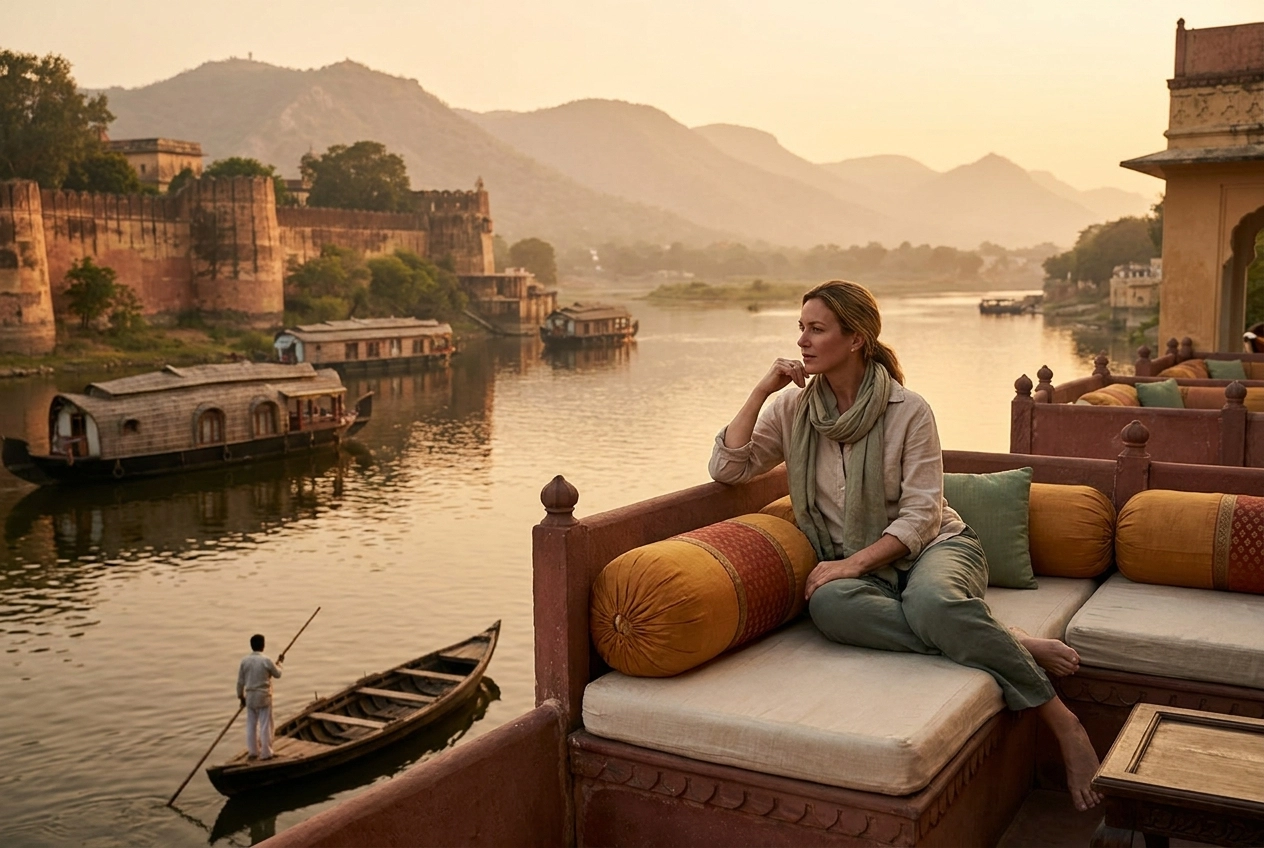
India has a way of getting under your skin. One moment you're standing in front of the Taj Mahal at sunrise, and the next you're navigating a chaotic spice market in Old Delhi, wondering how one country can hold so much colour, history, and flavour all at once. For Australian travellers, the good news is that getting there has never been easier, and the options for experiencing this extraordinary destination have never been better.
Whether you're dreaming of golden Rajasthan palaces, serene Kerala backwaters, or the spiritual energy of Varanasi, the right india tour packages can make all the difference between a trip that feels rushed and one that feels truly transformative. But with so many options out there, knowing where to start can feel a little overwhelming.
That's exactly why we've put this list together. In this post, we're breaking down the best expert-designed India tour packages specifically tailored for travellers coming from Australia. You'll discover what each package offers, who it suits best, and how to find the perfect fit for your travel style and budget.
Why India Rewards Expert Planning
India is not a destination you can wing. Spanning 28 states and eight distinct climate zones, it presents a planning puzzle that rewards careful thought and genuinely punishes guesswork. Arrive in Rajasthan in late April without accounting for the heat, or land in Kerala at the height of the south-west monsoon unprepared, and even the most extraordinary landscapes lose their appeal. For an Australian traveller investing weeks of precious leave and a significant amount of care and anticipation into a long-haul journey, getting the regional sequencing right is arguably the single most important decision you can make before you depart.
The travel market reflects this reality clearly. Customised and private holidays now represent the largest segment of the global luxury travel market at 34.8% (around USD 0.49 trillion in 2024, per Strategic Market Research), ahead of cruises, adventure travel and wellness retreats. That figure tells you something important: travellers who care deeply about their experiences have overwhelmingly moved away from off-the-shelf packages toward journeys built around their own interests, pace and priorities. India, with its extraordinary range of regions, cultures and seasons, is precisely the kind of destination where that tailored approach makes the most tangible difference.
The demographic reality reinforces this further. Travellers aged 35 and above account for more than 80% of premium travel spending globally. This is an audience for whom time is genuinely finite, comfort matters, and a journey's cultural depth counts for far more than simply covering maximum ground. Ticking cities off a rushed itinerary is nobody's idea of a meaningful trip.
What a specialist absorbs on your behalf goes well beyond a well-sequenced route. Visa logistics for Australian passport holders, domestic flight connections across India's vast interior, accommodation quality assurance, knowledgeable local guides, and contingency planning when things shift unexpectedly all require experience to navigate well. As research into 2025 and 2026 travel behaviour consistently shows, travellers still trust human experts to build their perfect trip, even as digital tools improve.
That is precisely how Taj Voyages works. Rather than presenting a catalogue of fixed tours, the approach is consultative from the first conversation, translating your interests into a cohesive, personally relevant journey with every detail coordinated. If you are ready to start that conversation, get in touch with the team here.
The Golden Triangle and Rajasthan: Heritage, Palaces and Living History
Delhi, Agra and Jaipur are rightly celebrated as India's most iconic circuit, but for many travellers, this is where the journey truly begins rather than ends. Extend west into Rajasthan and the experience deepens considerably. Jodhpur's blue-washed lanes tumble beneath the vast walls of Mehrangarh Fort. Jaisalmer rises from the Thar Desert like a sandstone mirage. Udaipur, with its lake palaces and cool marble terraces, offers a gentler, more romantic counterpoint to the grandeur that precedes it. The painted havelis of Shekhawati and the camel trails around Bikaner add further layers of texture that simply cannot be rushed. This is a part of India that rewards time, and a well-crafted itinerary honours that.
Where You Stay is Part of the Experience
Accommodation along this route is unlike anywhere else in the world. Converted maharaja palaces now welcome guests into the same halls where royalty once held court; heritage havelis have been restored with such care that the original frescoes remain vivid on every wall. On the edge of the Thar Desert near Jaisalmer, luxury tented camps offer the extraordinary sensation of sleeping beneath an immense, star-crowded sky while remaining entirely comfortable. These are not simply places to rest between sightseeing; they shape the journey itself and tend to become among the most vivid memories travellers bring home.
Seeing the Icons Properly
There is a meaningful difference between visiting the Taj Mahal and experiencing it. Arriving at dawn with a private guide, before the crowds gather and while the light is still soft and directional, transforms a famous monument into something genuinely moving. The same is true at Amber Fort in Jaipur and Mehrangarh Fort in Jodhpur, where private guided access allows you to understand the political histories, artistic traditions and human stories embedded in the stonework rather than simply photographing the facade.
A well-sequenced itinerary across this region typically spans 12 to 16 days and connects naturally with onward travel to South India's temple coasts or a luxury rail journey such as the Palace on Wheels. The October to March season is the sweet spot for comfortable travel, and it aligns neatly with Australian summer holidays and the January school break, making it a natural fit for couples and families planning an extended trip. Explore Taj Voyages' India itineraries to see how this region can be tailored to your pace and interests, or get in touch with our team to begin planning your journey.
Kerala and South India: Backwaters, Temples and a Cuisine Unlike Any Other
If the Golden Triangle and Rajasthan represent India at its most theatrical, South India offers something quieter and equally profound. The pace shifts noticeably here. Streets are greener, temples are older, and daily life carries a ceremonial quality that feels deeply rooted rather than performed for visitors. Kerala's palm-fringed waterways, Tamil Nadu's towering Dravidian gopurams and Karnataka's sandalwood-scented hills each tell a different chapter of a civilisation that stretches back thousands of years. Together, they form a journey that feels like an entirely separate country from the north, which is precisely the point.
The Backwaters: Where Village Life Moves at Water's Pace
The houseboat journey through Kerala's backwater canals is one of those experiences that resists easy description. Drifting through Alleppey's network of lagoons on a traditional kettuvallam, you watch village life unfold at the water's edge: fishermen casting nets at dawn, children walking to school along narrow towpaths, coconut palms leaning over still water. It is unhurried in the best possible sense. A well-planned itinerary builds in a private overnight houseboat stay, giving you the full arc of the day on the water rather than a brief afternoon cruise. Kochi makes an ideal starting point, with its layered colonial architecture, Chinese fishing nets and vibrant spice markets offering a rich introduction before you head south into the backwaters.
Temples That Demand Your Full Attention
Tamil Nadu's great temple cities are in a category of their own architecturally. Madurai's Meenakshi Amman Temple is a genuinely overwhelming structure, with twelve towering gopurams encrusted in thousands of painted sculptures, still fully active as a place of worship. Thanjavur's Brihadeeswarar Temple, a UNESCO World Heritage Site, demonstrates an engineering precision that continues to puzzle scholars. At Mahabalipuram on the Coromandel Coast, the Shore Temple and the famous rock-cut rathas sit directly beside the Bay of Bengal, carved from single granite boulders in the 7th century. These are not places to rush through.
A Food Culture Worth Planning Around
South Indian cuisine is genuinely distinct from what most travellers encounter in Indian restaurants abroad. Kerala's cooking leans on coconut milk, fresh curry leaves, black pepper and an extraordinary variety of seafood, with the Kerala sadya (a ceremonial feast served on banana leaf) representing the tradition at its most generous. Head into Tamil Nadu's Chettinad region and the flavour register shifts dramatically; the cooking there is fierce with pepper, kalpasi (stone flower) and marathi mokku, producing dishes of rare complexity. A thoughtfully designed itinerary builds in a cooking class, a market visit and at least one meal in a home or heritage property where the food tells the story of the place.
South India works beautifully as a standalone 10 to 12 day journey, particularly for travellers returning to India for the second or third time and ready to explore beyond the familiar north. It can also be woven into a 17 to 21 day itinerary that combines Rajasthan or the Golden Triangle with a southern extension, creating a genuinely comprehensive portrait of the subcontinent in a single trip. Talk to us about how we'd structure that for you.
North-East India: Assam, Meghalaya and the Road Less Travelled
If the Golden Triangle is India's opening chapter, the north-east is the passage that seasoned travellers quietly call their favourite. Stretching across Assam, Meghalaya, Sikkim, Arunachal Pradesh and Nagaland, this is a part of India that most international visitors never reach, and those who do tend to describe it as a revelation. The landscape alone is staggering: floodplains fed by the Brahmaputra, cloud-draped hills thick with subtropical forest, high-altitude monasteries perched above valleys that feel genuinely remote. Add more than 200 distinct tribal communities, tea estates producing some of the world's most prized first-flush leaves, and a biodiversity classification that puts it among the planet's significant ecological zones, and you begin to understand why this region rewards curiosity so generously.
Kaziranga National Park is the natural starting point for most north-east itineraries, and with good reason. Home to the world's largest population of the Indian one-horned rhinoceros, the park spreads across the Brahmaputra river plains in a landscape that feels genuinely primeval. Jeep safaris at dawn, with mist lifting off the grasslands and rhinos grazing at close range, offer a wildlife experience that sits comfortably alongside Africa's finest game reserves. Elephant-back excursions bring you even closer to the floodplain habitat and are a reminder that this kind of access is rare anywhere in the world.
Cross into Meghalaya and the character of the journey shifts entirely. The Khasi hills around Cherrapunji are famous for two things: extraordinary rainfall and the living root bridges that the Khasi people have cultivated over centuries by training the aerial roots of rubber fig trees across streams and gorges. These structures, some spanning more than 30 metres, are not tourist constructions; they are working bridges still used by local communities, and hiking to them through layered forest is one of the more quietly memorable experiences India offers.
The north-east is genuinely best suited to travellers who have already explored other parts of India and are ready for something less structured and more immersive. It rewards those with a particular interest in wildlife, ecology, indigenous cultures or simply the experience of travelling somewhere that hasn't yet been smoothed into easy familiarity. Seasonal access matters here more than almost anywhere else in India; the dry months from October through March are when most itineraries operate, while Cherrapunji's position as one of the world's wettest places makes the monsoon months a consideration worth understanding clearly before you plan.
At Taj Voyages, we design north-east India itineraries with careful attention to domestic flight connections through Guwahati, permit requirements for states like Arunachal Pradesh, and the calibre of local guides who bring genuine specialist knowledge of remote areas. If you're ready to explore this side of India, speak with our team about how we can shape the journey around your interests.
India's Luxury Rail Journeys: Palace on Wheels, Maharaja Express and Beyond
There is a category of travel experience that sits apart from anything a conventional tour can replicate. India's heritage luxury trains are purpose-built journeys where the train itself is the destination: private cabins dressed in silk and timber, attentive butler service, multi-cuisine dining that moves through regional menus as the landscape shifts outside your window, and curated excursions at each halt that place you directly inside centuries of history. These are not simply comfortable ways to move between cities. They are immersive, rolling experiences designed to make the journey feel as memorable as the places you visit.
Palace on Wheels and the Maharajas' Express
The Palace on Wheels operates a seven-night, eight-day circuit through Rajasthan each season, running from September to April when the desert light is at its most forgiving. The route visits Jaipur, Jodhpur, Jaisalmer, Sawai Madhopur (gateway to Ranthambore) and Agra, covering the essential heart of royal India in a single, cohesive arc. For many travellers, it works beautifully as a standalone journey; for others, it becomes the centrepiece of a longer itinerary that opens with days in Delhi and closes with time in Udaipur or Mumbai. You can explore the Palace on Wheels journey for route and season details.
The Maharajas' Express offers genuine route variety across its season, with four named itinerary options spanning Rajasthan, Agra, Varanasi, Khajuraho and Mumbai. Cabin categories run from Deluxe through to Presidential Suite, with full-board inclusions and curated excursions to UNESCO World Heritage sites as standard. The passenger experience draws explicitly on the grandeur of India's princely era, and the train has earned consistent recognition as one of the world's leading luxury rail journeys.
Golden Chariot and Deccan Odyssey
South and western India are served by two equally compelling options. The Golden Chariot journeys through Karnataka, Goa, Tamil Nadu and Kerala, with itineraries ranging from three to five nights that take in Hampi, Mysore, Pattadakal, Mahabalipuram and the backwaters of Cochin. The Deccan Odyssey explores Maharashtra, Rajasthan and Gujarat across six distinct journey options, with each coach carrying a name rooted in the Deccan cultural heritage. These are regional perspectives that no conventional touring programme delivers in quite the same way.
Planning Is Everything
Securing a place on any of these trains requires serious advance planning, typically six to twelve months ahead, particularly for peak season departures where cabin inventory is genuinely limited. Beyond the booking itself, there is the question of how to build the days before and after the rail journey into a coherent trip: which gateway city to arrive in, what to see along the route that the train does not cover, and how to sequence everything without unnecessary doubling back. This is precisely where working with a specialist makes the difference. At Taj Voyages, we have detailed working knowledge of all four trains and design complete itineraries that combine the rail journey with curated time in the cities and regions the train passes through. Get in touch with our team to start planning your heritage rail journey through India.
India and Sri Lanka: A Natural Two-Country Journey
For Australian travellers, the geography quietly works in your favour here. Southern India and Sri Lanka sit within a short flight of each other, meaning you can connect two genuinely distinct countries without adding meaningful time in the air. From Kochi or Chennai, the crossing to Colombo takes roughly an hour and a half, which makes a combined journey feel like a natural extension rather than a logistical stretch. Given that you're already travelling from Australia, weaving in Sri Lanka is one of the most rewarding decisions you can make.
A well-designed India and Sri Lanka itinerary typically unfolds over 18 to 24 days. The journey flows from Kerala's backwaters and spice gardens, or the great temple towns of Tamil Nadu, across to Colombo and then north into Sri Lanka's Cultural Triangle. Here, the ancient rock fortress of Sigiriya and the ruined city of Polonnaruwa, both recognised on UNESCO's World Heritage List, anchor the archaeological sequence. From there, the route rises into the hill country through Kandy, home to the sacred Temple of the Tooth Relic, and further up through the tea-carpeted highlands around Ella before descending south towards the national parks. Yala National Park is renowned for one of the highest leopard densities in the world, while Udawalawe draws travellers seeking elephant herds in genuinely wild surroundings.
What makes this pairing so satisfying is the contrast in scale and pace. India is vast, layered and richly complex. Sri Lanka offers something equally ancient but more intimate, a country where distances are shorter and the pace naturally softens. Travellers often describe arriving in Sri Lanka as a chance to breathe, to absorb rather than to constantly take in. The exploration doesn't stop; it simply changes register.
The thematic coherence across both destinations also surprises people. Buddhist heritage threads through both countries in different but related forms. Colonial architecture leaves its mark on Colombo and Chennai alike. Spice culture connects Kerala's cardamom estates to Sri Lanka's cinnamon coast in ways that feel genuinely connected rather than coincidental. For travellers drawn to archaeology, religion or culinary history, this is a pairing that rewards curiosity at every turn.
Taj Voyages coordinates the full two-country journey as a single, managed itinerary, handling the cross-country flights, visa logistics for both destinations and accommodation that maintains a consistent standard from start to finish. There's no gap between the India chapter and the Sri Lanka chapter; the whole journey is held together by one specialist team who knows both destinations well. If you're ready to start planning, speak with the Taj Voyages team about how a combined itinerary can be shaped around your interests and travel dates.
India with Nepal or Bhutan: Adding the Himalayan Dimension
For Australian travellers who feel India alone might not be enough, Nepal and Bhutan offer something remarkable: a Himalayan chapter that is culturally and visually unlike anywhere else on earth. Both countries sit naturally alongside a northern India itinerary, and for those making a genuinely significant long-haul journey, the combination transforms a memorable holiday into something closer to a life-defining expedition.
Bhutan operates on its own terms, and that is precisely what makes it so compelling. The country's high-value, low-impact approach to tourism means visitor numbers are deliberately kept low, and entry requires booking through a licensed operator well in advance. The result is an experience of genuine rarity: ancient dzongs rising above forested river valleys, mountain monasteries perched on cliffsides, and communities that have maintained their cultural rhythms with extraordinary continuity. You will not find yourself sharing these places with crowds. That sense of unhurried, uncrowded immersion is built into the fabric of how Bhutan receives its guests.
Nepal, meanwhile, offers a breadth of experience that can be shaped to suit almost any traveller. Kathmandu's UNESCO-listed temple cities, including Pashupatinath and Boudhanath, provide a rich cultural foundation. Further afield, Chitwan National Park offers wildlife encounters in the lowland jungles of the Terai, while the Everest and Annapurna regions cater to trekkers at every level of fitness, from gentle foothills walks to more demanding altitude routes.
A well-constructed India, Nepal and Bhutan itinerary typically spans 21 to 28 days and demands careful sequencing. Altitude transitions, domestic flight connections, seasonal timing and Bhutan's advance permit requirements all need to be coordinated with precision. The optimal travel windows align with March to May and September to November, periods that generally work well for Australian travellers planning annual leave around the southern hemisphere autumn and spring.
These multi-country journeys are among the most comprehensive itineraries we design at Taj Voyages, and they suit travellers who want to make the most of a once-in-a-generation journey rather than return home wishing they had gone further. If this kind of depth appeals to you, get in touch with our team to start mapping it out.
Festivals and Cultural Immersion: Timing Your Journey Around India's Calendar
Few things reshape how you experience India quite like being present for one of its great festivals. Pushkar's Camel Fair, Diwali in Varanasi, Holi in the streets of Mathura and Jaipur, Pongal harvest celebrations in Tamil Nadu, and the Hornbill Festival in Nagaland are not simply colourful backdrops to a standard itinerary. They are singular cultural moments, rooted in centuries of tradition, that offer a depth of connection simply unavailable at any other time of year.
That depth comes with a planning requirement that is just as significant. Accommodation in festival towns sells out remarkably early; for Varanasi at Diwali or Pushkar during the Camel Fair, twelve months' advance planning is not an exaggeration. Crowd management matters too. The difference between being swept along by a festival as a passive onlooker and actually participating in it meaningfully comes down almost entirely to the quality of your local guide relationships and the contextual preparation you arrive with. Knowing the ritual significance of what you are witnessing, and having a guide who can open doors that are invisible to the general visitor, transforms the experience entirely.
A Diwali journey built around the October to November window is one of the most satisfying itineraries you can construct. Starting in Varanasi for the lamp-lit ghats and evening aarti ceremonies, then moving through Rajasthan to take in Jaipur's illuminated havelis and the festive energy of Udaipur, a 14 to 18 day journey allows genuine cultural depth alongside comfortable travel logistics. The Pushkar Camel Fair often falls within this same window, making it a natural addition for travellers who want to witness one of India's most visually extraordinary gatherings.
Cultural immersion, of course, extends well beyond festival dates. Cooking classes with local families, textile and craft workshops in Jaipur or Kochi, early morning temple rituals, classical music evenings in private homes, and time spent with spiritual communities are all experiences that your guide network facilitates quietly and without fanfare. These are not tourist programmes; they are connections arranged through trust built over years.
It is worth noting that cultural tours now represent 13.9% of the global luxury travel market, according to Strategic Market Research (2024), and the segment is growing. Travellers who seek out festival and immersion journeys are motivated primarily by experience depth, and India, with its unmatched calendar of living traditions, sits at the very centre of that growing appetite. Speak to the team at Taj Voyages about building a journey around the moments that matter most to you.
Wildlife and Wilderness India: Tigers, Elephants and the National Parks
India's national park network is one of the most biologically diverse in Asia, and for travellers who have never experienced a tiger safari, the sheer scale of what's on offer tends to come as a genuine surprise. The country is home to around 3,000 Bengal tigers spread across 40 dedicated tiger reserves, alongside 99 national parks and 450 wildlife sanctuaries covering an extraordinary range of ecosystems. Ranthambore in Rajasthan rolls across dry scrub forest punctuated by ancient ruins, creating a landscape unlike any other safari setting in the world. Kanha and Bandhavgarh in Central India's Madhya Pradesh offer thick sal woodland and meadow clearings, with Bandhavgarh consistently recording some of the highest tiger densities in India. Jim Corbett in the Himalayan foothills sits within riverine grassland edged by ridgelines, while Pench adds leopard and wild dog to the mix, rounding out a distinctly different character again.
What separates a memorable India wildlife safari from an ordinary one is rarely the park itself. It is the vehicle, the guide, and the freedom to follow the animal. A private jeep with an experienced naturalist means you can sit quietly at a sighting for as long as the moment holds, adjust your timing based on where activity was recorded at dawn, and respond to fresh tracks rather than a fixed route. Shared vehicles must keep moving; private arrangements don't. That difference, in practice, is the difference between observing wildlife and genuinely being present with it.
For elephant encounters, the approach matters as much as the location. Kabini and Nagarhole in Karnataka offer wild elephant sightings in a riverine and forest setting where herds move on their own terms. Kabini is particularly noted for its remarkable elephant gatherings during the dry season, as animals congregate around the reservoir. Where elephant sanctuaries are involved, it's worth choosing venues in Kerala and Karnataka that prioritise natural behaviour, rest periods, and appropriate herd dynamics over performance or staged interaction.
One of the most rewarding formats in an India tour package is the wildlife-heritage combination. A Rajasthan heritage circuit pairs naturally with two or three days at Ranthambore, given the park's location near Jaipur. For South India, a temple circuit through Karnataka and Tamil Nadu can flow seamlessly into time at Kabini and the broader Nilgiri Biosphere.
The prime window for most parks runs October to March, overlapping cleanly with the best conditions for heritage travel across Rajasthan and South India. This means a single, cohesive itinerary can genuinely deliver both without compromise. Permits in the peak zones of Bandhavgarh and Ranthambore are limited, so planning well ahead is simply part of getting this right. If you'd like help designing an itinerary that weaves wildlife and heritage together, get in touch with the team at Taj Voyages.
When to Travel to India from Australia
Timing your India journey well makes an enormous difference to what you'll experience on the ground. India's scale and climate diversity mean there's rarely one single "best time" that applies universally, but understanding the key windows helps you design an itinerary that works beautifully rather than one that fights the conditions.
October to March is the primary travel season for most of India, and for good reason. Temperatures across the north, including Delhi, Agra, Rajasthan and Varanasi, settle into comfortable, clear-sky days that are genuinely pleasant for exploring on foot. Wildlife parks are active, heritage sites are accessible, and the festival calendar during this window is rich. For Australian travellers, this season also aligns conveniently with school holiday periods in late September and October, and again in April, making it a practical fit for families or couples planning around work and school commitments.
The monsoon season (June to September) is often misunderstood. Yes, rainfall can be significant, and some road routes and national parks become less accessible during these months. But the south and central regions transform into something genuinely lush and atmospheric. Kerala in the monsoon is a different, softer experience; crowds thin considerably and the landscape is vibrantly green. Travellers who visit during this period often speak of a more intimate, unhurried India.
The Himalayan regions operate on their own timeline entirely. Ladakh is typically only accessible between June and September, when the high mountain passes are open. Bhutan, which pairs naturally with an India itinerary, reaches its best for mountain views and festival access during spring (March to May) and autumn (September to November).
India's heritage luxury trains, including the Palace on Wheels and Maharaja Express, run seasonally, generally between October and April. Demand consistently exceeds availability during peak departures, so securing your preferred dates early is important. When Taj Voyages designs a rail journey for you, train departure dates are built into the broader itinerary from the outset, ensuring the connections before and after work seamlessly.
From Australia, India sits roughly 12 to 16 hours away depending on your routing and connection city. Most travellers fly via Singapore, Dubai, Kuala Lumpur or Hong Kong, with connections into Delhi or Mumbai from all major Australian cities. It's a long-haul journey worth planning thoughtfully, and many travellers choose to build in a rest day at the start of their itinerary to settle in properly before the real journey begins.
What a Premium, Tailor-Made India Tour Actually Includes
When you invest in a carefully designed India tour package, here is what that investment actually looks like on the ground.
Accommodation that places you inside India's story. The difference between a converted maharaja palace, a heritage haveli and a generic five-star hotel is not simply aesthetic. Sleeping inside the walls of a former royal residence, in a room that once housed nobility, with courtyards and architecture that no new-build property can replicate, changes how India feels around you. Luxury tented camps on the fringes of tiger reserves offer something equally distinctive: wilderness immersion without surrendering comfort. This quality of accommodation is not available through generic booking platforms; it comes through specialist relationships built over years.
A dedicated private vehicle throughout your journey. Your own air-conditioned vehicle and a reliable, experienced driver is one of the most quietly valuable inclusions in any premium India itinerary. It means departing when you are ready, stopping where something catches your attention, and never negotiating shared transfers after a long flight or an afternoon in 38-degree heat. Travellers consistently describe this as the inclusion that made everything else feel manageable.
A guide who genuinely knows the culture. India changes language, architecture, religious tradition and culinary character every few hundred kilometres. A specialist local guide with deep historical knowledge, real language skills and trusted community relationships transforms a site visit into something you actually understand and remember. This is what separates an information download from a lived experience.
All logistics handled before you arrive. Visa support, domestic flight bookings, airport transfers and a thorough pre-departure briefing covering entry requirements, cultural etiquette, currency and day-by-day detail. You land in India knowing everything is in place.
A human expert available throughout. If a flight shifts, a preference changes or an unexpected opportunity opens up, there is a specialist available to respond. No booking platform offers that. Speak with the Taj Voyages team to start designing your itinerary.
Begin Planning Your India Journey
Every great India journey starts with a conversation about what matters most to you. Perhaps it is the pull of Mughal architecture and the Golden Triangle, a tiger sighting in Ranthambore, a festival experience in Varanasi, or the singular pleasure of travelling aboard a heritage luxury train through Rajasthan. Whatever draws you to India, the starting point is always the same: talking with someone who knows this country intimately and can shape an itinerary around your interests rather than a fixed template.
Taj Voyages designs fully coordinated, tailor-made India journeys for Australian travellers, handling everything from itinerary design and accommodation selection to visa support and end-to-end in-country tour management. The enquiry process is genuinely consultative. You share your interests, travel dates and preferred travel style, and the team builds an itinerary around you.
Whether you are considering a two-week first visit to North India, a multi-country journey combining India with Sri Lanka, Nepal or Bhutan, or a once-in-a-generation luxury rail adventure, the approach is the same: a straightforward conversation with specialists who have done this many times before, for travellers very much like you.
Reach out via the enquiry page at tajvoyages.com.au to begin designing your India journey. The sooner you start, the more options open to you, particularly for peak season travel and heritage rail departures where availability moves quickly.
Conclusion
India is one of those destinations that stays with you long after you've returned home. The right tour package makes all the difference, turning what could be an overwhelming experience into something genuinely life-changing. Here are the key takeaways to keep in mind:
Expert-designed itineraries remove the guesswork and help you experience India's highlights without the stress
Packages tailored for Australian travellers account for your travel time, budget, and interests
Whether you prefer cultural immersion, spiritual discovery, or scenic landscapes, there is a perfect itinerary waiting for you
Ready to start planning? Explore our India tour packages and speak with a travel specialist who understands exactly what Australian travellers need. Your journey to the land of colour, culture, and incredible cuisine is closer than you think. Take the first step today.