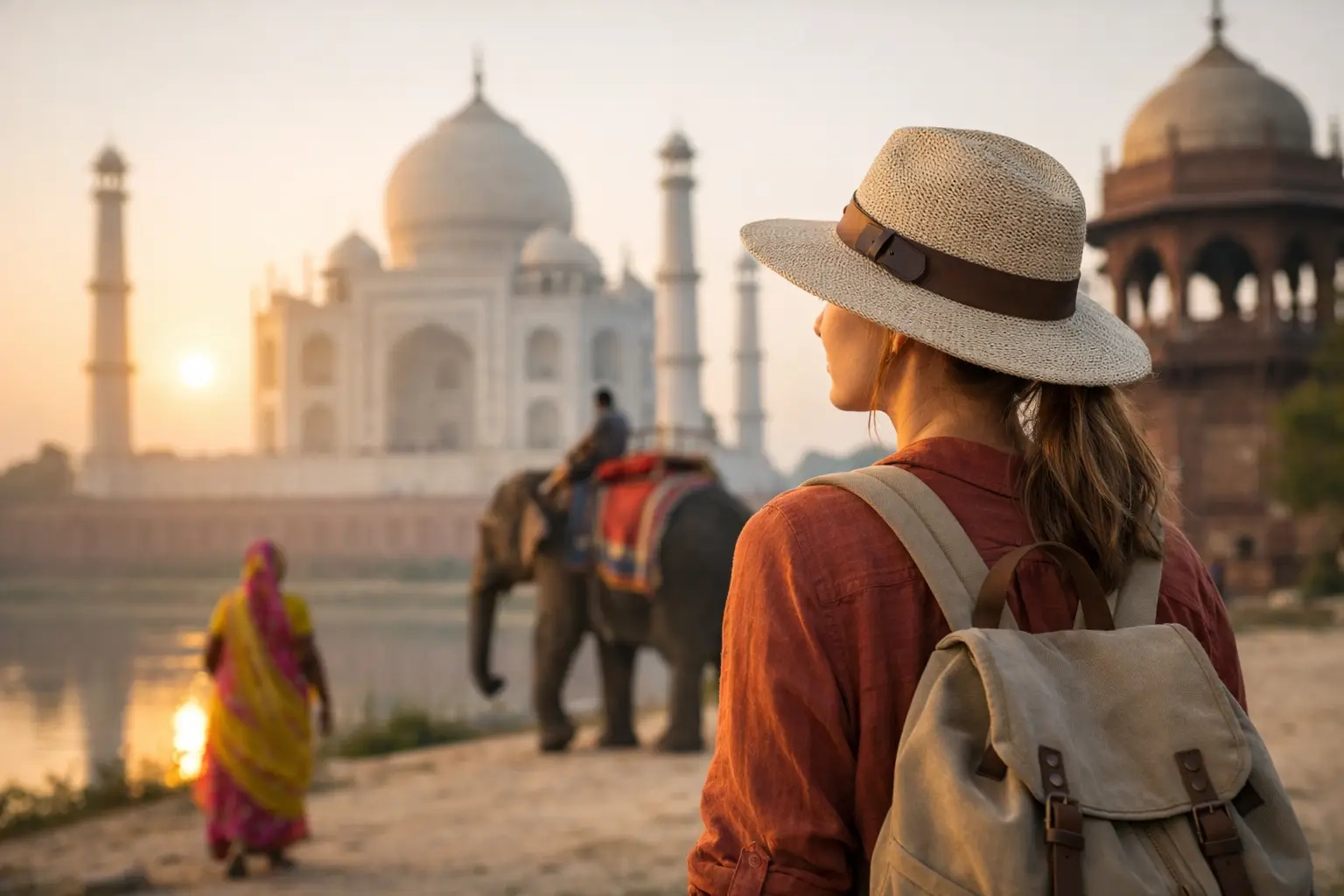
A sunrise over the Ganges at Varanasi, dinner in a restored haveli in Rajasthan, a tiger safari in Madhya Pradesh. India rewards travellers who arrive curious and well prepared.
So — is it safe? For most visitors, yes, particularly when the journey is well designed, the transport is reliable and there is support throughout. But that's a thin answer on its own, and if you're asking the question you probably want something more useful than reassurance. So here is the fuller version.
What solo women actually report
Most women who travel in India have a wonderful time. They also, very commonly, describe two things worth knowing about in advance.
Staring. Persistent, open staring is common, particularly outside the major cities and particularly towards women travelling alone. It is almost always curiosity rather than threat, but it is relentless enough that women who weren't expecting it find it wearing. Knowing it's coming makes it far easier to shrug off.
Unwanted attention and crowding. Crowded public places — markets, railway platforms, busy festivals — are where the great majority of reported incidents occur. This is the practical reason we favour private transport over public, pre-arranged drivers over hailing one on the street, and arrivals in daylight rather than late at night.
Neither of these should stop you coming. They are the reason a well-planned trip is worth more here than in many destinations — most of the uncertainty sits in the gaps between arranged arrangements, and good planning removes the gaps.
For current official guidance, Australian travellers should check the Government's Smartraveller advice for India before booking and again before departure.
What good planning actually removes
The biggest practical variable is movement between places. India's distances are substantial and its cities are busy. Pre-arranged airport welcomes, professional private drivers and well-timed rail or internal flight connections make a genuine difference to how settled you feel — especially after a long-haul flight, or arriving somewhere unfamiliar at the end of a long day.
Accommodation matters just as much. A well-regarded hotel or heritage stay offers more than a comfortable room: a calm base, a knowledgeable concierge, attentive staff and a location that suits the day's plans. After a morning among Jaipur's palaces, returning somewhere you're recognised is part of the experience, not a luxury.
Local guidance adds a further layer. A good guide doesn't simply explain a monument. They read the pace of a neighbourhood, pick the right moment to visit a busy site, arrange a suitable table for dinner, and adjust the day when your interests lead elsewhere. That's particularly valuable for solo travellers who want independence without having to solve every logistical problem alone.
Sensible awareness, without losing the pleasure of it
India's warmth and hospitality are among its most memorable qualities, and ordinary travel awareness goes a long way. In busy markets, stations and major sites, keep valuables secure and stay aware of your surroundings — as you would in any large city anywhere. Your guide or hotel team can advise on the character of an area and the most comfortable way to see it.
Traffic deserves a mention of its own. Roads are lively, crossings feel different from home, and travel times vary considerably. Experienced local drivers and realistic scheduling are worth far more than trying to fit another sight into the day.
For women travelling alone, context-aware dress helps you feel at ease, particularly at places of worship and in smaller towns. That needn't mean sacrificing your own style — light layers, a scarf or shawl, and clothing suited to the climate are practical choices that also respect the setting.
English is widely used in tourism settings, so communication is rarely difficult. Even so, a local host is invaluable when plans change, luggage goes missing, or a reservation needs moving. The comfort is in knowing help is close by, not in expecting nothing will ever need attention.
Choosing regions that suit how you travel
There is no single best first itinerary. It depends on the experience you want and the tempo that feels comfortable.
For a classic introduction, Delhi, Agra and Rajasthan combine significant architecture, excellent hotels and a well-established touring rhythm. Private guided visits are the difference between seeing the Taj Mahal and understanding it. Udaipur and Jaipur also leave room for good dining, museums, artisan traditions and quiet hotel courtyards between the sightseeing.
South India suits travellers who want a gentler pace. Kerala's waterways, Tamil Nadu's temple towns and Karnataka's heritage landscapes offer rich cultural experience with a more unhurried flow, and the route can balance historic sites with coastal stays or time in tea country.
Wildlife itineraries in central India work particularly well when coordinated around the right lodges and safari timings. For solo travellers, the small-group atmosphere of a safari and the attentiveness of lodge staff tend to feel both sociable and reassuring.
Luxury rail is another option worth considering. On the Maharajas' Express, Palace on Wheels, Golden Chariot or Deccan Odyssey, the accommodation, dining, sightseeing and logistics are all coordinated within the journey — which removes most of the arrival-and-departure friction that makes solo travel tiring.
Why tailored planning matters more when you're alone
Travelling solo doesn't mean travelling without connection. Many women value the freedom to follow their own interests while still appreciating well-chosen guides, company for particular activities, and hosts who know when to step back. A personalised itinerary makes room for both.
Perhaps you'd like an early photography walk in Varanasi, a private cooking session in Jaipur, an afternoon at a textile atelier, or several quiet days at a coastal retreat. Those requests shape an itinerary in ways a fixed programme can't, and they let travel days and meals be planned around your rhythm rather than a group's.
Ask for what you need. A preference for female guides where available, quieter accommodation, a particular arrival time, free afternoons — these are not awkward requests, and any specialist worth using will have been asked before. They are usually what turns a good itinerary into one that actually suits you.
Before you depart
Make sure your travel insurance covers your itinerary and planned activities. Keep copies of key documents. Discuss any health considerations with a medical professional before you go. Entry requirements and visa processes change, so allow adequate time for applications and check the current position rather than relying on what was true last year.
India is best approached with openness, respect, and a plan built by people who understand its distances and rhythms, which is worth discussing with a specialist before anything is booked. When the practicalities are quietly handled, you have far more room to notice the generosity of a welcome, the precision of a craft tradition, and the moments of stillness that tend to be the ones you remember.