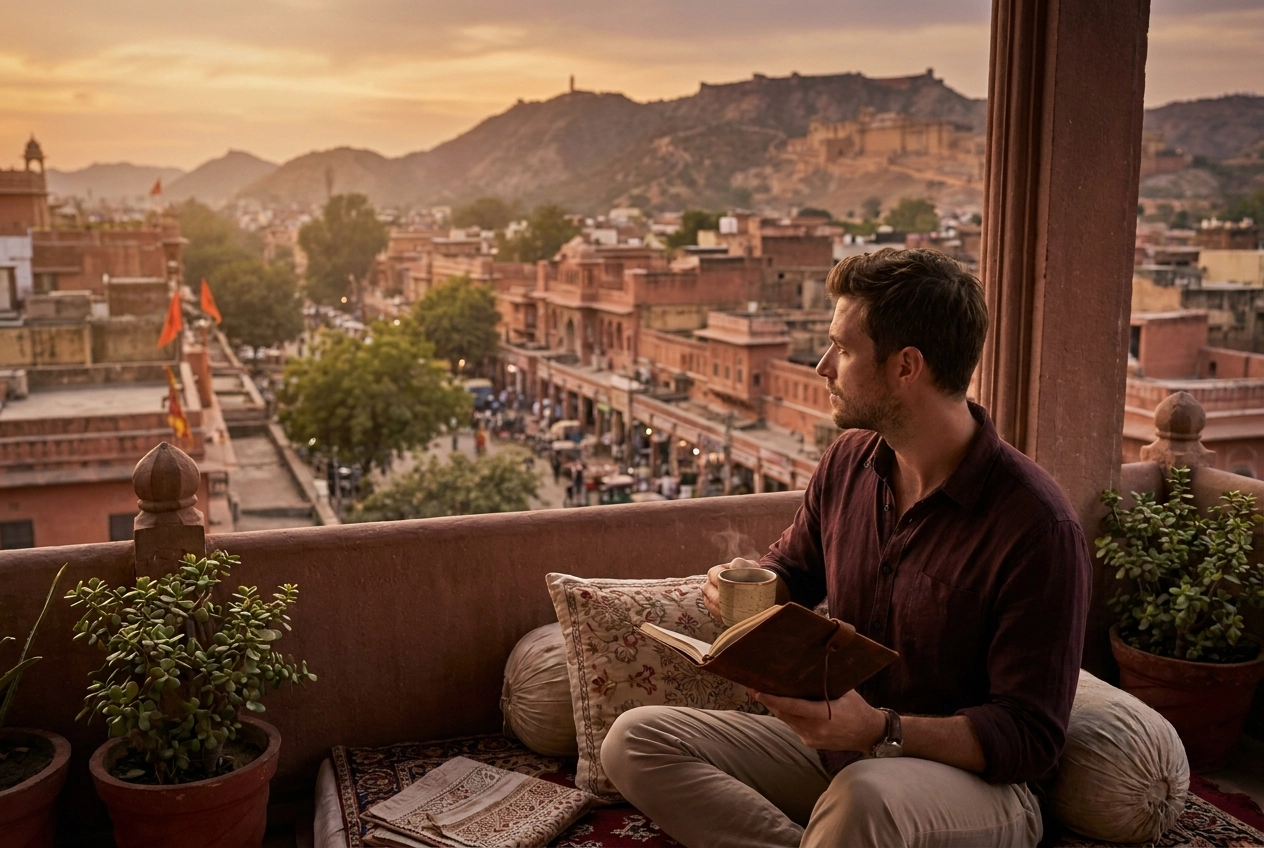
Rajasthan's crown jewel has been captivating travelers for centuries, and Jaipur continues to deliver that same sense of wonder to every visitor who walks through its grand gates. But here is the truth most travelers discover too late: how you plan your trip determines everything about the experience you take home.
Choosing the right Jaipur tour packages is not simply about booking a hotel and mapping out a few monuments. It is about understanding the city's rhythm, knowing which experiences are genuinely worth your time, and finding the combination of sightseeing, culture, and comfort that matches your travel style.
Whether you are a history enthusiast eager to explore the Amber Fort's intricate architecture, a food lover ready to dive into Rajasthani cuisine, or a first-time visitor trying to make sense of it all, the right package makes the difference between a rushed checklist and a truly memorable journey.
In this guide, we break down the most compelling options available, what each one offers, and how to identify the package that will help you experience the Pink City exactly the way it deserves to be seen.
The Classic Golden Triangle Package: Delhi, Agra and Jaipur
The Delhi–Agra–Jaipur circuit stands as the most consistently booked India itinerary for international travellers, and for good reason. These three cities form a natural geographical loop that can be completed without retracing a single kilometre, making the circuit exceptionally time-efficient for Australians working within a 7 to 10 day window. Each city anchors a distinct chapter of India's story: the layered, restless energy of Delhi; the singular, breathtaking monument that is the Taj Mahal in Agra; and Jaipur, the Pink City, where Rajput grandeur is written across every roofline, fort and bazaar lane. It is a route that consistently rewards first-time visitors while offering enough depth to satisfy seasoned travellers returning for more.
What a well-structured Jaipur tour package covers
In Jaipur alone, a thoughtfully designed itinerary moves through some of India's most remarkable heritage sites. Amber Fort commands the hills above the city and rewards an early start, when golden light falls across its mirrored halls and the courtyards are quiet. The City Palace, still partially home to the royal family of Jaipur, offers an intimate encounter with living Rajput history. Jantar Mantar, the 18th-century astronomical observatory and a UNESCO World Heritage site, is genuinely extraordinary once a knowledgeable guide unpacks its instruments. Hawa Mahal, the Palace of Winds, is one of India's most photographed facades; seeing it at the right hour, with the right context, transforms it from a photograph into a memory. Pair these with Agra's Taj Mahal and Agra Fort, and Delhi's Old City, Red Fort, Humayun's Tomb and the sweeping geometry of Rajpath, and you have an itinerary of remarkable coherence and cultural range.
The private touring difference
A quality Jaipur tour package is built around private, rather than shared, travel. This means a dedicated English-speaking guide and a chauffeur assigned to your party for each leg of the journey, with no fixed group departure times and no shared coaches. If you want to linger at Amber Fort longer than the itinerary suggests, or return to a particular bazaar before dinner, the flexibility is genuinely yours. Airport meet-and-greet on arrival in Delhi sets the tone from the first moment, and all inter-city transfers between Delhi, Agra and Jaipur are arranged within the package. Accommodation at heritage or boutique properties completes the picture, placing you within the atmosphere of each city rather than at arm's length from it.
Getting the duration right
Seven nights is the practical minimum for this circuit if you want to move through it without feeling pressured. It allows full days in each city and the breathing room to absorb what you are seeing. Nine to ten nights is the more considered choice: an extra day creates space for a sunrise visit to Amber Fort before the first tour groups arrive, a cooking class in a local home, or simply a morning at leisure with no agenda. Taj Voyages designs Golden Triangle itineraries to suit exactly this kind of pace. To explore the options or begin shaping your own itinerary, get in touch with our team and we will take it from there.
Golden Triangle Plus Rajasthan Extension: Going Deeper
For travellers who complete the classic Delhi–Agra–Jaipur circuit and find themselves wanting more, the answer is almost always the same: keep going into Rajasthan. Adding Ranthambore, Udaipur and Jodhpur to the core itinerary is the most popular upgrade path heading into 2026, and it transforms a compelling introduction to India into something genuinely immersive. Across 12 to 16 days, this extended format gives each destination the space it deserves, rather than compressing Rajasthan's extraordinary diversity into a single city visit.
The logical first extension after Jaipur is Ranthambore National Park, sitting roughly three hours away by road. This proximity makes it a seamless addition rather than a detour, and the contrast it offers is remarkable. After days spent moving through forts, bazaars and Mughal architecture, settling into a wildlife lodge on the edge of one of India's most celebrated tiger reserves resets the rhythm entirely. Morning and afternoon game drives through Ranthambore's dry deciduous forests, in search of Bengal tigers moving between the ruins of a 10th-century fort, offer a kind of encounter with India that purely heritage-focused itineraries simply cannot replicate. The combination of cultural immersion in Jaipur followed by wilderness in Ranthambore is one of the most satisfying pairings on any well-structured Rajasthan itinerary.
From Ranthambore, the extended circuit continues west and south through Rajasthan's most distinct personalities. Jodhpur, the Blue City, is a place of dramatic contrasts: the immense Mehrangarh Fort rising above a cascade of cobalt-painted rooftops, narrow lanes alive with spice merchants and textile traders, and a cooking tradition centred on earthy, robust flavours quite unlike anything found in Jaipur. Udaipur arrives as an entirely different register again; built around a series of lakes and anchored by the magnificent City Palace, it carries an almost improbable romance. These two cities alone demonstrate how varied Rajasthan is as a state, and why treating it as a single, uniform experience would be a significant underestimation.
Travellers who invest in this extended format consistently reflect that it was the version they wished they had started with. The additional days do not simply add more sightseeing; they allow each city to reveal itself at a more human pace. There is time for an unplanned conversation with a local craftsman, a sunrise walk before the crowds arrive, a long dinner in a rooftop restaurant watching the city settle into evening. That quality of presence is what separates a meaningful journey from a checklist.
At Taj Voyages, this extended Rajasthan circuit is designed as a fully tailor-made itinerary from the outset. Pace, accommodation style, the balance between structured experiences and open time, the inclusion of a cooking class or a textile workshop or simply more time at Ranthambore: all of it is shaped around each traveller's interests and rhythm. Speak with our team to begin designing an itinerary that reflects exactly what you are looking for from Rajasthan.
Using Jaipur as a Standalone Base: Day Trips and Deeper Exploration
For travellers who already have a broader India itinerary taking shape, dedicating three to five days to Jaipur rather than passing through in a rush opens up an entirely different quality of experience. The city rewards patience, and using it as a settled base allows you to explore the surrounding region without the pressure of constant movement. This approach suits couples and families alike, particularly those who want to absorb a place rather than merely photograph it.
Abhaneri and the Chand Baori Stepwell
Around 95 kilometres east of Jaipur lies one of India's most visually arresting structures: the Chand Baori stepwell at Abhaneri. With approximately 3,500 narrow steps descending 13 storeys into the earth, it is among the largest and most dramatic stepwells in the subcontinent. A privately arranged day trip pairs it naturally with the adjacent Harshat Mata temple, a beautifully carved shrine to the goddess of joy. Having a knowledgeable guide alongside you makes an extraordinary difference here; the site's geometry, history and significance reward explanation rather than a brief glance before the next stop.
Samode Village and Palace
Just 45 minutes north of Jaipur, Samode feels worlds removed from the city's bustle. The restored 18th-century palace and the village surrounding it offer a genuinely intimate glimpse into Rajasthani life that most itineraries never reach. A privately arranged visit here is qualitatively different from a brief group tour stop; you move at your own pace, engage with the surroundings properly, and leave with a sense of having understood something real about the region.
Pushkar and Its Sacred Ghats
Roughly two hours from Jaipur, Pushkar is one of India's most revered pilgrimage towns. Its ghats, winding temple streets and the rare Brahma temple carry layers of religious and cultural significance that are easy to miss without proper context. Visiting with a thoughtful local guide transforms the experience from a sightseeing exercise into something genuinely meaningful.
Deeper Experiences Within the City
Allocating more time in Jaipur also creates space for the experiences most commonly sacrificed on shorter itineraries: a block-printing workshop in the old city, a private session exploring Jantar Mantar's astronomical instruments with a specialist guide, or an early-morning walk through the old city bazaars before the heat builds. These are the moments that tend to define a trip in retrospect, and they simply cannot be rushed.
Luxury Heritage Stays in Jaipur: Where You Sleep Matters
Choosing where to stay in Jaipur is one of the most consequential decisions in any Rajasthan itinerary, and it deserves as much care as selecting the sights on your daily agenda. Jaipur holds one of the finest concentrations of heritage palace hotels in India, and sleeping within their walls is a cultural immersion in its own right. These are not simply comfortable rooms with period furniture. They are living repositories of Rajput and Mughal history, where the architecture, the gardens, the staff and the rituals of daily service all speak to a way of life that stretches back centuries.
Distinct Properties, Distinct Personalities
Each of the major heritage properties carries its own biography and atmosphere, and understanding those differences is essential to matching the right stay to the right traveller. Rambagh Palace was built in 1835, served as the official residence of Maharaja Sawai Man Singh II and his celebrated wife Gayatri Devi, and now offers exclusive royal butler service alongside the Suvarna Mahal ballroom restaurant within its grounds. The Raj Palace, originally constructed in 1727 and recognised as India's first museum hotel, held the World Travel Awards title of World's Leading Heritage Hotel for ten consecutive years between 2007 and 2018. It sits in the vibrant heart of the old city, placing guests within immediate reach of the Pink City's most atmospheric laneways and bazaars. Samode Haveli, a 300-year-old property that has appeared on Condé Nast Traveler's Gold List, unfolds as a sequence of intimate courtyards, each with its own character. The haveli format is smaller and more personal than a grand palace, which suits travellers who prefer a sense of quiet discovery over spectacle.
Location Changes Everything
Staying within the old city rather than at a modern hotel on the periphery transforms the texture of each day. Morning light over sandstone façades, the sound of the bazaars waking up, the ease of stepping out on foot toward Hawa Mahal or the textile merchants of Johari Bazaar: these are experiences that simply cannot be replicated from a distance.
The level of service at these properties deepens the experience further still. Personally assigned butlers, in-room dining served in a palace courtyard, privately arranged sunrise excursions to Amber Fort before the crowds arrive; these details elevate a Jaipur visit from a sightseeing exercise to something genuinely memorable.
At Taj Voyages, accommodation is selected on the basis of first-hand property knowledge, not star ratings alone. The goal is to ensure that where you sleep matches the quality and intention of the itinerary built around it. Speak with our Jaipur specialists to find the heritage property that suits your travel style.
Arriving in Jaipur by Luxury Train: Palace on Wheels and Maharaja Express
There is a particular moment that stays with travellers long after a Rajasthan trip ends: the morning light over the Thar Desert through a wide carriage window, the gentle rhythm of the rails, and the knowledge that you are arriving in Jaipur not by road, but aboard one of India's most celebrated heritage trains. Both the Palace on Wheels and the Maharaja Express include Jaipur as a centrepiece stop on their Rajasthan circuits, and arriving this way reframes the entire experience of the city. The Pink City feels different when you step onto the platform having already crossed deserts and fortified plains to reach it.
The Palace on Wheels
Launched in 1982, the Palace on Wheels holds the distinction of being India's first luxury heritage train, and its coaches carry genuine provenance: many were originally designed as personal carriages for the rulers of Rajputana states. The train follows a seven-night, eight-day itinerary departing from Delhi, sweeping through Sawai Madhopur, Chittorgarh, Udaipur, Jaisalmer, Jodhpur and Bharatpur before returning to the capital. Jaipur is a named stop on the circuit, with the onboard programme typically including guided excursions to Amber Fort and the City Palace, along with time in the bazaars. Entrance fees and guided tours are included as part of the all-inclusive fare, meaning the Jaipur day unfolds without any logistical friction. The train operates between September and April, aligning neatly with Rajasthan's cooler touring season.
The Maharaja Express
The Maharaja Express occupies a different tier of the luxury rail world. Recognised as the World's Leading Luxury Indian Train for multiple consecutive years at the World Travel Awards, it offers four distinct itineraries of varying lengths, with Jaipur featuring prominently across the majority of them. Private cabins ranging from Deluxe through to Presidential Suite, fine-dining carriages, butler service and fully curated shore excursions together create a self-contained travelling world of considerable refinement. The Maharaja Express is not simply transport between cities; it is the journey itself.
The Hybrid Option
For travellers drawn to the rail experience but not ready to commit to a full multi-night train itinerary, Taj Voyages offers a genuinely practical alternative. As a core speciality, the team can design a combined journey: arriving in Jaipur aboard a luxury train, then transitioning to a private chauffeured vehicle to continue through the rest of the Rajasthan circuit at your own pace. This structure gives you the theatre and romance of the rail arrival without locking the entire itinerary to a fixed train schedule.
For Australian travellers who have explored South-East Asia extensively and are ready for something of greater complexity and resonance, a luxury train journey through Rajasthan represents one of the most compelling arguments for choosing India as the next major trip. Explore Taj Voyages' luxury rail journeys or speak with our team about weaving a Palace on Wheels or Maharaja Express leg into your broader India itinerary.
Wildlife and Heritage Together: Jaipur and Ranthambore
Ranthambore National Park stands among India's most celebrated tiger reserves, and its position roughly three hours by road from Jaipur makes it one of the most compelling additions to any Rajasthan itinerary. Rather than treating wildlife and heritage as separate journeys, a well-designed Jaipur tour package brings them together in a single, flowing experience that feels genuinely varied rather than fragmented.
A typical pairing allocates two to three nights in Jaipur for the city's architectural landmarks and cultural experiences, followed by two to three nights at a Ranthambore safari lodge. Morning and afternoon game drives form the core of the wildlife component, with the rhythm of early starts and golden-hour returns giving the days a deeply satisfying structure. Because Ranthambore's tiger population has recovered significantly under Project Tiger conservation efforts, sightings are meaningfully possible rather than merely hopeful, though every safari has its own character.
What distinguishes Ranthambore from a purely wildlife destination is the presence of a 10th-century fort built during the Chahamana dynasty, which stands within the park's boundaries overlooking the lakes and forest below. The fort, along with ancient temples and mosaic-tiled step wells, means the landscape carries genuine historical weight alongside its natural drama. Moving through the park, you are surrounded by centuries of human and ecological history simultaneously.
The accommodation landscape at Ranthambore is genuinely diverse. Classical tented camps offer an immersive wilderness atmosphere close to the forest edge, while more formal heritage-style properties provide refined comfort after a long day on safari. Matching the lodge style to the overall tone of a trip is precisely where specialist guidance adds real value; the right property can either amplify the wilderness feeling or provide a graceful counterpoint to it.
This combination resonates particularly with couples and families who want an itinerary that moves beyond purely cultural sightseeing. It also connects naturally to a broader Rajasthan extension, with Udaipur, Jodhpur or Pushkar all within reach. Explore Taj Voyages' Rajasthan itinerary options or get in touch to design your own Jaipur and Ranthambore journey.
Jaipur Within Multi-Destination Itineraries: India and Beyond
For Australian travellers planning a long-haul trip to this part of the world, Jaipur works beautifully as an anchor point for something far more expansive than a single-country journey. Rajasthan's desert landscapes, forts and palace architecture form a compelling opening chapter, and from there, the region offers several very different but equally rewarding directions.
India and Sri Lanka: Two Cultures, One Journey
A popular combination pairs the Golden Triangle and Rajasthan with Sri Lanka. The itinerary might open in Delhi, move through Agra and Jaipur, then continue into Rajasthan before a short flight south connects you to Colombo. From there, Sri Lanka's cultural triangle draws you through the ancient rock fortress at Sigiriya, the sacred temple city of Kandy and the island's southern coast. The contrast between Rajasthan's arid grandeur and Sri Lanka's lush hills and turquoise shoreline is striking; the two destinations feel worlds apart, yet they sit within comfortable flying distance of each other and complement each other in texture and pace.
Adding Nepal: The Himalayan Counterpoint
Nepal introduces an entirely different dimension to an India itinerary. Kathmandu's UNESCO-listed temple squares and the sight of the Himalayan horizon beyond the Kathmandu Valley provide a natural and deeply memorable counterpoint to the desert palaces of Rajasthan. Within a three to four week itinerary, there is genuine room for both, with enough days to absorb each destination rather than simply pass through it.
Bhutan: The Region's Most Deliberate Destination
Bhutan occupies a category of its own. Accessible via India's eastern gateways, it can be appended to an India itinerary for travellers seeking something quieter and more contemplative. Entry is carefully managed, group sizes remain small, and access to the country's monasteries, valleys and festivals carries a sense of genuine privilege.
Coordinating visas, cross-border logistics, internal transport and accommodation across two or three countries is a significant undertaking. At Taj Voyages, this complexity is handled entirely by the team, allowing you to travel across the region with confidence rather than paperwork. If a multi-destination South Asia journey appeals to you, get in touch to begin planning.
Best Time to Visit Jaipur from Australia
Timing your visit to Jaipur thoughtfully makes an enormous difference to the quality of your experience, and for Australian travellers the planning equation is genuinely favourable.
October through March is the sweet spot, and it aligns naturally with the Southern Hemisphere summer. While temperatures at home climb through December and January, Jaipur settles into its most agreeable season: crisp, clear days ranging from around 25°C in October and November, cooling to comfortable daytime highs of 18°C to 22°C through the heart of winter. Nights in December and January can dip to around 8°C, so packing a light layer is sensible, but the conditions for walking fort ramparts, exploring bazaars and spending long hours outdoors are as good as they get. This is when Jaipur rewards unhurried attention, and it is the window around which we build most of our Rajasthan itineraries.
January deserves particular mention for culturally curious travellers. The Jaipur Literature Festival, widely recognised as one of the world's largest literary gatherings, takes place across five days in late January at the Diggi Palace grounds. It draws a remarkable breadth of international and Indian voices, novelists, poets, historians, journalists and thinkers, in a setting that feels entirely in keeping with Jaipur's intellectual and artistic heritage. If this kind of cultural immersion appeals, it is worth building your dates around the festival well in advance, as accommodation in the city fills quickly during that week.
March and early April offer a gentler transition. The Gangaur festival, a vibrant celebration of the goddess Gauri that is especially beloved in Rajasthan, typically falls in this window and brings processions, colour and ceremony to the streets of the old city. It sits at the edge of the comfortable touring season, with afternoon temperatures beginning to rise, but a well-paced itinerary can accommodate it beautifully.
April through June is best avoided if your itinerary includes any significant time outdoors. Jaipur is a semi-desert city and summer temperatures regularly reach 40°C, with peaks that can climb considerably higher. Heritage sightseeing becomes genuinely demanding in this heat, and the experience of exploring the Amber Fort or wandering the walled city is materially diminished by the conditions.
The monsoon months of July through September bring humidity and intermittent rainfall to Rajasthan. Jaipur receives less rain than many Indian cities, and some travellers appreciate the quieter crowds and lush post-monsoon landscape that arrives in October. The Teej festival in July or August, a colourful celebration marking the onset of the monsoon with processions and folk performances, holds genuine cultural appeal. Both Teej and the monsoon season more broadly, however, require careful itinerary planning and are not typically where we recommend first-time visitors begin their Rajasthan journey.
For Australians, the practical timing works in your favour. The October to March window sits squarely across the long summer break, school holidays and the quieter post-Christmas period, giving you genuine flexibility to choose dates that suit your schedule and align with whichever cultural moments matter most to your trip.
Getting to Jaipur from Australia: Practical Considerations
Getting to Jaipur from Australia is more straightforward than many travellers initially expect, and understanding the logistics in advance makes the planning process considerably smoother.
Flying in: Delhi as your gateway
Jaipur's Sanganer Airport (JAI) operates a well-connected domestic network but does not currently serve direct long-haul international routes. For Australian travellers, the standard approach is to fly into Indira Gandhi International Airport in Delhi (DEL) and continue to Jaipur from there. The domestic flight from Delhi to Jaipur takes approximately one hour and operates regularly throughout the day. Alternatively, the overland journey by private vehicle runs four to five hours and is genuinely worth considering as part of a guided itinerary; the route passes through Rajasthani countryside and allows for stops at remarkable sites such as the Abhaneri stepwell and the dramatic clifftop Neemrana Fort, turning a transfer into an experience in its own right.
Getting to Delhi from Australia
From Sydney, Melbourne and Brisbane, the most common routing is via a Gulf hub, typically Dubai, Abu Dhabi or Doha, before continuing to Delhi. Total journey times run roughly 16 to 20 hours depending on your connection and layover duration, which places India among the more accessible long-haul destinations from Australia. It compares very favourably to transatlantic travel and is no longer than flying to many European cities when connections are factored in.
Visas, time zones and health preparation
Australian passport holders require a visa to enter India. The e-Tourist Visa (eTV) is available online prior to travel and is generally straightforward to apply for; however, processing timelines, eligibility conditions and any applicable fees should always be verified directly with the official Indian government visa portal before you apply, as these details can change.
The time difference works in your favour as well. India Standard Time runs 4.5 hours behind Australian Eastern Standard Time in winter and 5.5 hours behind AEDT during daylight saving. Jet lag adjustment tends to be mild compared with travel to Europe or the Americas, and most travellers find they settle into Indian rhythms within a day or two.
For health preparation, consult a travel medicine clinic or your GP well ahead of departure to discuss recommended vaccinations and any specific precautions relevant to your itinerary. Taj Voyages strongly recommends reviewing the Australian Department of Foreign Affairs and Trade's Smartraveller advisory for the most current and authoritative guidance on travelling to India; it is the most reliable resource for up-to-date safety and health information for Australian citizens abroad.
Why an Australian-Based Specialist Makes the Difference
India rewards the traveller who arrives well-prepared, and that preparation begins long before the flight departs. Rajasthan alone encompasses dozens of distinct destinations, each with its own climate window, cultural calendar and logistical rhythm. Add the complexity of sequencing cities across a multi-week itinerary, selecting accommodation that genuinely reflects the region's heritage, and coordinating domestic transfers without dead time, and you begin to understand why the quality of the specialist behind a Jaipur tour package matters as much as the destinations themselves.
An Australian-based specialist brings something that an India-based operator targeting Australians online cannot easily replicate: genuine familiarity with how Australians travel, what they value, and what they worry about. This means understanding flight routing from Sydney, Melbourne, Brisbane or Perth, knowing how departure timing affects the first day on the ground, and appreciating the cultural reference points that Australian travellers typically bring to a first India experience. These are not minor details. They shape the entire architecture of a well-designed itinerary.
Taj Voyages takes responsibility for every moving part of the journey. Itinerary design, heritage accommodation, private guides and vehicles, domestic transfers, airport logistics and around-the-clock on-trip support are all handled as part of a single, coordinated service. There is no handover point at which you become someone else's problem. That continuity means you arrive at Amber Fort focused on the experience, not troubleshooting a driver who did not show or a booking that did not translate.
The consultative approach is equally important. Rather than presenting a catalogue of fixed packages and asking you to choose, Taj Voyages begins by understanding your interests, your preferred travel pace and the experiences that genuinely matter to you. The itinerary that results is built around those specifics, not fitted to an existing template.
For a journey of this significance, time zone alignment is simply practical. When something needs adjusting mid-trip, you want to speak with someone during your own waking hours, not wait for a business day to begin on the other side of the world. Speak with the Taj Voyages team to begin designing a Jaipur itinerary built specifically around you.
Planning Your Jaipur Package: Next Steps
The next step is simply to begin, and it starts with a single, practical question: how much time do you have, and how do you most like to travel?
If you have seven to ten days, the classic Golden Triangle built around Delhi, Agra and Jaipur offers a coherent and deeply rewarding introduction. If your schedule allows twelve to sixteen days, a fuller Rajasthan circuit opens up, drawing in Ranthambore, Udaipur and Jodhpur alongside Jaipur's own riches. For travellers combining this journey with Sri Lanka, Nepal or Bhutan, Jaipur serves as a natural anchor within something genuinely expansive.
It is also worth considering whether a luxury rail journey on the Palace on Wheels or Maharaja Express might form the centrepiece of your time in Rajasthan. Travellers who choose this route rarely look back.
Most importantly, think about the experiences that matter most to you: palaces, wildlife, festivals, cuisine, spiritual sites. Sharing those priorities early allows the itinerary to be shaped around what will genuinely resonate.
Reach out to the Taj Voyages team to begin the conversation. From a broad interest in Jaipur to a fully managed, personalised itinerary, the path forward is straightforward when you have the right specialist alongside you.
Frequently Asked Questions
How many days do you need in Jaipur?
Two to three days covers the Pink City's highlights — Amber Fort, the City Palace, Jantar Mantar and Hawa Mahal — at a comfortable pace. Using Jaipur as a base for three to five days opens up day trips to Abhaneri, Samode and Pushkar.
When is the best time to visit Jaipur from Australia?
October to March, aligning with the Australian summer break. Days are crisp and clear and ideal for exploring forts and bazaars. April to June is very hot, and the monsoon runs July to September.
How do you get to Jaipur from Australia?
There are no direct long-haul flights to Jaipur. Most travellers fly into Delhi (typically via a Gulf hub, around 16–20 hours), then take a one-hour domestic flight or a scenic four-to-five-hour drive to Jaipur.
Is Jaipur worth visiting on its own, or as part of the Golden Triangle?
Both work. Jaipur is the natural third point of the Golden Triangle with Delhi and Agra, but it also rewards a longer, standalone stay as a base for exploring wider Rajasthan and its surrounding heritage sites.
Conclusion
Jaipur is not just a destination; it is an experience that stays with you long after you leave. The key takeaways are simple but powerful: the right tour package saves you time, reduces stress, and unlocks experiences you would never discover on your own. Matching your package to your travel style ensures every moment feels intentional rather than accidental. And investing in local expertise means deeper stories, better access, and memories that go beyond photographs.
Now it is your turn to take action. Browse the Jaipur tour packages that align with your interests, compare what each one offers, and choose the experience that genuinely excites you. The Pink City has been welcoming travelers for centuries, and it is ready to welcome you. Do not just visit Jaipur. Live it.