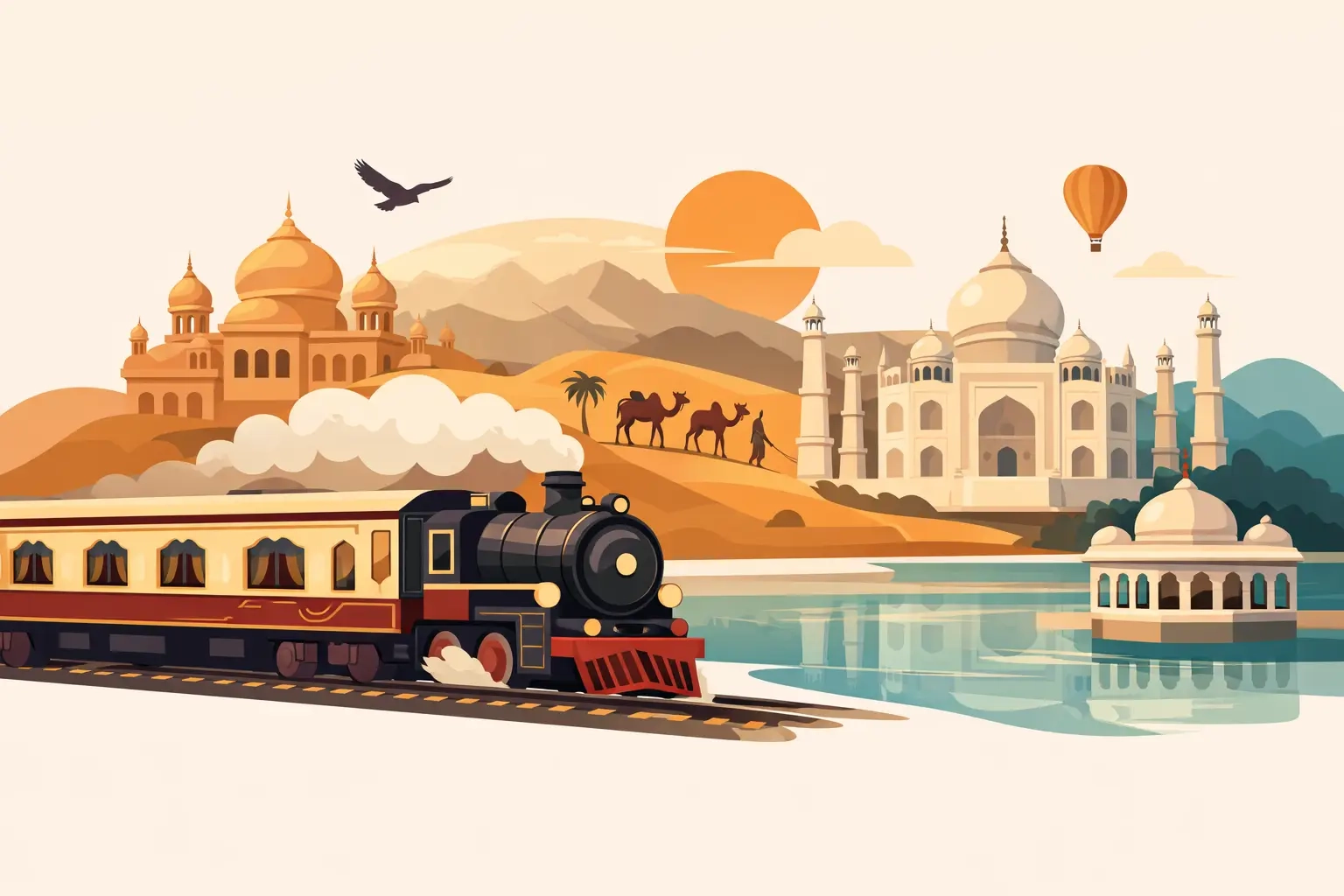
A Palace on Wheels journey is not simply a rail holiday. It is an elegantly paced way to see Rajasthan and the Golden Triangle's great landmarks while returning each evening to a private cabin, attentive service and a plan someone else is managing. For Australian travellers who want India's colour and history without coordinating every hotel, transfer and touring detail, it is a compelling way to do it.
The train balances two things that are otherwise hard to combine in India: a sense of occasion, and an efficient way to cover ground. Days are given to forts, palaces, bazaars, wildlife and food; nights are spent travelling towards the next destination. Instead of repeatedly packing, checking out and facing long road journeys, you settle into a rhythm that keeps the focus on the experience.
What makes it different
Palace on Wheels is among India's best-known luxury rail experiences, built around the romance of royal Rajasthan. The décor recalls the private carriages once associated with the princely states, with richly finished public areas, personal service and cabins named for former kingdoms.
It is deliberately theatrical, in the best sense. Arriving at a grand fort or dining in an atmospheric setting feels more memorable as part of a journey designed as a whole. But the train is not a museum piece — it is a practical base for a week of varied touring that lets you cover real distance at a consistent standard of comfort.
For many travellers the appeal lies in the contrast. Rajasthan is vast, energetic and deeply layered, from desert citadels to crowded urban markets. The train gives you a calm, well-managed place to return to at the end of each day, while local guides supply the context beyond the platform.
The route through Rajasthan
A typical Palace on Wheels itinerary runs from Delhi through Rajasthan and on towards Agra. Exact routing, sightseeing and inclusions vary by departure, so it is worth reviewing the current itinerary before committing to dates. Our full itinerary and cabin pricing sets out the detail.
Jaipur, the Pink City
Jaipur is often the highlight for first-time visitors. Broad avenues, ornate façades and lively markets introduce Rajasthan's royal heritage, while Amber Fort supplies the grand scale most travellers are hoping for. A well-planned day takes in the fort, the City Palace precinct, and time to look at textiles, jewellery or blue pottery.
The value of a good guide is especially clear here. Jaipur has many layers, and an experienced local can move past the headline sights to the courtly traditions, the craftsmanship and the living character of the old city.
Ranthambore and Chittorgarh
Ranthambore brings a different mood — open grassland, ancient ruins and the possibility of Bengal tigers. Sightings can never be guaranteed, and that is worth understanding before you travel. Even without a tiger, the reserve's landscape and birdlife make a rewarding change from the cities.
Chittorgarh follows with one of India's most dramatic hill forts. Its walls, towers and temples carry the story of Rajput resistance and dynastic ambition. It is not a place to rush: the scale of the site, plus the heat that builds through the day, makes pacing and a good guide genuinely valuable.
Udaipur, Jaisalmer and Jodhpur
Udaipur is known for its lakes, palaces and softer atmosphere. The City Palace above Lake Pichola is the defining experience, though the smaller lanes and waterside settings reward unhurried wandering.
Further west, Jaisalmer rises from the Thar Desert in warm golden sandstone. Its fort is still a living part of the city, with homes, shops and temples inside the walls. Desert touring is often the most memorable part of the journey — expect cool evenings in winter and warm conditions the rest of the year.
Jodhpur, the Blue City, adds another chapter. Mehrangarh Fort sits high above a tangle of blue-painted houses, and its museum is one of Rajasthan's most polished introductions to royal life. Each of these cities has its own personality, which is exactly why a rail itinerary works: the scene changes without you having to manage the change.
Bharatpur and Agra
The final stretch usually takes in Bharatpur, known for its birdlife, and Agra and the Taj Mahal. Agra is busier and more intense than Rajasthan's smaller cities, but the Taj at the right hour remains one of travel's defining sights.
If your schedule allows, add time in Delhi or Agra either side of the rail journey — a palace hotel stay, a private city tour, or simply a quiet day to recover from the flights.
Life on board
Cabins are designed for overnight rail travel, not the dimensions of a resort suite. They are refined and thoughtfully appointed, but the space is compact compared with a hotel room. Travellers who enjoy trains tend to see this as part of the charm; anyone who needs substantial private space is usually better served pairing a shorter rail leg with longer stays in heritage hotels.
The public spaces matter as much as the cabins. Meals are taken on board, and the dining cars give you a natural way to compare the day's discoveries with other guests — enjoyable for couples and small groups, with your own cabin to retreat to afterwards.
Dress is generally smart casual, with something more polished useful for the special dinners. Comfortable walking shoes, a light layer for cool mornings and modest clothing for religious sites will cover you.
When to travel
Luxury rail departures run during the cooler season, when Rajasthan is comfortable for extended sightseeing. October to March is the window most Australian travellers choose. December and January bring cool mornings and genuinely cold nights; October, November, February and March are warmer through the day.
Your ideal departure depends on what you care about. Photographers often favour the clearer winter light. Anyone who dislikes the cold should look at the shoulder months. Festival dates add extraordinary colour but push up demand for flights, hotels and cabins alike, so plan early — particularly if you want a specific cabin category.
Planning it from Australia
Treat the rail journey as the centrepiece of a broader holiday rather than an isolated booking. International flights, arrival timing, accommodation before and after, visas, travel insurance and transfers all have to line up. A missed connection at the start of a fixed rail departure is an expensive problem, so a buffer night in Delhi is almost always worth it.
The strongest itineraries also consider what follows. You might continue to Varanasi, head south to Kerala for backwaters and wellness, or add a wildlife lodge for more time in nature.
Choose a departure that gives you room to arrive well, travel with curiosity and linger a little afterwards. India's most memorable moments tend to happen between the scheduled highlights — a cup of chai after sunrise, a courtyard musician at dusk, or the first sight of a fort from the train window.