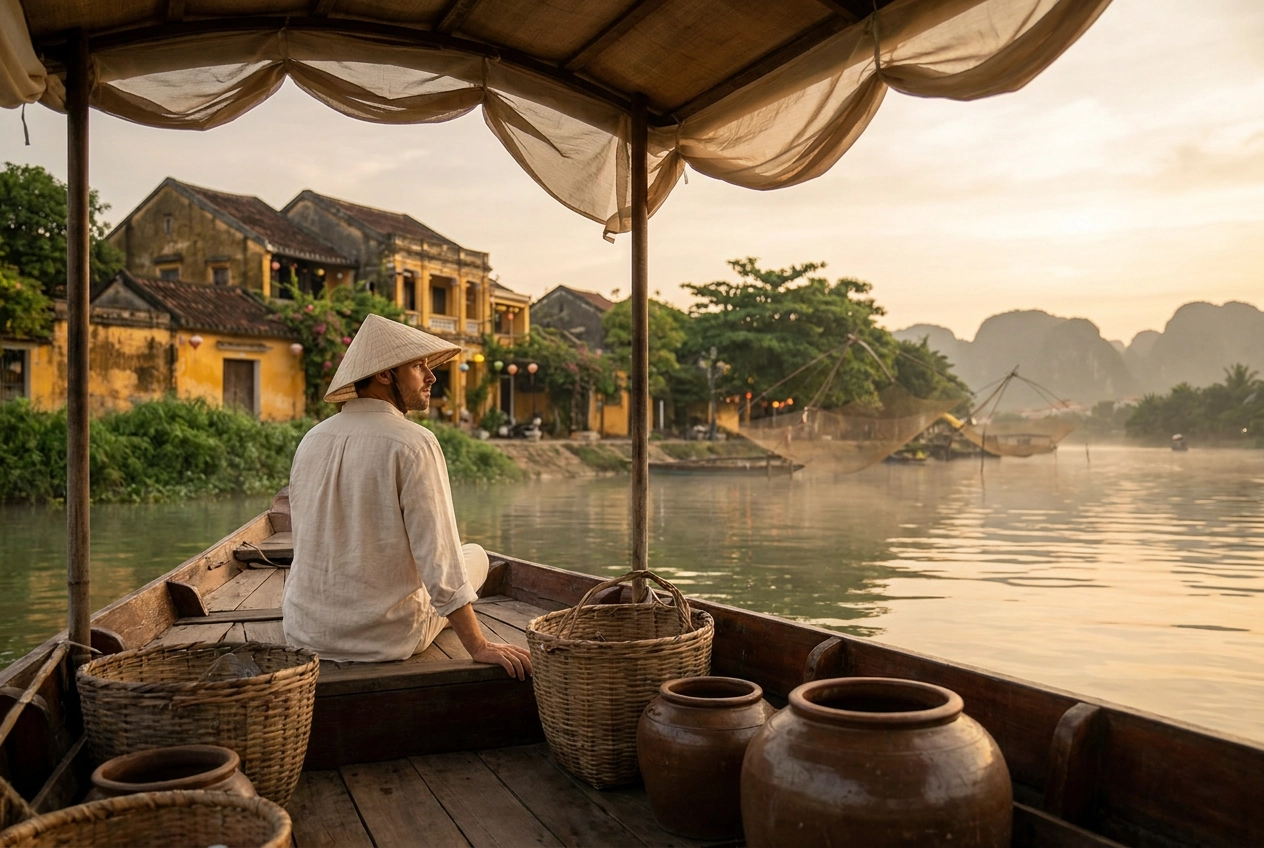
Few destinations in Southeast Asia stir the imagination quite like Vietnam. From the misty limestone karsts of Ha Long Bay to the lantern-lit streets of Hoi An, this country offers a depth of experience that rewards those who plan thoughtfully. Yet with so much to see and so many ways to see it, choosing the right Vietnam holiday package can feel overwhelming, especially when generic, one-size-fits-all itineraries rarely do justice to a country this diverse.
That is where specialist knowledge makes all the difference. A well-crafted package goes beyond simply booking flights and hotels; it considers the rhythm of your journey, the seasons, the regional contrasts, and the experiences that genuinely connect you to local culture. Whether you are drawn to street food tours in Hanoi, motorbike adventures through the Central Highlands, or relaxed beach days on Phu Quoc, the right package shapes each of those moments into something cohesive.
In this guide, you will find a carefully curated breakdown of the essential elements that define a truly tailor-made Vietnam trip, helping you ask the right questions and make informed decisions before you book.
How to Think About Vietnam as a Destination
Think of Vietnam less as a single country on an itinerary and more as three distinct destinations that happen to share a border. Stretching over 1,650 kilometres from north to south, it encompasses wildly different landscapes, climates, cuisines and cultural characters. Understanding this structure is not just useful background; it is genuinely the starting point for any well-considered Vietnam holiday package.
Three Regions, Three Personalities
Northern Vietnam, anchored by Hanoi and reaching out to Ha Long Bay, Ninh Binh, Sapa and Ha Giang, is where dramatic karst topography meets highland minority cultures and a deeply felt sense of historical weight. The pace here is contemplative, the scenery often mist-softened, and the cultural layers are some of the richest you will encounter anywhere in Southeast Asia.
Central Vietnam occupies a different register entirely. Hue, with its Imperial Citadel and royal tombs, carries the grandeur of a former dynastic capital. Hoi An offers beautifully preserved merchant-era architecture alongside one of the region's most admired culinary scenes. Da Nang connects the two with a modern, well-serviced coastal city that works well as a logistical hub. The central region is where heritage, architecture and food converge in ways that reward slow, considered exploration.
Southern Vietnam brings energy, warmth and an altogether different sensory experience. Ho Chi Minh City moves at a relentless, fascinating pace. The Mekong Delta opens into a world of river commerce, floating markets and lush waterway life. And Phu Quoc, now drawing significant international attention, offers the kind of tropical island setting that is increasingly outperforming comparable destinations elsewhere in the region in traveller search interest.
Why This Structure Matters for Planning
The north-central-south distinction is more than geography. Each region has its own seasonal patterns, meaning a single travel window does not deliver ideal conditions across all three simultaneously. Moving between all three regions also requires deliberate routing, whether that involves domestic flights, the scenic Reunification Express train, or a considered combination of both. Getting this sequencing right makes an enormous difference to how a trip feels on the ground.
This is precisely why a conversation with a specialist early in the planning process pays dividends. An experienced adviser will ask honest questions about how much time you have, what you most want to feel and see, and where compromises might serve you better than ambition. Trying to do all three regions in under ten days, for instance, often produces a trip that covers ground without truly engaging with any of it. When it comes to planning a Vietnam trip from Australia, the logistics of pacing and regional sequencing deserve careful thought well before departure.
A Destination That Meets Multiple Motivations
What makes Vietnam genuinely compelling for a wide range of travellers is that its diversity accommodates very different motivations, often within a single itinerary. Cultural immersion, culinary exploration, coastal relaxation, heritage architecture, photography, wildlife and nature: Vietnam delivers across all of these without requiring travellers to choose just one lens. A well-designed itinerary can weave several of these threads together coherently, which is one reason the destination has developed such strong word-of-mouth among Australian travellers.
Australia now ranks among Vietnam's top ten international source markets, and that position reflects a structural shift in how Australians are thinking about outbound travel. Asia, and Vietnam specifically, is drawing serious, considered attention from travellers who might previously have defaulted to Europe or North America. Whatever guidance you draw on for Vietnam travel tips, the foundational step is always the same: understand the shape of the country before you begin designing the route through it.
Sample Vietnam Itinerary Flows for Australian Travellers
Vietnam rewards travellers who approach it with a clear geographic logic. The country stretches over 1,650 kilometres from north to south, and the most effective itineraries treat that length as an asset rather than an obstacle. Rather than flying into one city and retracing your steps, the vast majority of well-designed Vietnam holiday packages use an open-jaw routing: arrive into Hanoi in the north, travel progressively southward through the central coast, and depart from Ho Chi Minh City. The reverse works equally well. This single structural decision eliminates unnecessary backtracking, keeps pace comfortable, and ensures each destination feels distinct rather than rushed.
The 10-Day Flow: Vietnam's Highlights, Properly Sequenced
For Australian travellers balancing meaningful travel with finite leave, ten days is a genuinely satisfying duration when the routing is well-constructed. A well-coordinated 10-day Vietnam itinerary typically opens with two nights in Hanoi, giving you time to absorb the Old Quarter's layered energy, visit Hoan Kiem Lake, and dine properly rather than just arriving and departing. From Hanoi, two nights aboard a small-ship cruise on Ha Long Bay or the less-trafficked Lan Ha Bay provides one of the country's most distinctive experiences: limestone karsts rising from calm emerald water, kayaking through sea caves, and evenings with almost no light pollution. A short domestic flight then takes you south to Hue for a night in Vietnam's former imperial capital, before two nights in Hoi An allow you to settle into the lantern-lit ancient town at a genuinely relaxed pace. One transfer day south leads to two nights in Ho Chi Minh City, ideally including a half-day excursion to the Mekong Delta. Each connection pre-arranged means no decision fatigue, no missed transfers, no wasted hours.
The 14-Day Flow: Space to Go Deeper
Two additional nights transform a highlights itinerary into something more considered. At 14 days, you can incorporate Ninh Binh before Ha Long Bay, a landscape of dramatic limestone peaks and rice paddies often described as "Ha Long Bay on land," and a far more peaceful introduction to northern Vietnam's countryside. The extra time in Hue becomes meaningful: rather than a single evening, you have a full day to arrange a private boat journey along the Perfume River to the Thien Mu Pagoda, and to explore the Imperial Citadel with proper context rather than a quick walkthrough. In Hoi An, an additional night opens the door to a half-day Vietnamese cooking class at a working farm outside town, or a bicycle ride through the Thu Bon River villages that surround the ancient town. At the southern end, a day on the quieter backwater channels of the Mekong Delta rather than the main tourist circuit gives you an entirely different quality of experience. These additions are not extras; they are the moments most travellers remember.
The 21-Day Flow: A Complete Country at an Unhurried Pace
For retirees, couples with flexible schedules, or those returning to Vietnam with a deeper curiosity, three weeks allows the country to reveal itself properly. The northern highlands become accessible: a few nights in Sapa for terraced rice field walks and Hmong village visits, or a loop through Mai Chau or the more remote Ha Giang region for highland minority culture that feels genuinely immersive rather than staged. The central coast can be experienced at a slower rhythm, with more time in Hue and a day trip to the ancient trading port of Hoi An's surrounding countryside. At the southern end, the itinerary can close with several nights on Phu Quoc island, giving you a natural decompression before flying home. The balance of cultural intensity and genuine rest is something that only time allows. Three weeks allows this longer format to unfold without any sense of being rushed.
Why Routing Decisions Matter More Than They Appear
The choice between a night train, a domestic flight, and an overnight cruise seems like a logistical detail, but it shapes the entire tone of a trip. A night train through the central highlands is atmospheric and unhurried; a domestic flight is efficient but removes the journey from the experience. An overnight cruise on Ha Long Bay is not simply transport from A to B; it is one of the most memorable nights of the itinerary. Sequenced correctly, these transitions become part of the story rather than gaps between destinations. When each connection is pre-arranged and coordinated, the cumulative effect is a trip that flows without friction, and that is precisely where specialist itinerary design earns its value over a self-assembled trip constructed from individual bookings.
Best Time to Visit Vietnam from Australia
One of the most common misconceptions about planning a Vietnam holiday is that there is a single, universally ideal season. In truth, Vietnam's climate is regional, not national. The north, central and south each follow distinct seasonal rhythms, and what constitutes ideal conditions in Hanoi may coincide with the wettest fortnight in Hoi An. Understanding this distinction is not just useful; it is the foundation of good Vietnam itinerary planning.
February to April: The Strongest Window for a Full North-to-South Journey
For Australian travellers planning a comprehensive north-to-south itinerary, February through April represents the most consistently comfortable window across all three regions. Hanoi and Ha Long Bay are cool, dry and settled, with pleasant temperatures that feel refreshing rather than cold. Central Vietnam is warm and clear before the summer heat intensifies. The south, including Ho Chi Minh City, the Mekong Delta and Phu Quoc, is firmly in its dry season. This three-month window also benefits from a particularly appealing cultural atmosphere. In the weeks following Tet (Lunar New Year, which in 2026 falls on 29 January), the country carries a lingering festive energy, with flower markets still brightening city streets and temples busy with locals, but without the peak domestic congestion of the festival period itself. Vietnam Tourism's own guidance identifies March to May as one of the strongest countrywide weather windows, and experienced travellers consistently confirm that March and April offer the fewest weather trade-offs for mixed-region holidays. For those with flexibility in their travel dates, this is the window we return to most often when designing full-country itineraries.
October to December: Excellent for the South, Worth Managing in the Centre
The October to December period is outstanding for southern Vietnam. Phu Quoc enters its prime season from November onwards, and Ho Chi Minh City is dry, bright and comfortable. Hanoi and the north are also in excellent condition through this period. The important caveat sits with the central coast. November is statistically the wettest month in Hoi An and Da Nang, and heavy rain or flooding can interrupt plans if the itinerary is not designed with this in mind. The solution is sequencing, not avoidance. By visiting the south and north first and allowing the central coast time to dry out, a well-structured itinerary can still include Hoi An's extraordinary old town and the lanes of Hue without undue weather risk. This is precisely where specialist guidance adds genuine value. Understanding these regional climate patterns is central to sequencing a Vietnam itinerary that sidesteps the worst of the weather in each area.
Australian School Holidays: Aligning Travel Windows for Families
Australian school holiday periods align reasonably well with good Vietnam conditions, though each window has its own character. January school holidays suit southern Vietnam particularly well; Phu Quoc and the Mekong are in peak dry season, while Hanoi is cool and manageable with the right packing. The April school holidays are among the best overall for Vietnam, supporting a full north-to-south itinerary with comfortable conditions throughout. July and August work well for the central coast, especially Da Nang's beaches, but bring high humidity to the south and elevated storm risk to the north. Families travelling in July and August should weight their itinerary toward central Vietnam and build in flexibility for weather. For families in particular, a specialist can help you weigh the seasonal trade-offs against your specific travel dates.
Weaving Vietnam's Festival Calendar into Your Itinerary
Vietnam's cultural calendar deserves a place in itinerary planning from the very beginning, not as an afterthought. Tet transforms both Hanoi and Hoi An with extraordinary colour; flower markets line the streets, lanterns illuminate the old towns, and ceremonies mark the lunar new year with a warmth that is genuinely moving to witness. Timing a departure for the days immediately after the peak festival period allows travellers to absorb the atmosphere while avoiding the busiest domestic travel days. Separately, Hoi An's Full Moon Lantern Festival takes place monthly, when the old town's electric lights are switched off and paper lanterns are released across the river. The experience is atmospheric year-round, but particularly beautiful between October and February, when the cooler evenings and lower humidity make the riverside setting feel effortless. Weaving these moments into the structure of a holiday, rather than hoping to stumble across them, is what transforms a good itinerary into an extraordinary one.
What a Well-Designed Vietnam Holiday Package Actually Includes
There is a meaningful difference between booking a Vietnam holiday and having one designed for you. When you piece together flights, hotels and tours through separate platforms, you end up with a collection of components that may technically cover the same geography but rarely add up to a coherent journey. A well-designed Vietnam holiday package is something quite different: a single, coordinated experience built around your specific interests, travel rhythm and the experiences that genuinely matter to you, rather than whatever happens to be available at the time of booking.
Accommodation chosen for how it feels, not just how it rates
The properties in a specialist-designed itinerary are selected because they belong in the journey, not because they cleared a star-rating filter. That might mean a heritage boutique hotel in Hanoi's Old Quarter, positioned close enough to Hoan Kiem Lake that you can walk to the water before breakfast. In Hoi An, it could be a private-pool villa set among rice paddies on the edge of town, offering a sense of stillness that a beachfront resort simply cannot replicate. On Phu Quoc, it means a well-positioned property that gives you easy access to the island's quieter northern coast rather than the busier resort strip. Each property is vetted for quality, character and location, and selected with the broader pace of your itinerary in mind.
Private guiding as genuine access, not just accompaniment
Joining a group tour of Hue's Imperial Citadel or the Cu Chi Tunnels means moving at the group's pace, hearing answers to questions you didn't ask, and spending the most evocative moments alongside dozens of other visitors. Private guiding changes that entirely. Your guide moves with you, responds to your curiosity, and brings the kind of contextual knowledge that transforms a site visit into something you'll still be thinking about weeks later. It's also what makes genuinely personal experiences possible: a private cooking lesson with a family in Hoi An's backstreets, a dawn visit to a Hue pagoda before the tour coaches arrive, or a quiet conversation with a local artisan that no group itinerary could accommodate.
Transfers that connect, rather than complicate
Vietnam's geography demands careful logistical thinking. Domestic flights, private road transfers and overnight cruises on Ha Long Bay all need to work together seamlessly, with realistic timing and pre-arranged ground coordination at every point. In a specialist-designed package, those connections are pre-arranged and monitored throughout your journey, so there is no moment of uncertainty between cities, no scramble to find your transfer, and no reliance on a booking confirmation from a platform that closes at 5pm.
The knowledge that comes from genuine experience
This is perhaps the least visible but most valuable element of what a specialist provides. Understanding luggage allowances on Vietnamese domestic carriers before you pack. Knowing how to navigate Da Nang's domestic terminal efficiently. Being able to distinguish the Ha Long Bay cruise operators who offer a genuinely considered experience from the vessels that pack in passenger numbers at the expense of everything else. These are the details that experienced travellers often discover too late, and that a specialist who works regularly with Vietnam handles quietly, before you even think to ask.
Cultural Experiences Worth Building Into Your Itinerary
Vietnam's cultural richness is not something you absorb by moving briskly from one landmark to the next. It reveals itself in specific, well-timed moments: a conversation with a village elder, the smell of a morning market before the crowds arrive, the stillness of a royal tomb at dusk. Travellers who return from Vietnam consistently say the same thing: it was not the famous sights that stayed with them, but the in-between moments that a thoughtful itinerary made possible. That kind of access does not happen by accident.
The Northern Highlands: Sapa and Mai Chau
In the north, the highland minority villages around Sapa and Mai Chau offer something that is genuinely difficult to replicate elsewhere in Southeast Asia. The H'mong, Dao and Thai ethnic groups who have farmed these terraced valleys for generations maintain a way of life that is, in the right hands, quietly accessible to visitors. The critical word is "right hands." A guide with genuine community relationships does not take you to a village as a spectator; they bring you in as a respectful guest. You might join a family during the rice harvest, learn to use traditional farming tools, or simply sit with a host family over tea. Approximately 70% of Vietnam's population still lives in rural areas, which gives these encounters genuine cultural weight rather than the feel of a staged performance. Mai Chau, in particular, is drawing increasing attention in 2026 as an emerging alternative to the busier Sapa valley, offering comparable depth with a more unhurried atmosphere.
Hue: Vietnam's Imperial Heartland
Hue rewards the kind of attention most visitors do not give it. As Vietnam's last imperial capital, it holds the Imperial City within its walls and is surrounded by the royal tombs of the Nguyen dynasty, each one a distinct architectural statement reflecting a different emperor's philosophy and legacy. The challenge is that these sites can read as atmospheric ruins without context. A private guide who understands the dynastic chronology, the symbolic language of the architecture, and the city's complex position in Vietnamese history transforms the entire experience. What might otherwise feel like a pleasant walk through overgrown stonework becomes a genuinely absorbing encounter with a civilisation that shaped modern Vietnam. Hue is also being actively promoted by Vietnamese tourism authorities as a culinary destination in its own right, with dedicated food programming running throughout 2026, so building a full day or two here is time very well spent.
Hoi An: The Art of Slow Travel
Hoi An is one of those rare places that actively resists being rushed. A bicycle ride through the rice paddies at dawn, a cooking class that begins at the morning market before moving to a local family kitchen, a lantern-making session with an artisan family in the Old Town: these are the experiences that define a well-designed stay here. The Full Moon Lantern Festival, held each month on the fourteenth night of the lunar calendar, transforms the Ancient Town's riverside into something quietly extraordinary, with paper lanterns floating on the water and the Old Town lit by candlelight rather than electricity. Timing a visit around this event, and knowing where to position yourself, requires local knowledge and advance arrangement. It is exactly the kind of detail that separates a curated itinerary from a self-assembled one.
Vietnam's Culinary Landscape
Food deserves deliberate space in any Vietnam itinerary, not as an afterthought but as a primary experience. A bowl of pho in Hanoi's Old Quarter, eaten at a street-side table in the early morning; a banh mi from a Hoi An bakery with decades of history; fresh seafood on the Phu Quoc coast; a guided street food walk through Ho Chi Minh City's District 1 where a knowledgeable guide steers you past the tourist traps and toward the genuinely local. Cultural itineraries that weave food into the broader journey consistently receive the strongest traveller responses, and it is easy to understand why: Vietnamese cuisine is deeply regional, and understanding what you are eating and why it differs from the dish you had two cities ago is part of understanding Vietnam itself. This is an area where specialist itinerary design adds real value.
Combining Vietnam with Other Destinations
Vietnam rarely needs to stand alone on an itinerary. For Australian travellers with two to four weeks available, the country works particularly well as the centrepiece of a broader regional journey, either within Southeast Asia or extending into South Asia entirely.
The Indochina Arc: Vietnam, Cambodia and Laos
The most natural pairing is the classic Indochina combination. Adding Angkor Wat in Siem Reap to a Vietnam itinerary creates an arc that shares a deep regional logic, the Mekong River threading through much of it, the influences of ancient Khmer, Cham and Lao civilisations visible at every turn. Luang Prabang in Laos offers something different again: a UNESCO-listed riverside town where saffron-robed monks collect alms at dawn and French colonial architecture lines quiet streets beside the Mekong. These destinations feel like natural companions to Hoi An or Hue, not detours. The key, as experienced travellers consistently note, is pacing. Attempting Cambodia and Laos on fewer than ten to twelve days each risks skimming the surface; multi-country Southeast Asia routes reward travellers who allow each country space to breathe rather than rushing between highlights.
Vietnam Paired with India or Sri Lanka
For travellers drawn to Asia's broader contrasts, Vietnam can anchor one end of a more ambitious journey into South Asia. A fortnight exploring Hanoi, Halong Bay and Hoi An followed by a curated India itinerary, perhaps Rajasthan's palace hotels, the backwaters of Kerala or the temple cities of Tamil Nadu, creates a paired journey that moves between two very different but equally compelling cultural worlds. The contrast is part of the appeal: Vietnam's Mekong delta and its French-influenced street life feel genuinely different from the Rajput forts and desert landscapes of northern India, yet both reward the same quality of attentive, unhurried travel. Sri Lanka works equally well in this pairing, its compact geography making it an efficient and deeply rewarding companion to a Vietnam itinerary within a single travel window.
Why a Single Specialist Changes Everything
The practical case for coordinating a multi-destination journey through one specialist is considerable. Visa applications, inter-country flights, accommodation continuity and ground-handling across each country all need to work together, and when they are assembled through separate platforms and operators, the gaps between them become the traveller's problem to solve. A single coordinating relationship removes that burden entirely.
Routing quality is where planning expertise earns its place most clearly. The difference between a journey that flows and one that wastes days on unnecessary backtracking or poorly timed connections is almost entirely a function of how carefully the sequence and pacing have been designed from the outset. As experienced planners of multi-country Asia travel consistently note, factors including flight routes, visa requirements, regional sequencing and seasonal timing all need to align, and this is precisely where specialist knowledge pays dividends.
Taj Voyages designs and coordinates itineraries across Vietnam, India, Sri Lanka, Nepal and Bhutan, which makes it particularly well placed to build these paired or multi-country journeys for Australian travellers who want more than a single-country experience within their available time. Rather than assembling the pieces yourself, you work with a specialist who already understands how these destinations connect, and who can design a journey that does justice to all of them.
Visa and Logistics for Australian Travellers
For Australian travellers, the practical side of a Vietnam holiday is considerably more straightforward than many expect, provided you understand the key requirements and plan accordingly.
The e-visa system has transformed access for Australians. Australian passport holders are required to hold a visa before entering Vietnam, and the e-visa is the standard, most accessible route. The current arrangement permits stays of up to 90 days on either a single or multiple-entry basis, a substantial expansion from the previous 30-day limit that once made longer itineraries logistically awkward. This extended window now makes it entirely feasible to move unhurriedly through Hanoi, the northern highlands, Hue, Hoi An, the Central Coast and Ho Chi Minh City within a single trip, without the pressure of a ticking clock.
The application process is straightforward when done correctly. You apply through Vietnam's official government portal, and the requirements include a valid Australian passport with at least six months' validity from your date of arrival in Vietnam and a minimum of two blank pages for entry stamps, a passport-style photograph, your travel itinerary, accommodation details and a small government processing fee. Your name must be entered exactly as it appears on your passport to avoid delays. Approvals are typically issued within three to five working days, though applying several weeks ahead of departure is always the sensible approach. Errors in applications are a common cause of processing delays, so careful preparation matters.
Flight connectivity from Australia continues to improve. Direct and well-routed services from Sydney, Melbourne, Brisbane and Perth to both Hanoi and Ho Chi Minh City have increased in frequency and convenience, reducing transit times and making Vietnam feel genuinely close rather than remote. For most Australians, the flying time and routing options are now comparable to other well-established Asian destinations.
Multi-country itineraries require careful visa sequencing. If your journey includes Cambodia, Laos or other Southeast Asian countries alongside Vietnam, each destination carries its own distinct entry requirements. The logistics of managing multiple visa applications, documentation and sequencing across countries can become complex quickly. When you travel with a specialist, this coordination is handled as part of your itinerary design, with all documentation confirmed before you depart.
Travel insurance deserves careful attention. Healthcare standards vary considerably between Vietnam's major cities and more remote regions, and comprehensive cover including medical evacuation is an important part of your pre-departure preparation. Smartraveller, the Australian Government's official travel advisory resource, provides current health and insurance guidance for Vietnam and is worth consulting directly. A knowledgeable specialist will raise this with you early in the planning process, helping you understand what appropriate cover looks like for your specific itinerary rather than leaving it as an afterthought.
Why Use a Specialist Rather Than Self-Booking?
Vietnam is genuinely navigable as an independent trip, and many travellers do exactly that. The real question for a discerning Australian traveller, however, is not whether self-booking is possible. It is whether the hours spent researching domestic carriers, comparing cruise operators on Ha Long Bay, cross-referencing hotel reviews across five cities, and stitching together transfers is the best use of the finite pre-holiday energy you have. For most people planning two weeks of annual leave from the other side of the world, the answer is fairly clear.
When Independent Travel Works Well, and When It Doesn't
The rise of independent travel in Vietnam is well documented, with a growing majority of travellers now preferring to book independently, and a large share of Korean visitors to Phu Quoc now arriving without a package. That statistic is real, but its context matters enormously. The independent travel surge is most visible on single-destination beach stays, where the decision set is simple: one flight, one resort area, a handful of day trips. It does not translate neatly onto a sequenced 14-day arc from Hanoi through Ha Long Bay, Hue, Hoi An and Ho Chi Minh City, involving multiple domestic flights, private transfers and vetted accommodation at every stop. Each of those bookings carries its own cancellation risk, its own quality variable, and its own timing dependency. Assemble enough of them and you are not planning a holiday; you are managing a logistics project.
The Moments That Self-Booking Cannot Anticipate
A specialist's value becomes most concrete in the scenarios that no booking platform can solve. A cancelled domestic flight into Da Nang requires immediate rerouting, not a chatbot. A Ha Long Bay cruise operator that looks impeccable in its online photography can deliver a very different reality once you are aboard. A Hue temple scheduled as the centrepiece of your afternoon may be closed for a private ceremony, with no notice posted online. A guide who knows the city, and a specialist with established relationships on the ground, can arrange a thoughtful alternative on the morning itself. These are not edge cases. They are the ordinary texture of travel in a country where conditions can shift quickly, and where accumulated local knowledge is the only reliable buffer.
Cultural Depth as a Genuine Differentiator
There is also what a specialist brings to the quality of your experience, beyond logistics. Knowing where to go is one thing. Understanding what you are looking at, why it carries the weight it does, and how to engage with it respectfully requires a depth of knowledge that takes years to accumulate. A well-briefed local guide transforms a visit to the Imperial Citadel in Hue from a walk through ruins into a conversation with Vietnamese history. That interpretive layer does not appear in a self-assembled itinerary; it is built into one that has been designed with genuine care.
Vietnam ranked third globally for package tour searches in the first half of 2026, with interest up 22% year on year. More travellers researching means more noise, more operators of variable quality and more decisions to navigate. For Australian travellers who value their time, want comfort and authenticity in equal measure, and want to arrive in Hanoi knowing that every element of the next two weeks has been considered by someone who genuinely knows Vietnam, a specialist-designed holiday package is not an optional extra. It is precisely the point.
Planning Your Vietnam Holiday with Taj Voyages
Vietnam is at a compelling point in its evolution as a travel destination. International arrivals have surged well beyond pre-pandemic levels, direct flight connections from Australian cities are improving steadily, and the country's hospitality and guiding infrastructure is operating with real confidence and maturity. For Australian travellers, the conditions right now are genuinely favourable.
The richness of Vietnam lies in how varied it is. The lantern-lit lanes of Hoi An offer something entirely different from the karst seascapes of Ha Long Bay, the imperial layering of Hue or the kinetic energy of Ho Chi Minh City. A well-designed itinerary draws these threads together in a way that reflects your pace, your interests and the experiences that matter most to you, rather than defaulting to a fixed sequence that treats every traveller the same. You can explore our Vietnam journeys and itinerary styles to get a sense of how varied a Vietnam journey can be, and what a genuinely personalised approach can offer beyond the standard formats.
Taj Voyages designs fully coordinated Vietnam holidays for Australian travellers, handling itinerary design, boutique accommodation, private guiding, domestic transfers, visa guidance and complete end-to-end management. Nothing is left for you to chase, follow up or improvise.
The best place to begin is a conversation. Tell us where your curiosity is leading you, how much time you have, and what kind of experience feels most meaningful, and we will shape it into an itinerary that fits you precisely.
Frequently Asked Questions
Do Australian travellers need a visa for Vietnam?
Yes. Australian passport holders need a visa before arrival, and the e-visa is the standard route. It currently allows stays of up to 90 days on a single or multiple-entry basis. Your passport should have at least six months' validity from your arrival date and two blank pages, and approvals are typically issued within a few working days, though applying several weeks ahead is wise.
When is the best time to visit Vietnam from Australia?
There is no single ideal season, because Vietnam's climate is regional rather than national. For a full north-to-south journey, February to April offers the most consistently comfortable conditions across all three regions. October to December is excellent for the south and north, with the central coast best managed through careful sequencing.
How many days do you need in Vietnam?
Ten days is enough for a satisfying highlights journey from Hanoi to Ho Chi Minh City. Fourteen days allows a deeper, more relaxed pace with time in places such as Ninh Binh and the Mekong Delta. Three weeks lets the whole country unfold unhurried, including the northern highlands and a beach finish on Phu Quoc.
Can you combine Vietnam with other destinations?
Yes. Vietnam pairs naturally with Cambodia and Laos on the classic Indochina arc, and works equally well alongside India or Sri Lanka for travellers wanting to contrast Southeast and South Asia within one trip. Coordinating a multi-country journey through a single specialist keeps visas, flights and connections working together.
Conclusion
Vietnam is not a destination you simply visit; it is one you experience, layer by layer, on your own terms. The key takeaways from this guide are clear: specialist knowledge transforms a good trip into an unforgettable one, timing and regional contrasts matter enormously, and a tailor-made package ensures every moment feels intentional rather than rushed.
Generic itineraries rarely capture what makes Vietnam so extraordinary. A thoughtfully crafted journey does.
If you are ready to move beyond the brochure and explore Vietnam in a way that genuinely reflects your interests and travel style, now is the time to act. Speak with a specialist, share your vision, and let expert guidance shape your perfect itinerary. Your journey through one of Southeast Asia's most captivating countries deserves nothing less than a plan built entirely around you.