
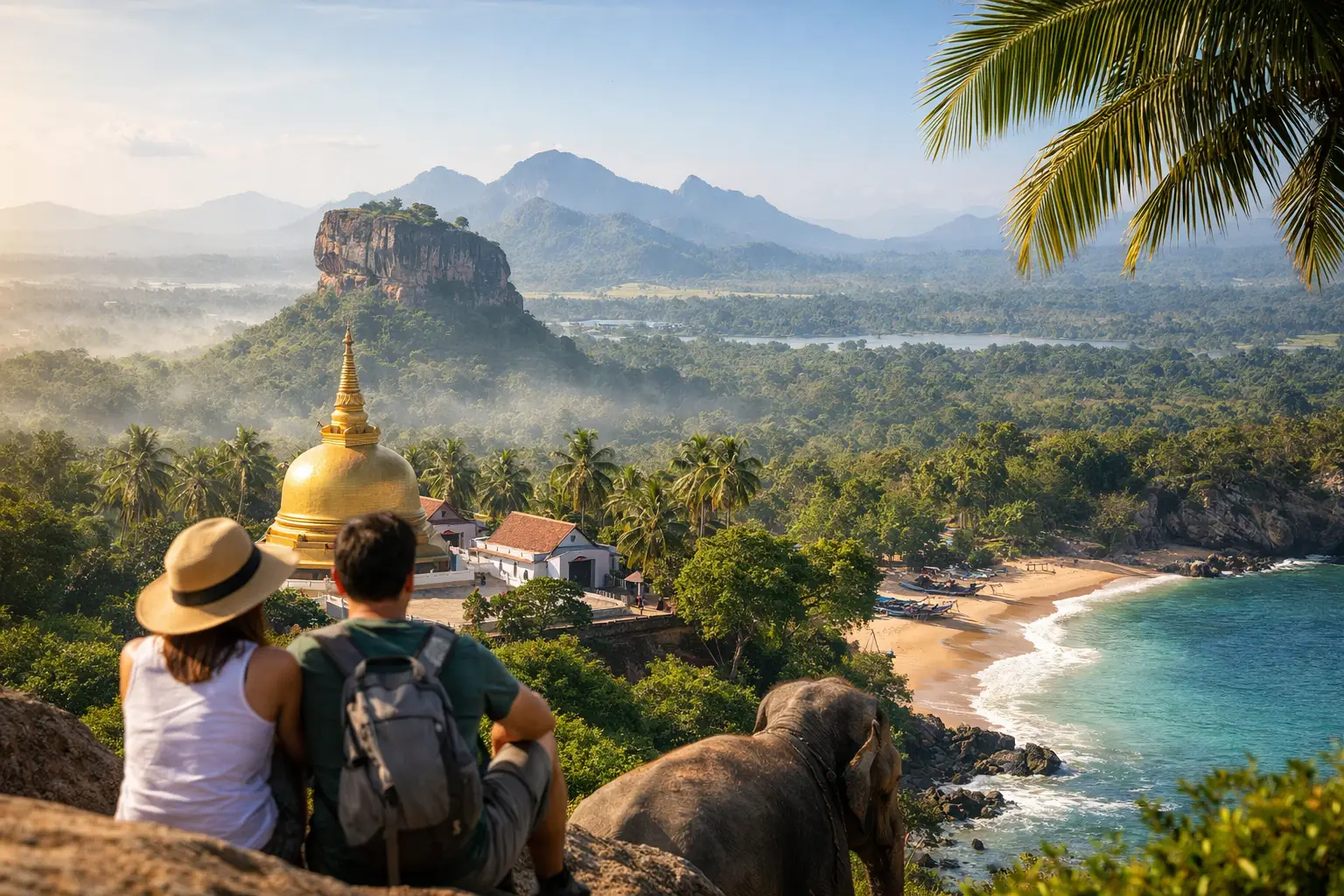
A morning train winding through tea-covered hills, a quiet dawn safari in Yala, and sunset on the south coast can all belong in one Sri Lankan journey. The best time to visit Sri Lanka depends on which of these moments matters most to you, because the island’s weather patterns vary markedly between coasts, highlands and national parks.
Sri Lanka is wonderfully suited to a considered, multi-region itinerary. Its two monsoons do not affect the whole country at once, which means there is usually a rewarding part of the island to experience in every month. The key is to match your route to the season, allowing enough time for the country’s cultural sites, landscapes and unhurried coastal stays rather than trying to see every region under the same skies.
Best time to visit Sri Lanka by region
For many first-time visitors, December to March is the most straightforward period for a journey through Colombo, Galle, the south coast, Kandy and the Cultural Triangle. This is generally the drier season across the west and south of the island, with warm beach weather and comfortable conditions for visiting Sigiriya, Polonnaruwa and Dambulla. It is also an excellent time to combine heritage touring with a few restorative nights by the sea.
From around April to September, the east coast comes into its own. Trincomalee, Pasikuda and Arugam Bay are typically sunnier and calmer while the south-west monsoon brings more rainfall to the west and south. This makes the eastern shore a compelling choice for travellers who wish to travel during the Australian winter, particularly when paired with the Cultural Triangle and selected hill-country experiences.
October and November are transition months, often called inter-monsoon periods. Rain can be more widespread and less predictable, usually arriving in short, dramatic bursts rather than lasting all day. Green landscapes, fewer visitors at major sites and a more flexible itinerary can make this a very appealing time, but it is best approached with realistic expectations and a route designed around changing local conditions.
December to March: south coast, west coast and cultural touring
This is the classic season for Sri Lanka’s south-west. Days are often clear and warm in Galle, Bentota, Mirissa and along the palm-lined southern coastline. The sea is generally more inviting for a relaxed beach stay, while the roads and walking paths around the Cultural Triangle are easier to enjoy in dry weather.
It is also a strong period for whale watching from the south coast, traditionally most reliable from December into April. Sightings are never assured, and conditions can change, but a well-timed outing can add a memorable marine experience to a broader itinerary.
The trade-off is demand. Christmas, New Year and Australian school holiday periods are popular, while January and February are particularly sought after for the south coast. For a polished journey with preferred hotels, private guides and well-paced transport, early planning gives far greater choice.
April to September: east coast sunshine and summer travel
When rain reaches the south-west, Sri Lanka’s east coast offers a different rhythm. The waters around Pasikuda are known for their gentle, sheltered feel, while Trincomalee brings wide bays, marine life and a strong sense of place. Further south, Arugam Bay has a lively seasonal atmosphere, especially for travellers interested in surf culture alongside coastal scenery.
This period works beautifully for Australians travelling in the middle of the year. A route might begin among the ancient capitals and rock temples of the central north, continue by scenic rail into the tea country, then finish on the east coast. There may still be showers in the hills, where mist is part of the appeal, but they rarely diminish the pleasure of tea estates, gardens and train journeys when the itinerary is sensibly paced.
October and November: a greener, more flexible Sri Lanka
The inter-monsoon months reward travellers who value atmosphere as much as predictable beach weather. The countryside is lush, temperatures remain warm and major cultural landmarks can feel less hurried. Rainfall is possible across much of the island, so this is not the moment to build a programme around consecutive beach days or tightly timed outdoor activities.
Instead, a thoughtful itinerary can balance indoor and outdoor experiences: a Colombo gallery or cooking experience, the sacred cave temples of Dambulla, a leisurely tea tasting in the highlands and restorative stays in characterful hotels. Sri Lanka remains deeply engaging when rain passes through the day.
When to travel for wildlife
Wildlife has its own calendar, and the best time to visit Sri Lanka for safari is not always the same as the best time for the beach. Dry conditions tend to draw animals towards water sources, but individual park access and animal movements are shaped by local rainfall and conservation management.
Yala National Park is often at its most popular from February to June, when drier conditions can support excellent leopard viewing. It is a compelling experience, though popular blocks can become busy. For travellers who prefer a more varied safari programme, combining Yala with quieter landscapes such as Gal Oya, Wilpattu or Udawalawe can bring different habitats, birdlife and elephant encounters.
Elephant gatherings around Minneriya and the neighbouring national parks are often associated with the dry season from roughly July to September. Herds may congregate near the reservoirs, creating an extraordinary spectacle, although the timing and scale naturally vary with annual weather patterns. A specialist-designed itinerary allows room to select the most suitable park closer to departure rather than treating wildlife as a fixed appointment.
Birdwatching is rewarding across many months, particularly from November to April when migratory species join resident birdlife. The wetlands, rainforests and dry-zone parks offer very different environments, making Sri Lanka especially satisfying for travellers who enjoy nature beyond the headline safari sightings.
Hill country and rail journeys: weather is part of the character
Sri Lanka’s hill country is cooler than the coast throughout the year, with temperatures that can feel refreshing after time in the lowlands. Nuwara Eliya, Ella and Hatton are among the places where an extra layer for early mornings and evenings is worthwhile, regardless of season.
The celebrated train route through the central highlands is scenic year-round. Green tea gardens, forested slopes and village life do not disappear when clouds gather. That said, April to September can bring wetter conditions in parts of the hill country, while December to March is often a little clearer. If photography and long walks are central to your plans, a drier window may suit you best. If your priority is the romance of the journey itself, mist on the hills can be every bit as memorable.
Train reservations, private transfers and accommodation locations deserve careful coordination here. The railway is one of Sri Lanka’s great experiences, but it works best as part of a wider itinerary that accounts for luggage handling, station timings and the desired level of comfort.
Festivals worth planning around
Sri Lanka’s festivals can bring profound colour, music and ceremonial traditions to a journey. They can also affect hotel availability, traffic and access around particular towns, so they are best woven into an itinerary with care.
Kandy Esala Perahera, usually held in July or August, is among the country’s most significant annual processions. Its evening pageantry makes Kandy especially atmospheric, though accommodation and viewing arrangements should be secured well ahead. Vesak, generally observed in May, sees towns and cities illuminated in celebration and offers a meaningful glimpse of local Buddhist traditions.
Festival dates can shift from year to year, often following lunar calendars. The most rewarding approach is not simply to arrive during a major event, but to arrange the right hotel location, guide, transport plan and level of participation for your interests.
How long should you allow?
Sri Lanka looks compact on a map, but its roads, railways and worthwhile detours invite a slower approach. Ten to 14 nights gives most travellers a comfortable introduction: Colombo or Negombo, the Cultural Triangle, Kandy and the hill country, followed by a coast selected for the season. With two weeks or more, it becomes possible to add a considered wildlife stay, a second coastline or time in the north without turning the journey into a succession of check-ins.
The finest timing is ultimately the period that supports the experiences you value most. A December departure may be ideal for Galle and the southern sea, while a July journey may be perfect for an east-coast retreat and elephant country. With the route shaped around the season, Sri Lanka feels generous rather than rushed - and every change of landscape has time to settle in.
Taj Voyages can coordinate those moving parts into a personalised itinerary, so your time is spent noticing the details that make Sri Lanka so distinctive: temple bells at dusk, tea being picked on a hillside, and the changing light across the Indian Ocean.