
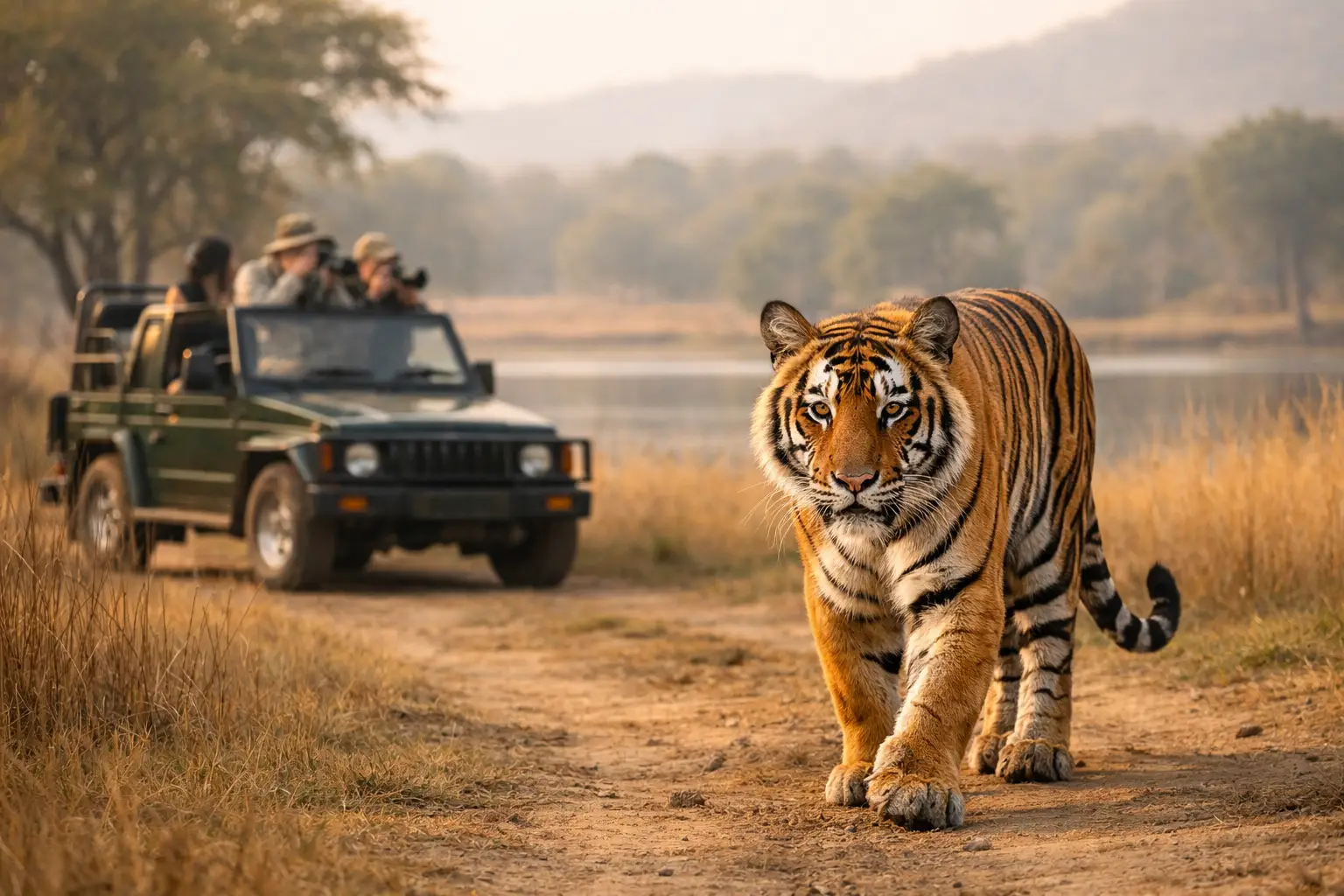
The rhythm of a Central India tiger safari itinerary is set before the first jeep enters the forest. The right sequence of parks, sufficient time in each, well-placed lodges and carefully arranged road transfers all shape whether the journey feels restorative or rushed. For most travellers, the strongest approach is to spend 10 nights moving through Pench, Kanha and Bandhavgarh - three distinct landscapes linked by the rich forests of Madhya Pradesh.
This is not an itinerary built around simply ticking off reserves. It allows time for unhurried mornings, changing light, quiet observation and the real pleasure of returning to a comfortable lodge after a dawn drive. Tigers may be the focus, but the experience is broader: alarm calls drifting through sal forest, herds of spotted deer at a waterhole, langurs high in the canopy, and the patient work of skilled naturalists reading the forest.
Why this Central India tiger safari itinerary works
Pench, Kanha and Bandhavgarh each offer a different sense of place, and together they create a satisfying progression rather than a series of similar game drives. Pench is often the most convenient opening point when arriving through Nagpur. Its teak forests and open meadows make a gentle introduction to the pace of safari travel. Kanha follows with a more expansive, immersive wilderness feel, while Bandhavgarh brings a dramatic terrain of hills, bamboo and grassland, along with the ruins and history that give the reserve its particular character.
Three nights in each park is a thoughtful minimum for a premium journey. It normally provides several opportunities to enter the reserve at different times and in changing conditions, without asking you to repack every morning. Wildlife is never scheduled, and no responsible itinerary should suggest otherwise. More time creates more chances to understand a habitat, notice its smaller details and enjoy each drive on its own terms.
The road journeys between parks are also part of the design. Central India is wonderfully rewarding but spread across substantial distances. A well-managed private transfer, a sensible departure time and a lodge ready to receive you make those transitions feel like part of the journey rather than an interruption to it.
A considered 10-night route through Madhya Pradesh
Day 1: Arrive in Nagpur
Nagpur is a practical gateway for Pench National Park, with flight connections through India’s major cities. Rather than heading straight to the forest after a long international arrival, spend the first night in Nagpur. It creates breathing space for a late flight, allows for a settled start the following morning and reduces pressure if schedules shift.
Your accommodation can be chosen for convenience and comfort, with airport transfers and travel documentation arranged in advance. For Australian travellers arriving after a long flight, this small pause often makes a significant difference to the first days of the safari.
Days 2 to 4: Pench National Park
After breakfast, travel south-east towards Pench, where your forest lodge becomes home for the next three nights. The journey is generally manageable, and an early enough start leaves time to settle in before an afternoon safari, subject to the park’s operating schedule and permit arrangements.
Pench has a pleasing variety of dry deciduous forest, teak stands and open clearings. Early drives can bring misty light and active birdlife, while afternoons often reveal a different character as animals move towards water and the temperature softens. Beyond tiger tracking, watch for wild dog, gaur, sambar, jackal and the lively interactions of langurs and deer.
A full day in Pench is best left lightly structured: a morning drive, a leisurely lunch and rest at the lodge, then an afternoon departure for the reserve. This is where a well-selected lodge matters. Privacy, thoughtful food, a tranquil setting and knowledgeable guiding add depth to the hours between drives.
On the final morning, take another safari before continuing to Kanha. Depending on the agreed pace and park timings, the transfer can be arranged after breakfast or following the morning’s activity.
Days 5 to 7: Kanha National Park
The journey to Kanha is longer, but the arrival is rewarding. Kanha’s broad meadows, known locally as maidans, feel remarkably open after Pench’s denser forest. The reserve is celebrated not only for its tiger habitat but also for its conservation significance and diversity of grazing animals, including the endangered hard-ground barasingha.
Plan two full days here, with morning and afternoon safaris organised around your preferred pace. The distinction between zones can matter, as park access is allocated through permits and the forest experience changes from one area to another. A specialist itinerary can account for availability at the time of booking and balance the strongest practical options, rather than treating every entry gate as interchangeable.
Kanha particularly rewards those who enjoy the whole forest. You may spend time watching a barasingha move through tall grass, listening to a change in bird calls, or following pugmarks along a dusty track. These moments are not secondary to a tiger sighting. They are how a good naturalist builds the story of the morning, and how a safari becomes more than a race between reported animal movements.
Days 8 to 10: Bandhavgarh National Park
Continue north-east to Bandhavgarh for the final three nights. The drive should be treated as a proper travel day, with comfort stops and a relaxed arrival at the lodge. Bandhavgarh’s landscape is more undulating, its forest roads can feel more enclosed, and the imposing Bandhavgarh Fort adds a strong historical presence to the reserve.
Two full safari days here provide a well-rounded close to the itinerary. The reserve is known for its wildlife density, but conditions change by season, zone and time of day. Your guide may focus on signs, calls and fresh tracks, or pause for an elephant herd, a crested serpent eagle or the flash of colour from a kingfisher beside a stream.
This final stay is also an opportunity to slow down. After several early starts, an unhurried afternoon at the lodge can be as welcome as an additional activity. Some travellers prefer every available drive; others value one clear afternoon for reading, a spa treatment or simply sitting outdoors as the forest settles towards evening. A personalised plan should allow for either preference.
Day 11: Depart via Jabalpur or continue your India journey
Bandhavgarh is commonly paired with a transfer to Jabalpur for onward flights, though the best departure route depends on flight schedules and the wider shape of your holiday. You may continue to Delhi, combine the safari with Rajasthan’s forts and palaces, or add time in Agra for the Taj Mahal. The important detail is to avoid a tightly timed connection immediately after a morning drive. A calm departure protects the experience you have come so far to enjoy.
When to travel and what changes with the seasons
Central India’s safari season is broadly shaped by the monsoon and park operating calendars, which can vary by reserve, zone and year. The cooler months bring crisp mornings, softer light and pleasant conditions for longer days outdoors. As the weather warms, vegetation can become less dense and animals may concentrate nearer water, although afternoons are naturally hotter.
There is no single best month for every traveller. If you are especially interested in birds, cooler periods and seasonal migration may appeal. If your priority is warm-weather wildlife viewing and you are comfortable with the heat, later safari months may suit you well. Families, photographers and couples combining safari with cities or rail travel may each need a slightly different balance. Park closures, accommodation availability and permits should be checked carefully before the route is confirmed.
Details that make the safari feel effortless
A Central India wildlife journey involves more coordination than it first appears. Safari permits are issued for particular dates, entry gates and vehicle arrangements. Lodge locations influence transfer times. Flights, road travel and park hours must work together, especially where a safari is being combined with international arrivals or a wider India itinerary.
It also helps to choose lodges for more than their appearance. The most suitable property may be closest to the preferred park gate, offer a quieter setting, suit a particular family configuration or have an excellent resident naturalist team. Dietary preferences, mobility considerations, preferred vehicle arrangements and the desired mix of private time and guided activity all deserve attention early in planning.
Taj Voyages can coordinate these moving parts within a personalised itinerary, from the sequence of parks and lodge selection to private transfers, safari arrangements and onward travel. The result is not a rigid schedule, but a journey with enough structure to run smoothly and enough space to feel genuinely your own.
A well-paced tiger safari leaves you with more than a photograph or a tally of sightings. Give the forests time, and you may remember the low call of a deer, the dust rising behind the jeep, and the extraordinary quiet that arrives just before the morning light changes.