
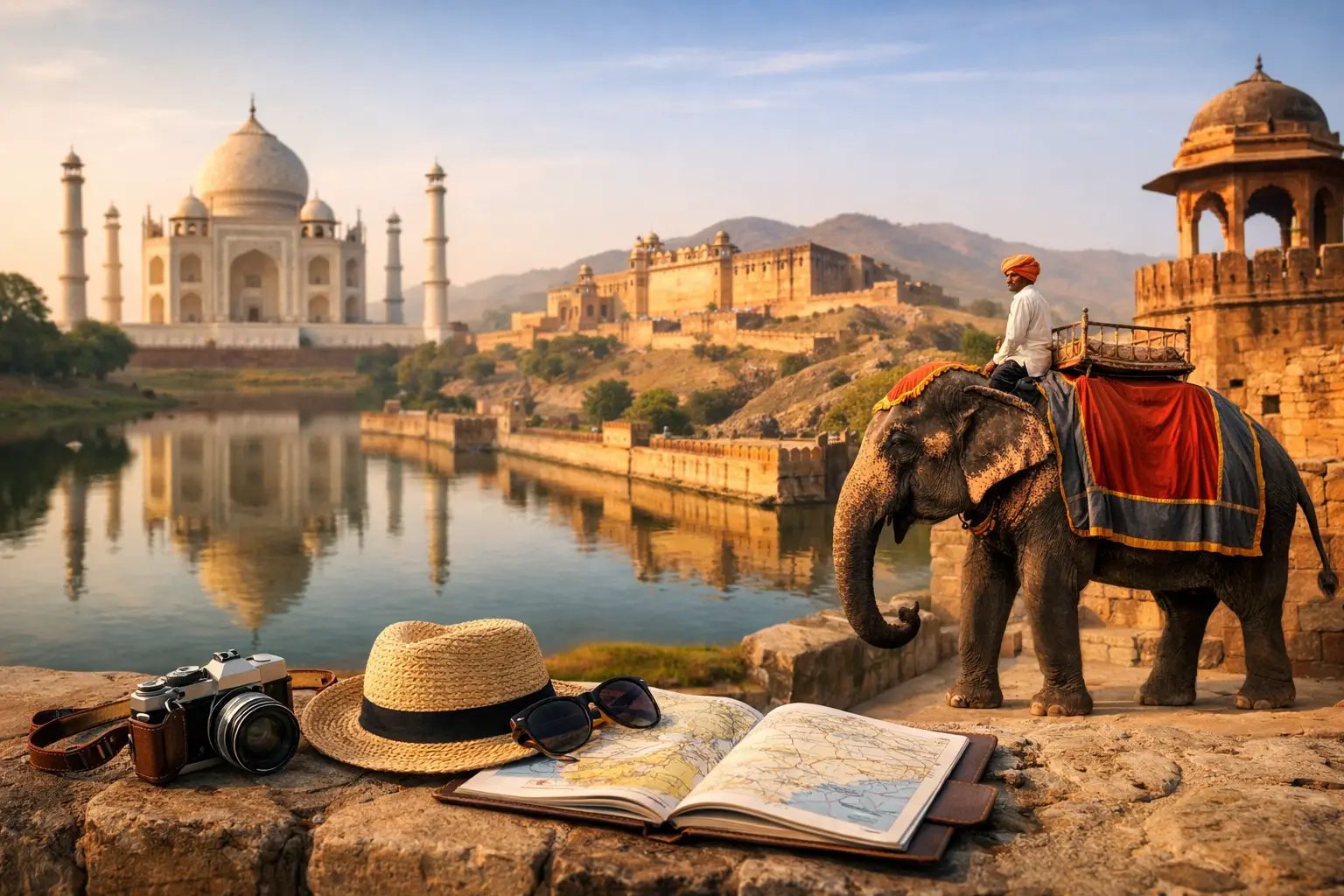
The first view of the Taj Mahal is often what brings travellers to North India, but it is the changing rhythm around it that makes the journey memorable: Delhi’s imperial avenues and old quarters, Agra’s Mughal artistry, and Jaipur’s warm sandstone facades. A golden triangle itinerary for Delhi, Agra and Jaipur, offered in 5, 6 and 7-day variants, should do more than join three celebrated cities. It should allow enough time to arrive well, travel comfortably and experience each place with context.
The right length depends on how you like to travel. Five days works for travellers with a tightly planned India holiday and a clear focus on the landmarks. Six days gives the route more breathing space. Seven days is the considered choice for those who want unhurried mornings, distinctive local experiences and time to enjoy their hotels rather than simply pass through them.
Choosing the right Golden Triangle itinerary
Delhi, Agra and Jaipur are well connected, but the distances shape the experience. Delhi to Agra is generally a three to four-hour road journey, while Agra to Jaipur commonly takes four to five hours, depending on stops and traffic conditions. Jaipur then connects back to Delhi by road or a short domestic flight, depending on your wider itinerary and international departure arrangements.
For Australian travellers, the Golden Triangle is frequently the opening chapter of a longer Indian journey. It can lead naturally into Ranthambore for wildlife, Varanasi for the Ganges and its evening rituals, Udaipur for lakeside heritage, or a luxury rail journey. It also stands confidently on its own when every transfer, guide, hotel and timing is carefully coordinated.
A private vehicle and knowledgeable local guide make a meaningful difference here. They provide continuity through busy city days, help pace visits around the best light and opening times, and turn the journey between cities into part of the experience rather than a logistical interruption.
Golden Triangle itinerary: 5 days
A five-day route is purposeful and rewarding, but it is not leisurely. It suits travellers who are comfortable with early starts and want the essential experiences in a well-managed sequence.
Day 1: Arrive in Delhi
Arrive in Delhi and settle into your hotel. After a long-haul flight, the first afternoon is best kept flexible. Depending on arrival time, this might mean a gentle orientation drive past India Gate and the grand government precinct, or simply time to rest before a relaxed dinner.
Day 2: Delhi to Agra
Begin with a curated introduction to Delhi. The exact focus can be tailored to your interests: Mughal architecture at Humayun’s Tomb, the atmosphere of Old Delhi, a rickshaw ride through Chandni Chowk, or the calm geometry of Lutyens’ Delhi. Later, travel by private vehicle to Agra and check in for the evening.
Day 3: Agra to Jaipur
Visit the Taj Mahal early, when the softer morning light and quieter atmosphere bring out its extraordinary detail. The experience is more profound when it is not rushed. Continue to Agra Fort, whose red sandstone walls hold stories of Mughal emperors, before departing for Jaipur. A stop at Fatehpur Sikri can be included en route, provided the day is planned with realistic timing.
Day 4: Jaipur
Spend the day with Jaipur’s defining sights. Amber Fort offers a dramatic hilltop setting and finely worked interiors, while the City Palace and Jantar Mantar reveal the city’s royal and scientific heritage. The Hawa Mahal is best appreciated from the street or a considered viewpoint, rather than as a hurried photo stop. An evening of regional cuisine, perhaps in a heritage setting, provides a fitting close to the day.
Day 5: Jaipur departure
A morning visit may include Jaipur’s markets, an artisan studio or a quieter architectural site before onward travel. If you are returning to Delhi for an international flight, this final movement needs careful coordination. For many travellers, an additional night in Delhi before departure is the more comfortable choice.
The trade-off with five days is straightforward: you see the three great cities, but have limited room for slow exploration. It is best when integrated into a wider itinerary with extra nights elsewhere.
A 6-day Golden Triangle itinerary with more balance
The six-day version is often the sweet spot. It retains the route’s highlights while allowing one city to be experienced in greater depth, without turning every morning into a departure.
Days 1 and 2: Delhi at a gentler pace
Use the first day for arrival and rest, then devote the second to Delhi. This makes space for both the historic and contemporary sides of the capital. You might combine Old Delhi’s lanes and food traditions with the graceful tomb gardens of Humayun’s Tomb, then return to your hotel before the evening rather than continuing straight onto the highway.
Day 3: Delhi to Agra
Travel to Agra after breakfast. An afternoon visit to Agra Fort introduces the Mughal world before the Taj Mahal visit the following morning. Seeing the two monuments separately gives each the attention it deserves.
Day 4: Agra to Jaipur via Fatehpur Sikri
Visit the Taj Mahal at sunrise, return for breakfast, then set out towards Jaipur. Fatehpur Sikri is an excellent addition on this route. The former Mughal capital is not simply a convenient stop between cities; its courtyards, gateways and mosque provide valuable context for what you have seen in Agra.
Days 5 and 6: Jaipur and departure
Give Jaipur a full day for Amber Fort, the City Palace and Jantar Mantar, then use the final morning for a more personal experience. This could be a textile workshop, a jewellery-focused visit, a walk through a bazaar with a guide, or time to enjoy the character of your heritage hotel. Departure can be arranged from Jaipur or via Delhi, according to the onward journey.
This variation works particularly well for couples and small groups who value a composed itinerary. There is still movement between cities, but the journey has a more natural cadence.
A 7-day Golden Triangle itinerary for deeper experiences
Seven days allows the Golden Triangle to feel less like a circuit of monuments and more like an introduction to North India’s layered history, craftsmanship and daily life. The additional day is not about adding sights for the sake of it. It gives you the freedom to choose what matters most.
Days 1 to 3: Two nights in Delhi, then Agra
Arrive and rest on day one. On day two, explore Delhi with a private guide, balancing the intensity of Old Delhi with the elegant monuments of New Delhi. Day three brings the drive to Agra, with time for Agra Fort or the delicate marble inlay work at Itmad-ud-Daulah’s tomb, often called the Baby Taj.
Day 4: Taj Mahal and a considered transfer
Visit the Taj Mahal at sunrise, then travel towards Jaipur. With the extra day in hand, you can include Fatehpur Sikri without feeling pressed, arrive in Jaipur at a sensible hour and enjoy a quiet evening at your hotel.
Days 5 and 6: Jaipur beyond the headline sights
The first full day covers Jaipur’s essential landmarks, including Amber Fort, City Palace and Jantar Mantar. On the second, take a more selective approach. Some travellers prefer an excursion to Abhaneri to see its remarkable stepwell and village setting. Others would rather spend time with Jaipur’s craftspeople, explore its food culture, visit a museum, or simply enjoy an unhurried afternoon at their hotel.
This is where personalised planning matters. Families may favour a hands-on activity or a later start. Travellers with a strong interest in architecture may choose additional time in the old city. Those celebrating a special occasion may prefer a private dining experience or a beautifully paced day with fewer formal visits.
Day 7: Onward travel
Depart Jaipur for your next destination or return to Delhi, with arrangements matched to your flight schedule. A seven-day version also creates a sensible point from which to continue to Ranthambore, Udaipur or Varanasi rather than retracing your steps immediately.
Details that make the route feel effortless
The Golden Triangle rewards thoughtful timing. The Taj Mahal is best visited early, while Jaipur’s forts are more enjoyable before the strongest afternoon heat. Delhi’s old city is most engaging with a guide who can shape the pace around your interests and comfort. Seasonal conditions, festival dates, hotel availability and flight schedules also influence the best order of travel.
Accommodation should be selected for more than location alone. In Delhi, a calm base offers welcome contrast to a full day of sightseeing. In Agra, staying close enough for an early Taj Mahal visit is valuable. In Jaipur, a heritage property can deepen the sense of place, especially when there is time to enjoy its courtyards, gardens and dining.
For a fully coordinated journey, Taj Voyages can tailor the route around your arrival city, preferred hotels, pace of travel and onward plans, while managing the transport and touring details that are easy to underestimate from afar.
The most satisfying Golden Triangle itinerary is rarely the one that fits the most into a day. It is the one that leaves room to stand quietly before the Taj Mahal, linger over a conversation with a local guide, and arrive at each new city feeling ready to experience it.