
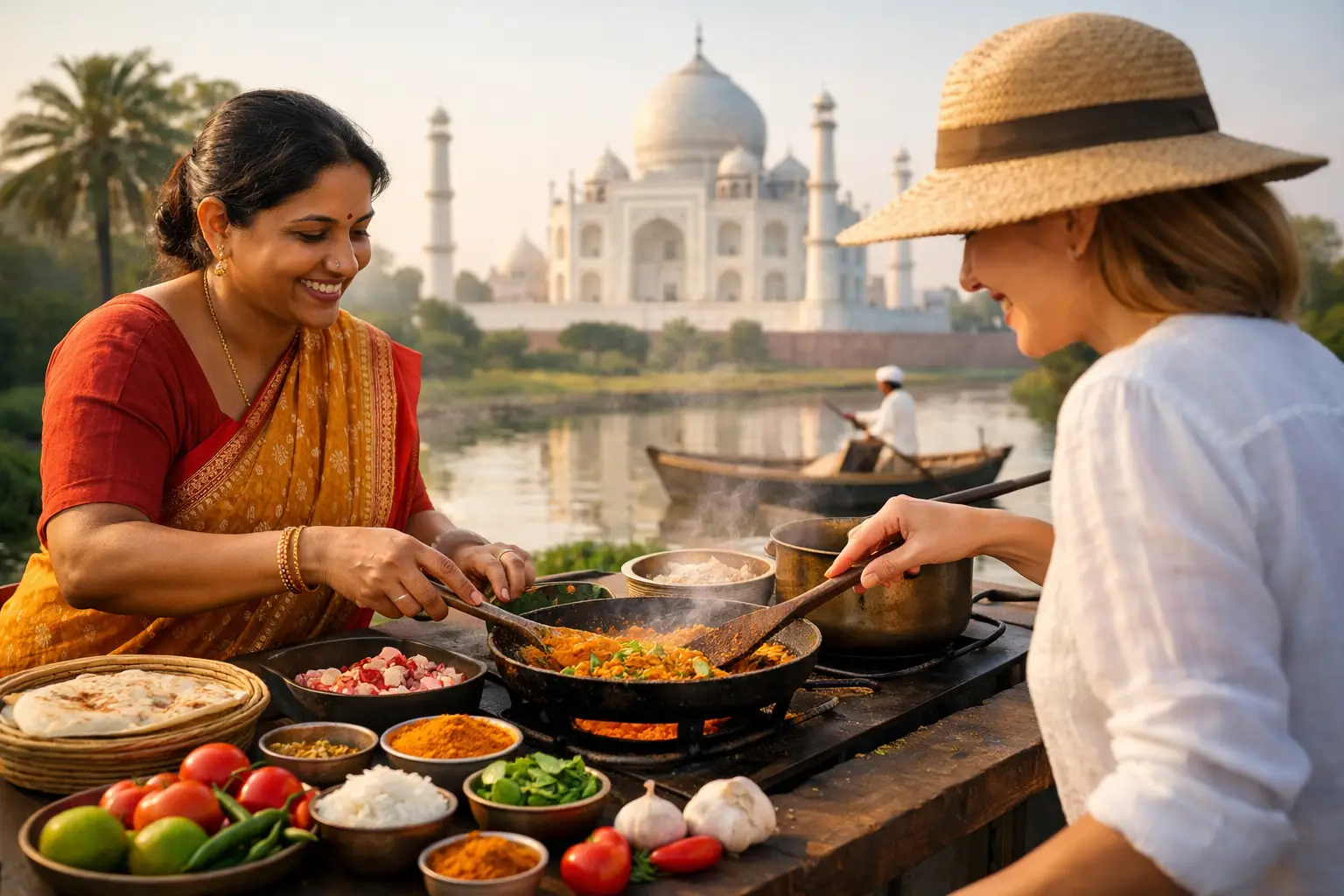
The fragrance of whole spices being ground at dawn, a family recipe explained beside a warm tandoor, lunch served on a shaded verandah after a market visit - these are the moments that give an India cooking tour holiday its lasting appeal. Food is not a single experience in India. It changes with the landscape, the season, local produce and the traditions of each household. A thoughtfully planned journey lets you savour those differences without spending your holiday managing train schedules, transfers or restaurant research.
For travellers who enjoy cuisine as a way into a destination, India offers extraordinary range. The finest cooking-focused itineraries do more than arrange a class. They place each kitchen experience in context: a morning market in Old Delhi, an inherited recipe in Rajasthan, spice gardens in Kerala, or a home-cooked Tamil meal after visiting a temple town. With the right pacing and well-chosen accommodation, these encounters become part of a comfortable, richly layered holiday.
What Makes an India Cooking Tour Holiday Different?
A cooking tour through India is best understood as a regional journey rather than a string of demonstrations. Indian cooking is shaped by climate and history. The food of the north often draws on dairy, wheat, slow-cooked meats and the legacy of imperial kitchens, while the south brings coconut, rice, tamarind, curry leaves and a wide vocabulary of lentils. Along the western coast, seafood and coconut take centre stage. In Bengal, mustard, freshwater fish and subtle balancing of sweet and savoury flavours are distinctive.
That variety is precisely why itinerary design matters. Trying to cover every major food region in one visit can make the journey feel hurried. A private itinerary might instead pair Delhi, Agra and Jaipur with Udaipur for a first exploration of northern India, then add a few restful days in Kerala. A return visit could focus on Mumbai, Goa and the southern states, or trace a route through Kolkata and the north-east for travellers drawn to less familiar regional traditions.
Cooking experiences themselves should vary, too. One may be a formal lesson with a skilled chef in a heritage hotel, where techniques are carefully explained and recipes can be recreated at home. Another may be an intimate meal in a local residence, where the value lies in conversation, family customs and dishes rarely found on restaurant menus. Both have a place. The balance depends on whether you want practical culinary instruction, cultural exchange, or a considered mix of the two.
Choose a Region Through Its Food
Delhi, Agra and Rajasthan for classic northern flavours
Delhi is an excellent starting point for many Australian travellers because it brings together India’s regional cuisines in one energetic capital. A guided food walk can reveal the character of Old Delhi’s markets and historic eateries, while a private cooking session offers a calmer setting to understand spice layering, breads and slow-cooked curries. The contrast between the two is valuable: one is immediate and lively, the other gives you time to ask questions and taste with intention.
From Delhi, the journey through Agra and Rajasthan combines celebrated landmarks with generous culinary traditions. In Jaipur, a market visit can introduce ingredients such as dried chillies, gram flour, pickles and aromatic spice blends before a cooking experience centred on Rajasthani specialities. Udaipur offers a gentler rhythm, with lakeside stays and opportunities to explore vegetarian dishes shaped by local seasonal produce.
This route works particularly well for a first visit because the cultural sights are substantial without overwhelming the food focus. It also suits families and small groups, as private guides and drivers can keep each day flexible around interests, energy levels and dining preferences.
Kerala for spice, produce and a slower pace
Kerala is often the natural counterpoint to a northern itinerary. Its tropical landscape changes what arrives in the kitchen: coconut in many forms, black pepper, cardamom, fresh seafood, banana leaves, curries brightened with tamarind and dishes built around vegetables and lentils. Time in Kochi can include a market-led cooking session, while the backwaters and hill country offer space between more active days.
A Kerala cooking experience is especially rewarding when it is connected to the source of ingredients. Visiting a spice garden or plantation provides a useful sense of how pepper, nutmeg, cloves and cardamom fit into the food before they reach the pan. The experience is not merely about collecting recipes. It gives you a clearer understanding of why a dish tastes the way it does.
For many couples, Kerala is also where a culinary itinerary benefits from a more unhurried stay. A well-paced programme might allow a free afternoon by the water, a private dinner featuring regional dishes and a cooking class the following morning, rather than filling every hour with activity.
Mumbai and Goa for coastal character
Mumbai offers another perspective: a cosmopolitan city where communities from across India have shaped the dining scene. It is well suited to travellers interested in food history, local markets and the everyday rituals of tea, snacks and home cooking. A knowledgeable guide can make the city’s culinary layers more intelligible, particularly when time is limited.
Goa brings a distinctive coastal tradition influenced by its geography and long cultural history. Seafood, kokum, coconut, vinegar and local spice blends appear across its cooking. A cooking session here may be complemented by time in a heritage neighbourhood, a visit to a produce market or a relaxed meal in a carefully selected restaurant. It is a pleasing addition for those who appreciate food with a strong sense of place and a few days by the coast.
Build the Journey Around the Way You Like to Travel
The most enjoyable culinary itineraries leave room for appetite, weather and discovery. A full market visit followed by a hands-on class and a long lunch can be a highlight, but it should not be followed by an overambitious evening of sightseeing. Likewise, a late dinner in Delhi may call for a slower start the next day. These small decisions make a material difference to how the journey feels.
Accommodation is part of that equation. After a stimulating day in busy city streets, a calm, characterful hotel offers a welcome reset. In smaller cities and rural areas, the right property may also create access to local food traditions through its chefs, gardens or community relationships. Comfort is not separate from cultural immersion; it gives you the energy to enjoy it properly.
Dietary requirements deserve careful attention from the outset. India is exceptionally accommodating for vegetarian dining, yet regional dishes can still include dairy, ghee, nuts or specific spice preparations. Vegan, gluten-free and allergy-aware travel can be arranged with advance planning and clear communication to hotels, hosts and restaurants. It is better to frame preferences precisely than to rely on broad assumptions about a cuisine.
The Detail Behind an Effortless Food-Focused Holiday
A cooking tour can involve more coordination than it first appears. Cooking hosts may only welcome guests on certain days. Markets are most compelling in the early morning. Long-distance rail and flights need to fit the pace of the route, while city transfers need to allow for traffic and luggage. The best cooking experiences are often small and personal, which makes advance confirmation particularly worthwhile.
This is where a specialist-led itinerary is reassuring. Rather than treating cooking classes as interchangeable additions, Taj Voyages can place them where they make sense within your route, alongside private touring, selected hotels, transport, visa guidance and on-ground arrangements. You have one considered plan rather than a collection of separate bookings, with time allowed for the moments that cannot be rushed.
It also helps to be clear about what you want to bring home from the experience. Some travellers are keen to learn techniques they can use in their own kitchen, such as tempering spices, preparing regional breads or balancing a curry. Others are more interested in eating well and understanding the stories behind a meal. Most enjoy both, but identifying the priority helps shape the right experiences.
A Few Practical Considerations Before You Go
Indian cuisine can be enjoyed throughout the year, although the ideal route depends on your preferred climate and the regions you wish to include. Northern cities, Rajasthan and Kerala each have different seasonal patterns, so a tailored itinerary should be planned around comfort as well as culinary interests. Festival periods can add colour and special foods, but they may also affect hotel availability and travel times.
Leave room in your luggage for carefully chosen food items where permitted, but do not let shopping become the central aim. The more valuable souvenir is often confidence: the memory of how a host combined spices, the rhythm of preparing a meal, or a new appreciation for ingredients you had previously used without much thought.
The finest food journeys in India are measured not by how many dishes you taste, but by the occasions you remember sitting down to them. Give each region enough time, let the itinerary breathe, and the kitchen becomes one of the most generous ways to understand the country.