
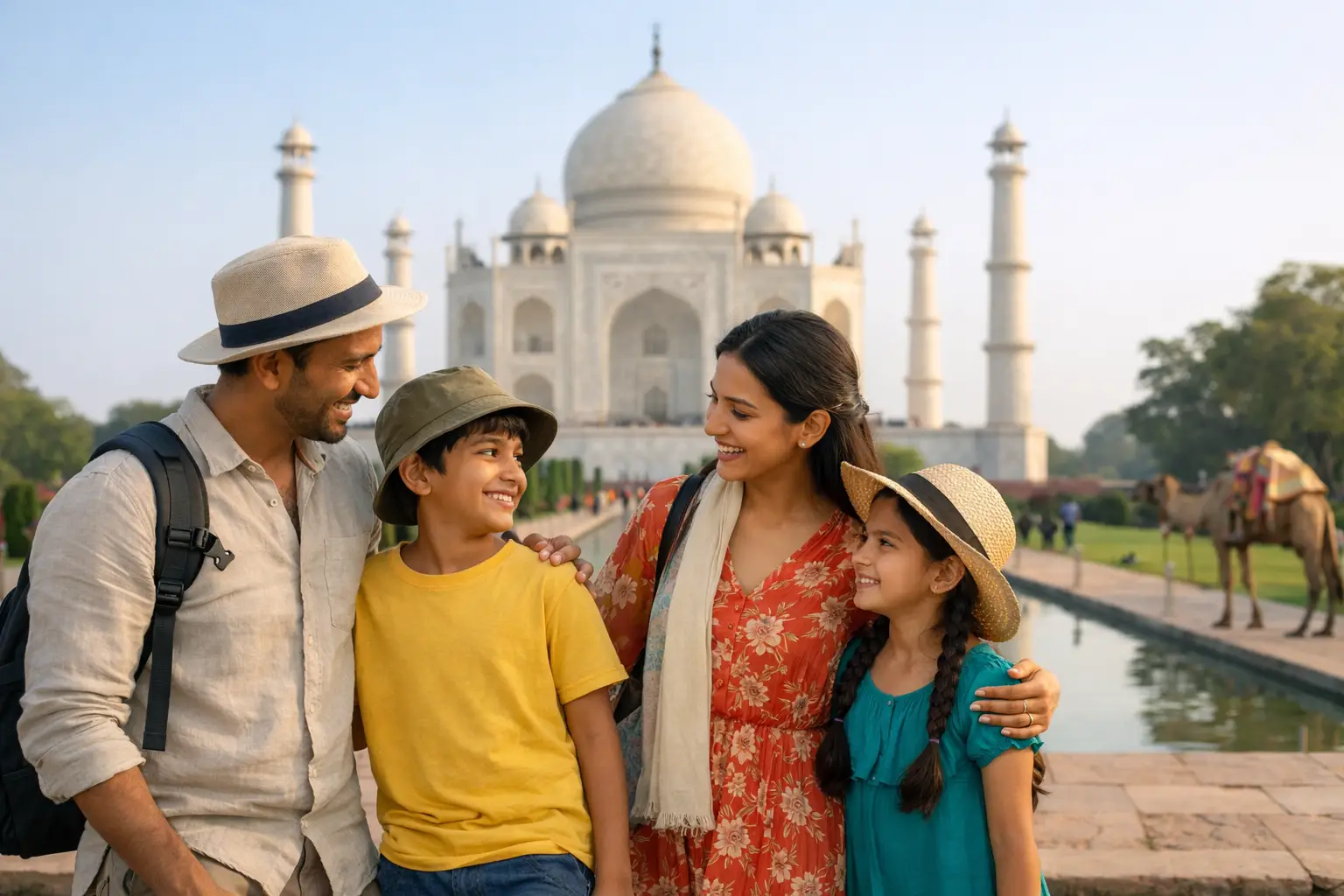
The best family journeys in India are not built around fitting in every celebrated sight. They are built around the moments everyone can enjoy: a quiet breakfast before a city tour, a rickshaw ride through Old Delhi, time by the pool after a morning at a palace, and a wildlife drive that gives children and adults something to talk about long after dinner. A considered India family holiday itinerary gives each place enough time to register, while keeping the practical details comfortably in hand.
For many Australian families, India is wonderfully rewarding but requires thoughtful pacing. Distances are significant, cities are full of life, and the country offers far more than can be experienced in one visit. Choosing a coherent route, private transport, family-suited hotels and a sensible rhythm of touring makes all the difference.
What a well-paced India family holiday itinerary looks like
For a first family visit, a 12 to 14-night journey through Delhi, Agra, Ranthambore, Jaipur and Udaipur is often an excellent fit. It brings together history, architecture, wildlife, local cuisine and relaxed time in characterful hotels, without constant unpacking. It also works well for mixed ages: curious teenagers, younger children who need variety, and grandparents who value comfort and manageable travel days.
A shorter journey can focus on Delhi, Agra and Jaipur. With additional time, Udaipur adds a gentler finish, while a beach stay in Goa or Kerala can be considered for families who would like a few days by the water. The right choice depends on your children’s ages, your preferred pace and whether the family is most drawn to heritage, nature or downtime.
Days 1 to 3: Arrive gently in Delhi
Delhi is a practical and engaging introduction, but it should not be rushed on the morning after a long flight. A well-located hotel, a flexible arrival day and an unhurried first evening allow everyone to settle into a new time zone.
Over the following two days, private guided touring can balance the grand scale of New Delhi with the texture of Old Delhi. The wide avenues and important monuments of the newer city provide context, while a rickshaw ride through the lanes around Chandni Chowk brings colour, aromas and daily life into focus. A family-friendly guide knows when to pause for refreshments, adjust the walking pace and turn a historical detail into a story younger travellers will remember.
Rather than filling every hour, leave room for a late start, a swim, or a meal at the hotel. These small gaps are often what preserve the energy for the days ahead.
Days 4 and 5: Agra beyond the postcard
The journey from Delhi to Agra is usually made by private vehicle or premium rail, depending on the wider itinerary. Agra’s obvious highlight is the Taj Mahal, best visited early when the light is soft and the day is still calm. Seeing it with a knowledgeable guide adds much more than a photograph: the human story behind its design helps children understand why the monument matters.
Agra Fort offers a useful contrast, with vast courtyards and views towards the Taj Mahal. Families with a particular interest in craft may also enjoy an introduction to the fine marble inlay work associated with the city. Two nights avoid the hurried feeling of a single-stop visit and make the next transfer far more comfortable.
Days 6 and 7: Wildlife in Ranthambore
Ranthambore provides a complete change of scene. The drive through Rajasthan leads to a landscape of dry forest, lakes and ancient ruins, where morning and afternoon safaris are arranged around the best available timings. Tigers are the great hope, naturally, but the experience is not only about one animal. Deer, monkeys, birdlife and the anticipation of moving quietly through the reserve can be just as memorable.
Safari schedules begin early, so this is a place to keep the rest of the day simple. Choose a lodge where the family can rest between drives, enjoy a relaxed lunch and spend time outdoors. Sightings can never be predicted, but careful planning around the number of safaris and the season gives the experience its best chance to unfold naturally.
Days 8 to 10: Jaipur’s forts, food and colour
Jaipur is energetic, gracious and highly visual. A private itinerary can include Amber Fort, where the scale of the hilltop complex captures children’s imaginations, alongside the City Palace and Jantar Mantar observatory. The latter is particularly engaging for families when explained as a working collection of astronomical instruments rather than simply another historic site.
Jaipur also allows for more hands-on experiences. A cooking session, block-printing workshop or guided walk through a local market can bring the city’s living traditions into the holiday in a way that formal sightseeing cannot. The key is not to schedule all of these at once. Select one activity that suits your family and leave the afternoon open for the hotel pool or a leisurely high tea.
Days 11 to 14: Slow down in Udaipur
Udaipur is a fitting final stop after the fuller days of the Golden Triangle and Ranthambore. Its lakes, palaces and low hills create a more restful atmosphere, particularly when you stay somewhere with water or garden views. A boat ride on Lake Pichola near sunset is a lovely family occasion, while the City Palace offers a rewarding final chapter in Rajasthan’s history.
This is also the place to ease off the pace. One day of light touring, one afternoon at leisure and a final celebratory dinner give the journey room to settle before the journey home. Families often find that these quieter days become the time when everyone starts sharing their favourite moments.
The details that make family travel easier in India
The route matters, but the coordination behind it matters just as much. In a country with varied road journeys, rail schedules, hotel styles and touring options, a family itinerary should be built around reliable transfers and sensible departure times. A private driver and vehicle throughout the touring sections provides privacy, flexibility and a comfortable place to retreat between experiences.
Accommodation should be selected for more than appearance. Interconnecting rooms, family suites or nearby rooms may be appropriate depending on the ages of your children. Some heritage hotels have exceptional atmosphere but more stairs, while contemporary properties may offer larger room configurations and extensive leisure facilities. A specialist will discuss these practical distinctions before recommending a stay.
Guides also shape the experience. The best family guides read the room: they make history accessible without overwhelming younger listeners, know where a rest stop fits naturally, and can adapt a visit if interest is waning. Food preferences, dietary requirements and confidence with local flavours should be discussed early, so meal arrangements feel pleasurable rather than uncertain.
When to travel and how long to allow
For Rajasthan and North India, the cooler months are especially popular for comfortable touring and wildlife experiences. School holiday timing may influence your plans, although a carefully designed itinerary can work well across different seasons. Warmer periods call for earlier sightseeing, slower afternoons and hotels with inviting spaces to rest. During monsoon months, some regions become particularly green and atmospheric, while road and activity timings may need extra flexibility.
International flights from Australia and the length of the journey make a minimum of 12 nights worthwhile for a first visit. If you have 16 nights or more, it may be possible to include a slower extension rather than adding several additional cities. India rewards depth. Spending an extra night in one location is often more valuable than turning every second day into a transfer day.
Planning with a specialist
A family itinerary becomes considerably easier when one team understands the whole journey, from the first hotel arrival to the final airport transfer. Taj Voyages can coordinate tailored touring, carefully selected accommodation, private transport, rail journeys, visa guidance and day-to-day travel arrangements, with every element considered as part of one cohesive plan.
This approach is particularly valuable for multi-generational groups or families travelling during school holidays, when room configurations, touring pace and restaurant arrangements need closer attention. It also means that your holiday is designed around what your family enjoys, rather than asking your family to fit a fixed sequence of stops.
The most memorable India family holidays leave space for surprise: the sound of temple bells at dusk, a child spotting a peacock from the car, or a shared meal that becomes a family story. Give those moments time, and let the itinerary carry the weight of the logistics.