
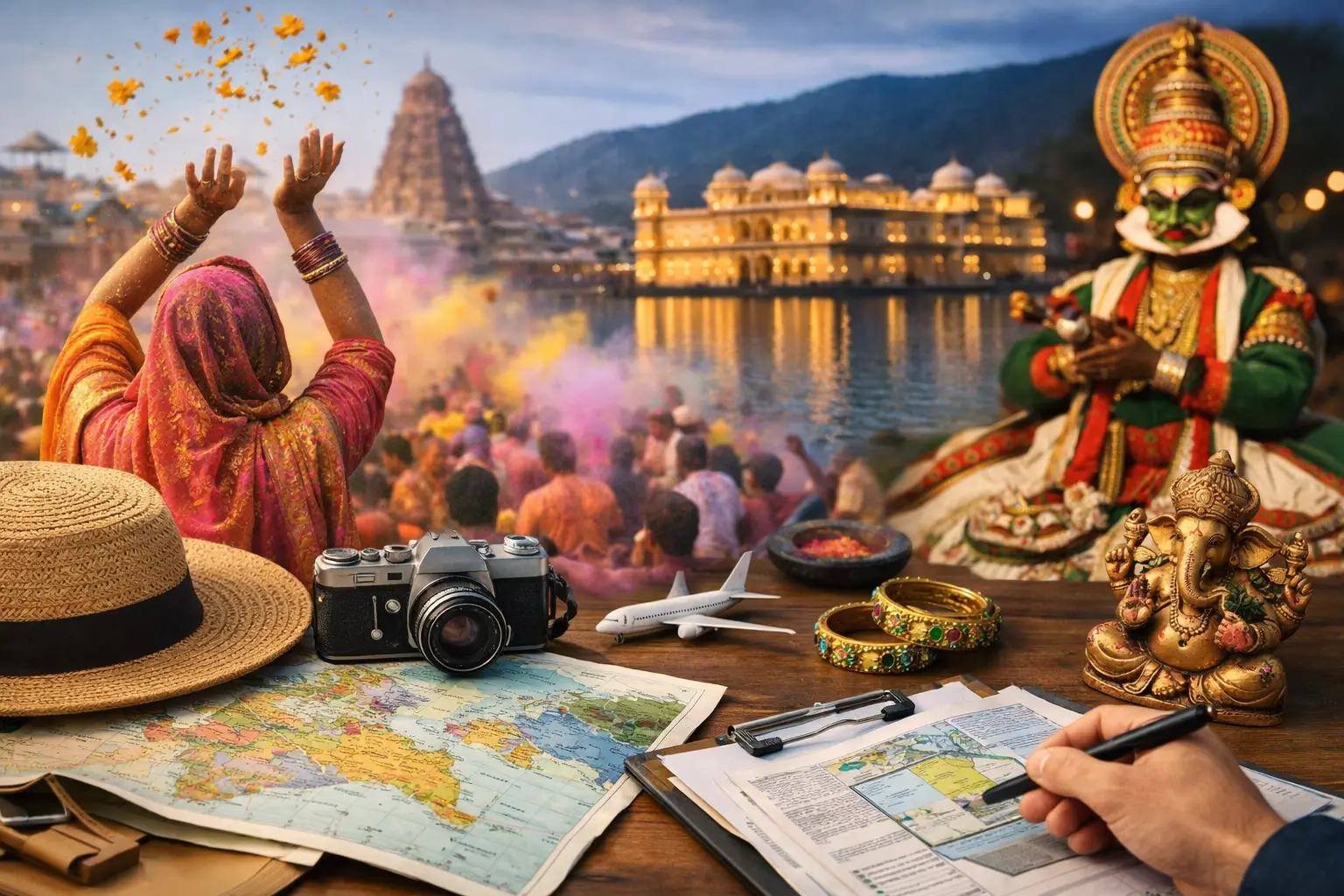
A festival in India is not simply an event added to an itinerary. It can change the rhythm of an entire city: lamps appear at doorways, markets take on a new energy, families gather, music carries through courtyards and long-held rituals become part of daily life. Well-designed India festival tour packages allow you to experience that atmosphere with the time, context and comfort to appreciate it properly.
For Australian travellers, the appeal is often as much about ease as it is about spectacle. Festival periods can be busy, accommodation is in demand and transport arrangements need to account for altered schedules and road closures. A carefully coordinated journey turns these practical considerations into a smooth, enriching holiday, rather than leaving you to manage moving parts while you travel.
Why festivals deserve a place in your India itinerary
India’s festivals are deeply connected to place. Diwali in Rajasthan feels different from Diwali in Mumbai or Kerala. Holi can be joyous and expressive in cities such as Jaipur and Udaipur, while Vrindavan and Mathura offer a particularly devotional setting. In Kolkata, Durga Puja brings neighbourhoods, artistry and ceremonial tradition together on a remarkable scale.
This is why the best festival journeys are not built around a single celebration alone. They consider what comes before and after it: the heritage cities, temples, palaces, regional cuisine, wildlife reserves or coastal stays that give the festival a wider sense of place. You might combine Diwali celebrations in Jaipur with the forts and havelis of Rajasthan, or pair a visit during Durga Puja with Kolkata’s colonial-era architecture and a quieter retreat in the foothills or along the Ganges.
The right experience also depends on how you prefer to travel. Some guests are drawn to the vitality of public celebrations and local markets. Others value more measured cultural encounters, such as a hosted meal, a private guide who can explain the symbolism of a ceremony, or a thoughtfully chosen viewing point away from the busiest crowds. Neither approach is better. The itinerary should reflect your interests, pace and preferred level of activity.
Choosing India festival tour packages by season
Festival dates follow lunar and regional calendars, so they shift from year to year. Planning well ahead gives you more choice in accommodation, guides and transport, particularly around major celebrations. It also helps to match the festival with the weather and regions that suit you best.
Autumn and early winter: lights, music and heritage cities
From roughly October to December, northern and western India are especially appealing for travellers who enjoy cultural touring alongside comfortable sightseeing conditions. Diwali, the Festival of Lights, is often the most sought-after occasion. Homes, hotels and historic streets are decorated with lamps and rangoli designs, while sweet shops, bazaars and family gatherings create a warm sense of occasion.
Rajasthan is a natural setting for a Diwali journey. Jaipur, Udaipur and Jodhpur each offer their own character, and a tailored route can include time in Delhi or Agra before continuing to the desert landscapes and elegant palace hotels of the state. Depending on timing, Pushkar Fair may also complement an autumn itinerary, bringing together rural traditions, livestock trading, crafts and a vibrant fairground atmosphere.
For those who enjoy rail travel, this season can suit an itinerary that incorporates a landmark luxury train. Experiences such as the Palace on Wheels or Maharaja Express can provide a comfortable, highly organised way to link several northern Indian destinations, although festival timing, departure dates and route design need to be considered together.
Spring: colour, gardens and living traditions
Holi generally falls between late February and March. Its famous colour celebrations are instantly recognisable, but the most rewarding way to experience the festival is with thoughtful planning and cultural context. In some locations, celebrations are spirited and public; in others, the emphasis is more intimate, ceremonial or family-oriented.
A well-paced spring journey might include Delhi, Agra and Rajasthan, with private transfers and accommodation selected for easy access to planned celebrations while still offering a calm place to return to afterwards. Your guide can help you understand local customs and navigate the day respectfully, rather than treating the occasion as a spectacle to be observed from a distance.
Spring is also an excellent time to consider South India. While the exact festival calendar varies, Kerala’s temple traditions, Karnataka’s heritage sites and Tamil Nadu’s richly layered cultural landscapes bring another perspective to the country. A north-to-south itinerary can be especially rewarding for travellers with time to explore contrasting regions at a relaxed pace.
Monsoon and late summer: regional celebrations with character
The monsoon months bring lush landscapes and distinctive festivals across different parts of India. Kerala’s Onam is associated with floral decorations, traditional feasts, cultural performances and boat races in selected areas. In Mumbai, Ganesh Chaturthi fills the city with devotional processions, crafted idols and community celebrations.
These journeys require a slightly different approach. Rain can shape sightseeing and transfers, while festival activity may concentrate in particular neighbourhoods or on specific days. Yet for travellers interested in regional culture, this can be an exceptionally atmospheric time to visit. The key is to build in sensible travel times, choose well-located hotels and keep the itinerary flexible enough to respond to local conditions.
What a well-managed festival journey includes
Festival travel rewards detail. The difference between a memorable, comfortable experience and a rushed one often comes down to arrangements made before departure.
A specialist itinerary begins with the practical framework: international and domestic flights where required, visa guidance, suitable accommodation, private transport, experienced guides and realistic travel times between destinations. During major festivals, it should also account for peak demand, local traffic patterns, venue access and the possibility that some businesses or sites operate to modified hours.
Just as importantly, there should be room to experience a destination beyond its headline celebration. A full day of festivities can be exhilarating, but most travellers appreciate a quieter counterpoint: a morning at a museum, an afternoon tea overlooking a lake, a cooking experience, a garden visit or unhurried time at their hotel. This balance is particularly valuable for couples, families and small private groups travelling across several regions.
At Taj Voyages, festival itineraries are shaped around the occasion you wish to experience, then refined around your preferred style of travel. That may mean a private Rajasthan journey built around Diwali, a curated eastern India itinerary during Durga Puja, or a broader South Asian holiday that combines India with Bhutan, Nepal or Sri Lanka. The purpose is not to fill every hour, but to make each part of the journey fit together naturally.
A few considerations before you choose a festival
The largest and most photographed celebration is not always the best match for your travel style. Diwali offers widespread atmosphere and works beautifully with a first journey through North India. Holi is ideal for travellers who are comfortable with lively public celebrations and want a more participatory cultural experience. Durga Puja suits those interested in art, ritual and the energy of a great city. Onam may appeal to travellers seeking a more regional, food-and-culture-focused journey through Kerala.
It is also worth considering trip length. If you have two weeks, focusing on one region usually provides a more relaxed and meaningful experience than trying to cover the entire country. With three weeks or more, it becomes possible to combine distinct regions, perhaps beginning among Rajasthan’s grand forts before travelling south for Kerala’s waterways and cultural traditions.
Finally, be clear about the level of structure you want. Some travellers prefer an escorted departure with the reassurance of a set route and like-minded companions. Others want a fully personalised private journey, with the freedom to linger longer in a favourite city or add a particular interest such as textiles, architecture, cuisine or wildlife. Festival travel accommodates both, provided the planning begins with the right questions.
A festival can offer one of the most immediate ways to understand India’s warmth, creativity and enduring traditions. Give it the space it deserves in your itinerary, and the celebration becomes more than a date on the calendar: it becomes the thread that connects the places, people and moments you will remember most.