
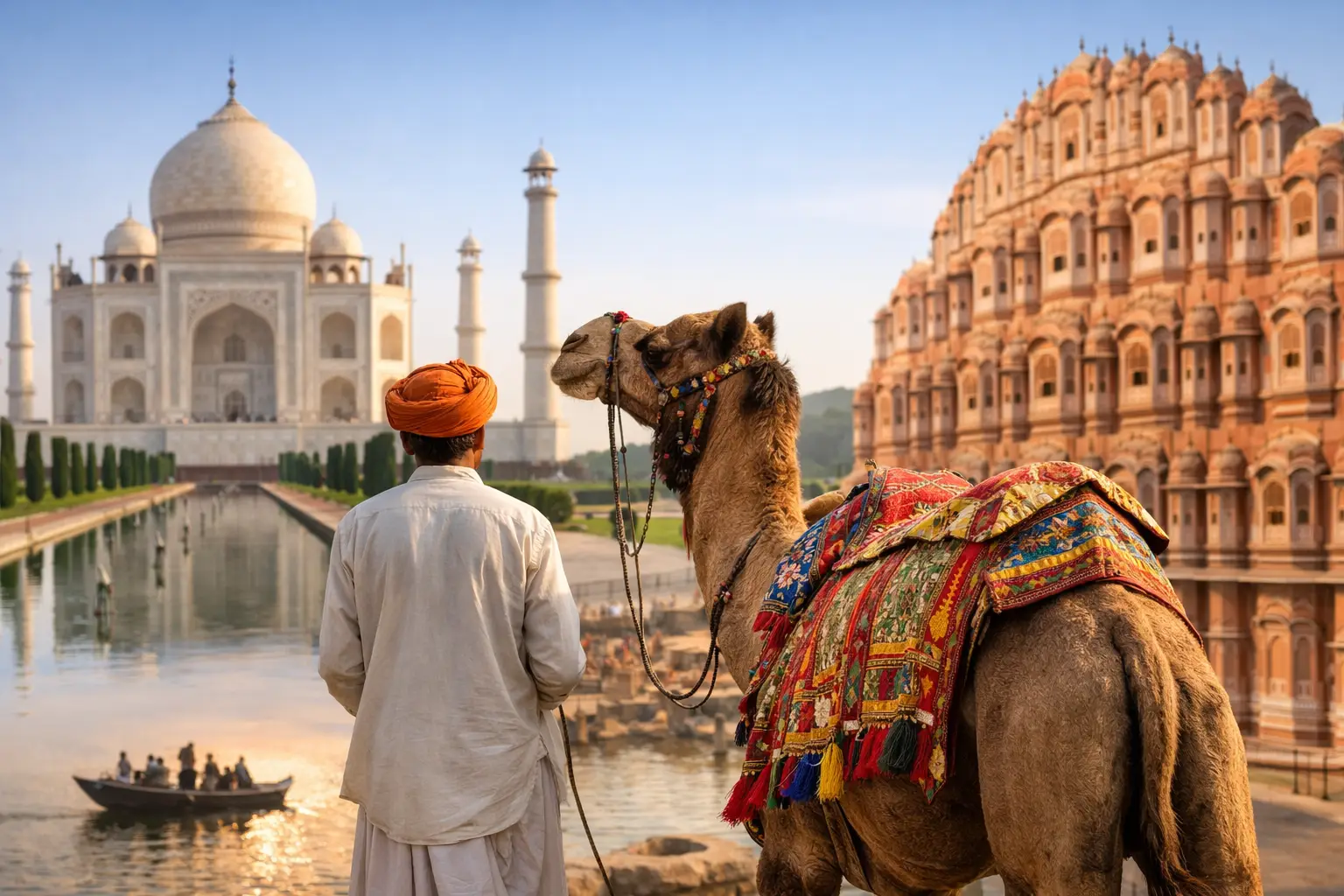
The first view of Delhi often arrives as a vivid rush of colour, traffic, temple domes and everyday life unfolding at close range. India in 2 weeks: the classic first-timer route gives you enough time to absorb that energy, then places it in a wider story of Mughal cities, Rajput palaces, wildlife country and lakeside Udaipur. The key is not trying to see all of India at once. It is choosing a route with a natural rhythm, well-timed transfers and space to pause.
For many Australian travellers, the most rewarding introduction combines Delhi, Agra, Ranthambore, Jaipur and Udaipur over 13 nights. It is a journey of striking contrasts, but one that can be made remarkably comfortable with private touring, considered accommodation and an itinerary designed around realistic travel times.
India in 2 weeks: the classic first-timer route
This route begins and ends in Delhi, making international flight planning straightforward. From there, the journey follows a sensible arc south and west: Delhi to Agra, on to Ranthambore and Jaipur, then a short flight to Udaipur before returning to Delhi for your onward journey.
Rather than treating each destination as a checklist, allow each place its own mood. Delhi is layered and energetic; Agra is concentrated and monumental; Ranthambore offers a quieter interval in the bush; Jaipur is richly ceremonial; and Udaipur brings the journey to a graceful close.
Days 1 to 3: Settle into Delhi
Arriving in India deserves more than a single overnight stay. Delhi is an excellent place to recover from a long flight, adjust to the pace of the country and begin with an informed introduction to its history. A well-located hotel provides a calm base, while a private guide can shape sightseeing around your interests and energy level.
Over two full days, explore the broad imperial avenues of New Delhi alongside the older quarters where spice markets, mosques and small workshops reveal the city’s enduring commercial life. Humayun’s Tomb and the Qutub complex offer an elegant foundation for understanding Mughal and Sultanate architecture before you reach Agra. A considered food experience, whether a refined regional dinner or a guided market visit, adds another dimension without overfilling the day.
Delhi rewards gentle pacing. The distances can be substantial, and traffic patterns change through the day, so an experienced driver and guide make a meaningful difference to how relaxed the city feels.
Day 4: Agra and the Taj Mahal
Travel from Delhi to Agra by private vehicle or premium rail, depending on your preferred pace and the wider itinerary. Agra is best approached as more than a stop for one landmark, although the Taj Mahal is rightly the centrepiece.
An early visit allows time to appreciate its changing light and exquisite inlay work before the day becomes warmer. Your guide can bring context to the monument, from its architecture and gardens to the craftsmanship that continues in the city today. Agra Fort, with its red sandstone walls and views towards the Taj, deepens the story of the Mughal court.
One night is sufficient for many first visits, particularly when the accommodation is comfortable and the following transfer is carefully arranged. Those with a strong interest in Mughal history may prefer a second night, but that extra time usually means reducing time elsewhere.
Days 5 and 6: Ranthambore’s quieter rhythm
From Agra, continue to Ranthambore, a former royal hunting ground now known for its national park, dry deciduous forest and historic fort. This is the route’s change of pace. After city touring, mornings and afternoons are shaped by safari timings, with peaceful hours at the lodge in between.
Wildlife sightings are always nature-led and cannot be predicted, but the experience is rewarding beyond any single encounter. Look for deer, langurs, birdlife and the shifting landscapes of lakes, rocky outcrops and ancient ruins. A two-night stay generally allows for several game drives and avoids making the visit feel rushed.
Safari operations follow park regulations and can vary by season, zone allocation and weather. A specialist-managed itinerary accounts for these details while ensuring your transfers, permits and accommodation work together cleanly.
Days 7 to 9: Jaipur’s royal architecture and living craft
The road journey from Ranthambore to Jaipur brings you into Rajasthan’s capital, where rose-coloured façades, hilltop forts and finely detailed palaces sit alongside a busy modern city. Three nights give Jaipur the time it deserves.
Start with the Amber Fort, whose courtyards and mirrored halls show the scale and refinement of Rajput royal life. In the city, the City Palace and Jantar Mantar observatory provide a different perspective, while the Hawa Mahal’s intricate frontage remains one of Jaipur’s most recognisable sights.
Jaipur also works especially well for travellers interested in craft. Block printing, jewellery, textiles and blue pottery are part of living traditions, and a privately arranged visit can offer a more meaningful experience than simply browsing shops. Evenings may be reserved for a relaxed dinner at your hotel, a heritage property or a thoughtfully chosen local restaurant.
It is tempting to add several day trips from Jaipur, but restraint is worthwhile. One unhurried afternoon for the hotel, a pool or independent wandering often improves the whole journey.
Days 10 to 12: Udaipur, lakeside and unhurried
A short flight from Jaipur to Udaipur saves a long road journey and introduces a welcome shift in scenery. Set around lakes and low hills, Udaipur has a softer pace than the northern cities and is an ideal final chapter for a first visit to India.
The City Palace is a vast and compelling complex of courtyards, galleries and balconies overlooking Lake Pichola. A private boat cruise offers a memorable perspective on the city’s palaces and ghats, particularly in the late afternoon when the water reflects the changing light. Nearby temples, gardens and artisan neighbourhoods can be explored at a pace that suits you.
Three nights also leave room for a more personal day. You might focus on art, textiles, cooking or photography, or simply enjoy the setting of your hotel. For couples, families and small groups alike, Udaipur provides time to reflect on the variety already experienced without the pressure of another major transfer.
Day 13: Return to Delhi
Fly from Udaipur to Delhi for a final night before your international departure. This buffer is a practical choice, particularly after a multi-stop journey. Depending on flight times, it may allow for a final dinner, a visit to a gallery or simply a restful evening in a comfortable hotel.
Why this first-time India itinerary works
The route covers several of North India’s most distinctive experiences without asking you to change hotels every day. It balances grand monuments with daily life, urban intensity with time in nature, and structured touring with moments to make the journey your own.
It also respects the reality of travel in India. Distances that appear modest on a map may take longer by road, and the most enjoyable itineraries allow for this rather than treating every day as a race. Private vehicles, carefully selected flight sectors and knowledgeable local guides make the route feel coherent rather than fragmented.
The best travel period depends on what matters most to you. The cooler months are often preferred for city touring and safaris, while shoulder periods can bring different light, landscapes and availability. Festivals may add extraordinary atmosphere, though they require earlier planning and a thoughtful approach to routing.
A rail journey can also be incorporated for travellers drawn to India’s celebrated heritage trains. This works best when it replaces a section of the route rather than being added on top of an already full schedule. The right choice depends on whether you value time in each destination or the experience of the rail journey itself.
A first visit to India should feel expansive, not exhausting. With a route that has been personalised around your interests, preferred accommodation style and desired pace, the country has room to reveal itself gradually. Taj Voyages can coordinate the many moving parts so you can give your attention to the places, people and moments that stay with you long after you return home.