
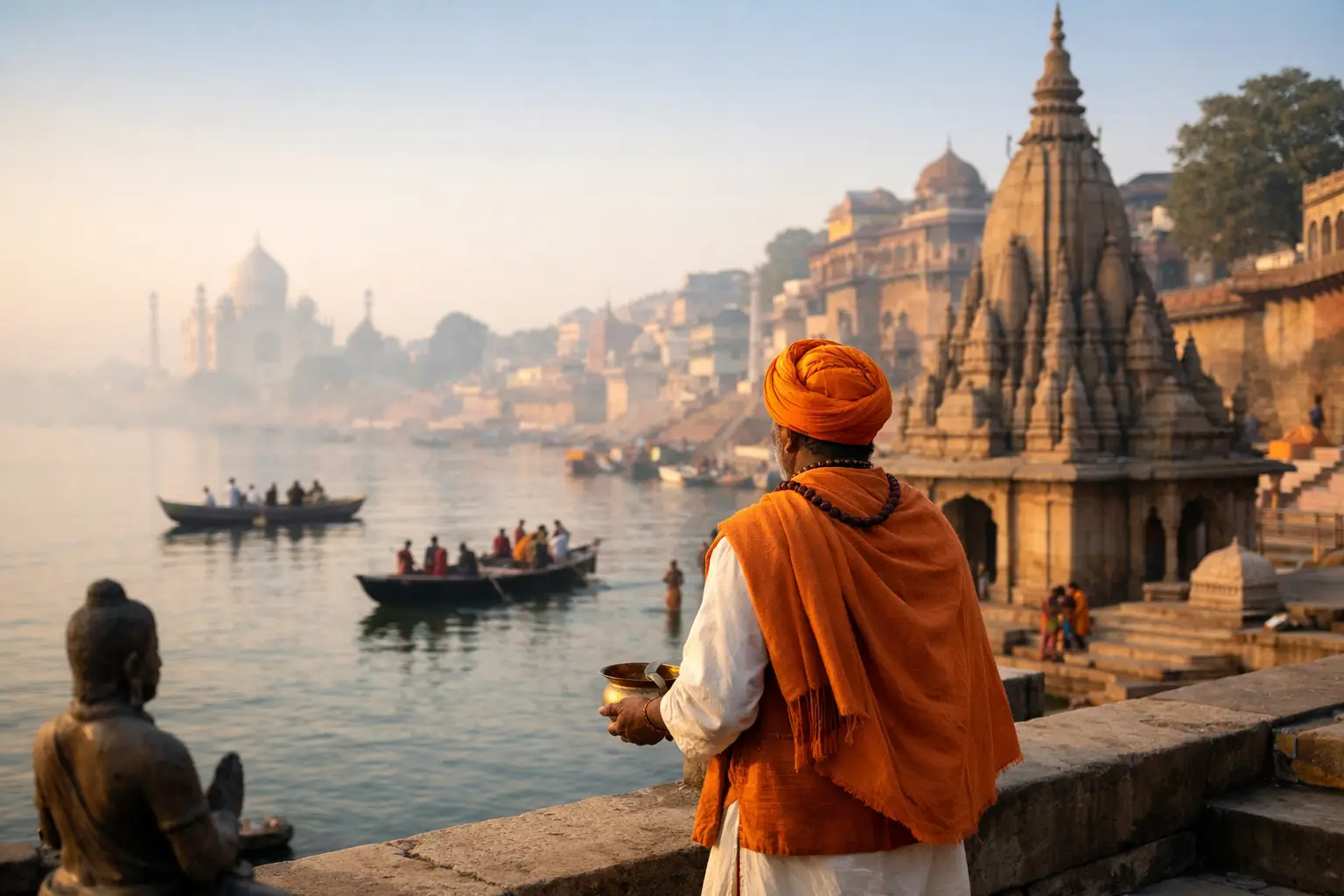
A dawn aarti beside the Ganges, the measured rhythm of prayer in a Himalayan monastery, the scent of jasmine at a South Indian temple - India spiritual pilgrimage tours are not simply about moving between revered places. They ask for time, sensitivity and a well-considered pace, so you can be present for each experience rather than preoccupied with the next transfer.
For many Australian travellers, a pilgrimage journey is an opportunity to engage with living traditions that have shaped India for centuries. The most rewarding itineraries balance sacred visits with comfortable accommodation, knowledgeable local guidance and enough breathing space to absorb what you have seen. This is where careful planning makes a genuine difference.
What makes a pilgrimage journey through India distinctive
India’s sacred geography is extraordinarily varied. A journey may trace the Ganges through Varanasi and Rishikesh, follow Buddhist sites across the northern plains, visit Sikh places of worship in Punjab, or travel through Tamil Nadu and Kerala to encounter temple architecture, rituals and devotional music. Each region has its own rhythms, customs and seasonal considerations.
The purpose of travel also differs from person to person. You may have a personal connection to a faith, an interest in philosophy or art, or a wish to better understand the role spirituality plays in daily life across India. A thoughtfully designed journey allows room for each of these motivations without treating sacred places as a checklist.
There is also a practical dimension. Temple opening times, religious observances, local festivals, road conditions and domestic flight schedules can shape the flow of a trip. A specialist itinerary anticipates these details and builds in sensible contingencies, allowing the journey to feel composed rather than tightly managed.
India spiritual pilgrimage tours by region
The Ganges and northern sacred cities
Varanasi is often central to a spiritual itinerary in North India. Its riverfront ghats are places of worship, ritual, work and community life, best approached with patient, informed guidance. An early boat ride on the Ganges offers a different perspective to the evening aarti, while time away from the river allows you to understand the city’s lanes, workshops and food traditions.
Further north, Rishikesh offers a gentler setting along the river, with ashrams, yoga traditions and views towards the Himalayan foothills. Haridwar, Amritsar and Dharamshala can be woven into a broader northern route depending on your interests and the time available. These destinations are very different in atmosphere, so they should not be rushed into one short circuit merely because they appear on a map.
Buddhist heritage across the northern plains
For travellers interested in Buddhism, sites associated with the Buddha’s life and teachings offer a deeply purposeful route. Bodh Gaya, where the Buddha attained enlightenment, is frequently the emotional centre of the journey. Sarnath, near Varanasi, is associated with the first sermon, while Kushinagar is an important place of remembrance.
These places are often visited alongside monasteries and communities representing Buddhist traditions from across Asia. The experience is enriched by a guide who can provide historical context without speaking over the quiet significance of the sites. Accommodation and transport should be selected with care, as distances across the plains can be longer than they appear and the quality of facilities varies by location.
Southern temples, ritual and sacred landscapes
South India rewards a slower, more layered approach. In Tamil Nadu, monumental temple towns such as Madurai, Thanjavur and Kanchipuram reveal centuries of architecture, scholarship and devotion. The scale of a temple complex can be remarkable, but its daily rituals and local worshippers are what make it a living place rather than a monument.
Kerala brings another dimension, with temple traditions, classical arts and tranquil backwaters that can provide a restorative pause between cultural visits. Karnataka and Andhra Pradesh may also suit travellers wishing to include distinctive temple centres or heritage cities. This is an ideal region for those who value design, cuisine, music and craftsmanship alongside spiritual experience.
Himalayan reflection and monastic traditions
The Himalayan regions bring a different sense of place: mountain air, monastic communities and landscapes that encourage reflection. Depending on the season and routing, Dharamshala, Ladakh or Sikkim can complement a wider pilgrimage itinerary. Their appeal lies not only in monasteries and ceremonial occasions, but in the unhurried time between them.
These journeys require especially careful sequencing. Altitude, weather and travel times need to be taken seriously, and a relaxed arrival schedule is often preferable to fitting too much into the first few days. The right itinerary makes space for acclimatisation and comfort while preserving the sense of occasion that draws travellers to the mountains.
Pacing is part of the experience
A pilgrimage itinerary should not try to cover every significant site. One well-timed morning at a sacred river, followed by a quiet afternoon and a considered dinner, may remain with you longer than three hurried visits in a single day. This is particularly true in Varanasi, Bodh Gaya and large temple towns, where the atmosphere changes markedly from dawn to evening.
Comfort also supports meaningful travel. A peaceful hotel, reliable private transport and well-located stays make it easier to begin early when appropriate and retreat when you need rest. This does not remove you from the destination. It gives you the energy and composure to engage with it fully.
For couples, families and private groups, the best pacing may differ. Some travellers want longer periods for contemplation or meditation; others appreciate a fuller cultural programme with cooking, heritage walks or museum visits between spiritual sites. A personalised itinerary can hold both sacred focus and variety without losing coherence.
Visiting with respect
Sacred places welcome visitors, but they are not performance spaces. Modest dress, removing shoes where required, observing photography restrictions and following the guidance of local hosts are simple ways to show respect. At temples, monasteries and gurdwaras, it is helpful to allow the visit to unfold on local terms rather than expecting a fixed tourist timetable.
Certain ceremonies can be crowded, particularly during festival periods and auspicious dates. These occasions can be profoundly memorable, although they suit travellers who are comfortable with more activity and a less private experience. At other times, a quieter visit may be preferable. Neither approach is inherently better - it depends on what you hope to feel and learn.
A knowledgeable guide is valuable here. They can explain etiquette, clarify the significance of what you are seeing and help you participate appropriately when opportunities arise. Just as importantly, they know when a little silence is the right form of interpretation.
When to travel for a spiritual journey
Timing shapes almost every aspect of India spiritual pilgrimage tours. Cooler months are often well suited to North India and the northern plains, while South India can be appealing at different points of the year depending on the route. Himalayan travel is more seasonal, with access and conditions varying considerably by region.
Festival travel brings colour, music and collective energy, but it also requires earlier planning and flexible expectations around timing. If your preference is a more contemplative journey, travelling outside the busiest religious dates may offer a calmer rhythm. A consultation-led approach helps match the season, destinations and style of experience to your priorities.
The value of a coordinated itinerary
A multi-stop pilgrimage journey can involve flights, road transfers, rail sectors, local guides, hotel check-ins and site-specific arrangements. The logistics matter because they determine how much mental space you have for the experience itself. When every element is coordinated, you are free to focus on the place in front of you.
Taj Voyages designs tailor-made journeys that bring these details together, from the first discussion of your interests through to accommodation, transport, visa support and on-ground arrangements. The aim is not to impose a standard route, but to create a journey with the right balance of sacred encounters, cultural depth and restorative comfort.
The most meaningful pilgrimage often leaves you with more than photographs or a list of places visited. Give each sacred setting the time it deserves, and India has a remarkable way of making the journey feel personal long after you return home.