
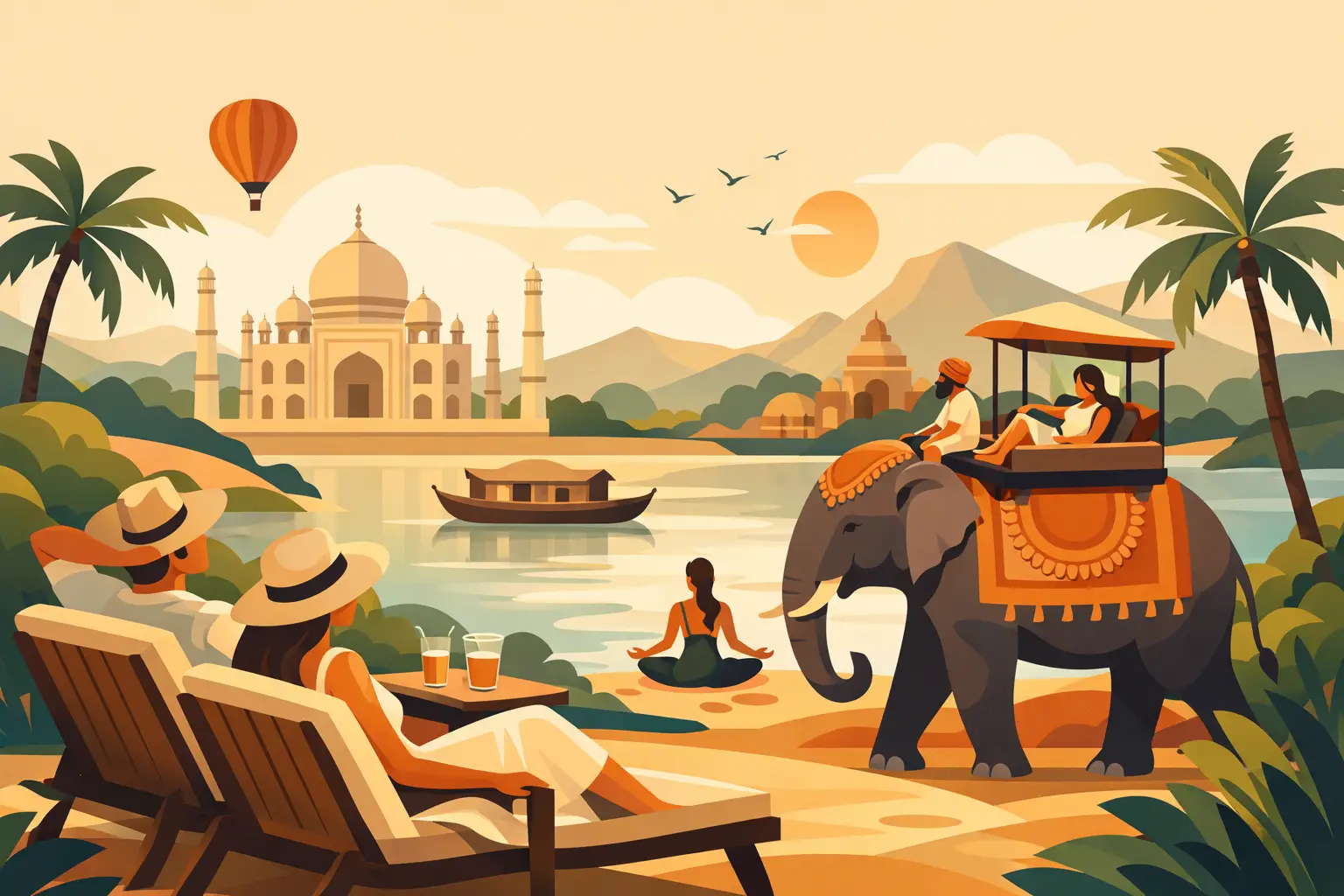
A well-planned journey through India is not measured by how many monuments fit into a fortnight. It is the unhurried morning at the Taj Mahal, the scent of cardamom drifting from a Kerala kitchen, and the comfort of knowing that the next driver, hotel and experience are already in hand. The finest India tours leave room for these moments while managing the considerable detail that sits behind them.
For Australian travellers, India can feel both deeply familiar and wonderfully unlike anywhere else. Its history is vast, its regional character changes quickly, and its distances can be deceptively large. That is precisely why a considered itinerary matters. When the route, pacing and accommodation are chosen with care, India becomes less daunting and far more rewarding.
What makes India tours feel genuinely personal?
India is not one destination that can be neatly captured by a single formula. Rajasthan's desert forts, Kolkata's literary energy, the tea country of the south and the Himalayan landscapes of the north-east each call for a different rhythm. A meaningful tour starts with the traveller rather than a fixed list of inclusions.
Some guests want to trace Mughal and Rajput history through Delhi, Agra, Jaipur, Jodhpur and Udaipur. Others are drawn to temple architecture, Ayurveda, spice markets and the languid waterways of Kerala. Families may prefer a balanced blend of culture, wildlife and restorative hotel time, while couples may be looking for atmospheric heritage stays, private guides and memorable dining experiences.
The distinction is important. A rushed circuit can produce excellent photographs but little time to absorb a place. A personalised itinerary allows for a later start after a long flight, two nights where one might technically suffice, and space to linger in a city that unexpectedly captures your interest. It also makes room for the practical comforts that shape the whole holiday: well-located hotels, reliable private transport and knowledgeable local guidance.
Choose a region, then give it time
The most satisfying itineraries rarely try to cover the entire country in one visit. India rewards focus. A first journey may centre on the celebrated landmarks of North India, while return visits can reveal a quieter, more regional side of the country.
North India for heritage and colour
North India is often the natural introduction, particularly for travellers who want iconic architecture alongside lively local culture. Delhi provides an absorbing starting point, where imperial avenues, old bazaars and contemporary galleries sit within the same city. From there, Agra's Taj Mahal and Rajasthan's palaces, stepwells and desert landscapes create a journey rich in contrast.
Allowing 10 to 14 nights gives this route the breathing room it deserves. Rather than treating Jaipur and Udaipur as overnight stops, a considered plan might include time for a private walking experience, a visit to a local artisan, or an evening to simply enjoy a heritage hotel. The detail depends on personal interests, but the principle remains the same: less transit generally means a more relaxed holiday.
South India for a slower cultural journey
South India offers a gentler pace without compromising on depth. Tamil Nadu is ideal for travellers interested in ancient temples, colonial towns and vibrant food traditions. Kerala brings a different mood, with misty tea estates, coastal forts, wildlife reserves and houseboat journeys through the backwaters.
This region particularly suits those who have already visited the north, or who prefer landscapes and wellness experiences to a densely packed sightseeing schedule. It also works beautifully as a winter escape from Australia, when days are generally warm and inviting. The trade-off is that road journeys between smaller towns can be longer than they appear on a map, so comfortable vehicles and realistic travel times are essential.
Wildlife, mountains and lesser-known routes
For travellers seeking something beyond the classic circuit, Central India and the north-east offer compelling alternatives. Central India's national parks can be paired with heritage cities and rural experiences, while the north-east introduces tea gardens, tribal traditions and striking mountain scenery. These areas often require more careful planning around flight schedules, permits and seasonal conditions, but they can deliver a strong sense of discovery.
India also connects naturally with neighbouring Nepal, Bhutan and Sri Lanka. Combining destinations can be appealing, though it is best done with intention. Adding another country simply because it is nearby can make an itinerary feel fragmented. When there is enough time, however, the contrast can be exceptional: India and Bhutan for culture and Himalayan landscapes, or South India and Sri Lanka for temples, coastlines and wildlife.
The value of coordinated travel
India's diversity is its great appeal, but it can make independent trip planning time-consuming. Train and flight schedules, hotel standards, driving times, regional guides, internal transfers and visa requirements all need to work together. A premium holiday should not leave travellers spending their evenings confirming tomorrow's arrangements or wondering whether a connection is realistic.
A coordinated journey brings these moving parts into one clear plan. Airport assistance, thoughtfully selected accommodation, experienced drivers and locally based guides create continuity from arrival to departure. This is not about removing spontaneity. It is about giving travellers the confidence to enjoy it.
At Taj Voyages, itinerary planning begins with how you want to travel: the pace you enjoy, the experiences that matter and the level of comfort you expect. A private car may suit one route, while a short internal flight can protect valuable holiday time on another. In certain cities, a centrally located heritage property may be the priority; in others, a peaceful resort outside the bustle may be the better choice.
The same care applies to guides. A guide who can bring the story of a fort, temple or old city quarter to life adds much more than historical dates. For food-focused travellers, a market visit and cooking experience can offer a genuine connection to place. For those interested in spirituality, a respectful introduction to rituals and sacred sites provides useful context without reducing a living tradition to a sightseeing stop.
When to travel and how to pace the days
The best time for India tours depends on the region. Broadly, October to March offers pleasant conditions across much of North India and Rajasthan, making it the most popular period for first-time visitors. Kerala and the south have their own seasonal patterns, while the Himalayan regions and wildlife reserves require more specific timing.
Monsoon travel deserves a more nuanced view than a simple yes or no. Heavy rain can affect some routes, yet it also brings lush landscapes, fewer visitors and a distinctive atmosphere, particularly in Kerala. It can be an excellent choice for travellers who value quieter hotels and do not mind adapting plans around the weather. The key is matching the season to the destination rather than applying one rule to the whole subcontinent.
Pacing also matters once you arrive. It is tempting to schedule full days from breakfast to dinner, especially when a destination is rich in landmarks. Yet the heat, traffic and sensory intensity of major cities can be tiring. A well-designed day might include an early visit to a major site, a relaxed lunch and afternoon at leisure, followed by an evening cultural performance or dinner reservation. This approach feels more luxurious and often makes the experiences themselves more memorable.
Consider luxury rail for the journey itself
India's luxury trains offer a distinctive way to travel between celebrated destinations without repeatedly packing, checking in and transferring to airports. Experiences such as the Maharaja Express, Palace on Wheels, Golden Chariot and Deccan Odyssey combine elegant cabins, attentive service and curated excursions with the romance of rail travel.
They are particularly appealing for travellers who value comfort and enjoy the journey as much as the destination. Each itinerary has a different regional focus and duration, so choosing the right train is more than selecting the most lavish option. Consider the cities included, the level of activity during off-train excursions and whether you would like to extend the journey with time before or after the rail experience.
Rail journeys do involve a more structured daily programme than a fully private itinerary. For some, that shared rhythm is part of the pleasure. For others, a tailor-made route with private touring may offer greater flexibility. Both can be exceptional when aligned with the way you prefer to travel.
Start with the experiences you will remember
The most useful first question is not, “Which cities should I visit?” It is, “What do I want this holiday to feel like?” Perhaps it is a celebration beneath the stars in Rajasthan, a quiet dawn on the Ganges, a family encounter with Indian wildlife, or a few restorative days among Kerala's palms after exploring temple towns.
From there, the route becomes clearer. A carefully arranged India journey gives the country the time, comfort and attention it deserves - and gives you the freedom to be fully present when each new place unfolds.