
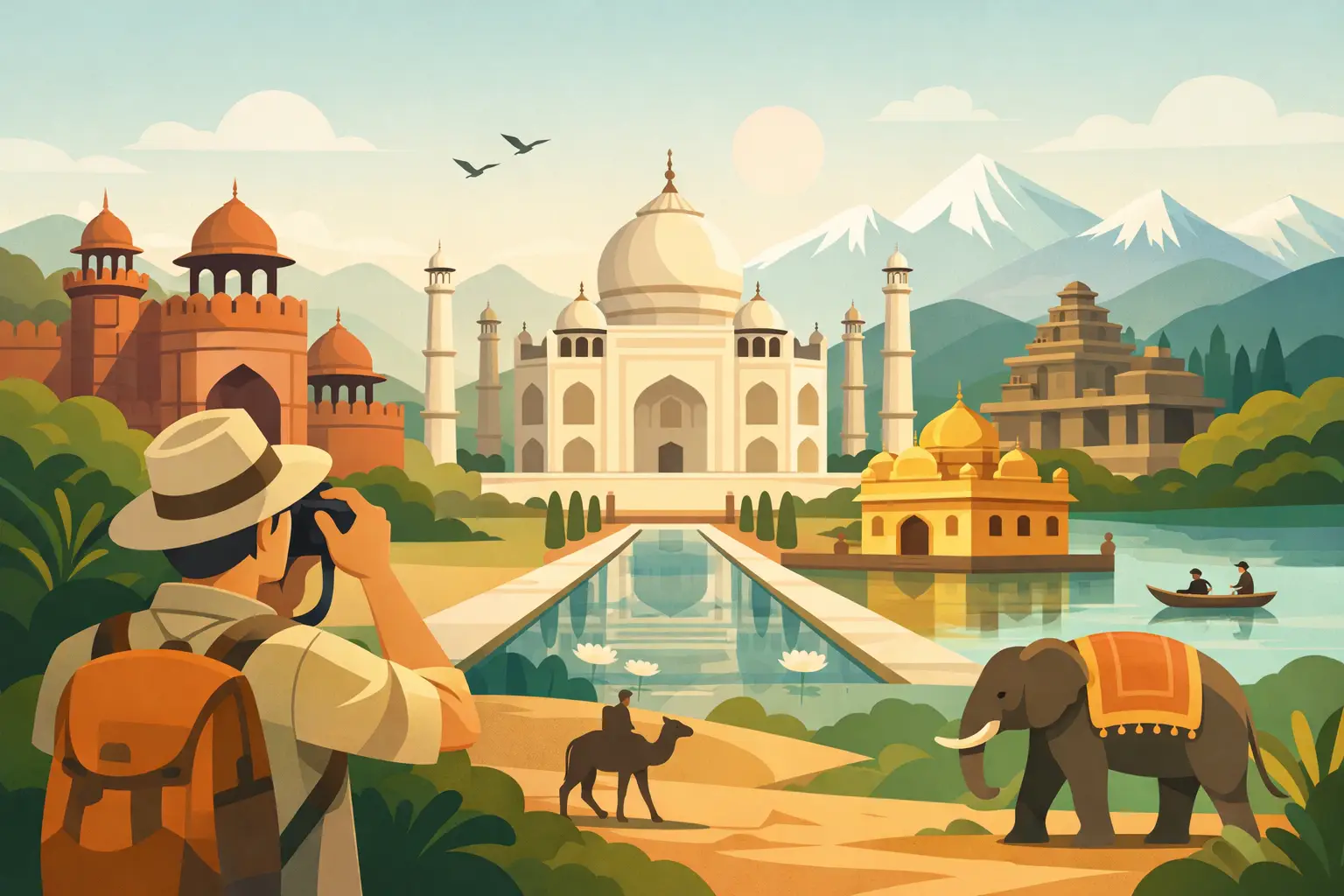
The first light over the Taj Mahal is one of travel’s great spectacles, but it is only the beginning. The finest North India heritage tours move beyond a checklist of monuments to reveal the courts, trade routes, faiths and family traditions that shaped them. A well-paced journey allows time for the call to prayer drifting over Old Delhi, a private palace dinner in Rajasthan, and the quieter details that give each historic place its character.
For Australian travellers, North India rewards careful planning. Distances can be substantial, road conditions vary, and a palace hotel may sit several hours from the next airport or rail station. With the right sequence of stays, private touring and thoughtfully chosen accommodation, the region becomes remarkably comfortable to experience - and far more meaningful than a rushed circuit.
What makes North India heritage tours distinctive
North India is not a single historic landscape. Delhi carries the layered remains of Sultanate, Mughal and British rule. Agra holds the architectural confidence of the Mughal Empire. Rajasthan presents an extraordinary concentration of hill forts, painted havelis, princely residences and desert trading towns. Further north, Varanasi offers a living spiritual heritage that is experienced at the river’s edge rather than behind museum glass.
This variety is precisely why itinerary design matters. A traveller interested in Mughal architecture may want more time in Delhi, Agra and Lucknow. Those drawn to royal India may prefer Jaipur, Jodhpur, Udaipur and a heritage lodge in rural Rajasthan. For families and small private groups, adding Ranthambore can balance city sightseeing with wildlife and open space.
The strongest itineraries pair major landmarks with experiences that place them in context. In Jaipur, that might mean seeing Amber Fort early, before the day’s busiest period, then meeting craftspeople whose work continues the city’s traditions in jewellery, block printing or blue pottery. In Jodhpur, it could be a guided walk through the old city below Mehrangarh Fort followed by a relaxed evening at a heritage hotel. The aim is not to fill every hour. It is to create room for places to register.
The classic route, designed with more care
Delhi, Agra and Jaipur remain a natural first introduction, especially for travellers visiting India for the first time. The route is often called the Golden Triangle, though its real value depends on how it is handled. Two nights in each city is usually the minimum for a relaxed experience, while three nights in Delhi can be worthwhile for guests with a strong interest in food, art or the city’s contrasting historic precincts.
Delhi deserves more than an overnight arrival. Humayun’s Tomb, the Qutub Minar complex and Old Delhi each tell different chapters of the city’s story. Private transport and a knowledgeable local guide are particularly valuable here, helping visitors move comfortably between wide boulevards, crowded lanes and significant sites without losing time to logistics.
Agra is best approached as more than a Taj Mahal stop. The mausoleum is rightly the focus, and a dawn visit can offer softer light and a calmer atmosphere. Yet Agra Fort and the finely detailed tomb of Itimad-ud-Daulah add depth to the Mughal story. Travellers who value a less hurried day may also appreciate a nearby heritage stay rather than continuing directly to Jaipur.
Jaipur brings a different rhythm. Its planned pink-hued streets, astronomical observatory and royal residences speak to the ambitions of the Rajput courts. It is also an excellent place to build in a little flexibility: a leisurely lunch, time by the pool, or an evening cultural performance can be more rewarding than adding another monument simply because it is nearby.
Extending into Rajasthan
Rajasthan is where a heritage journey can become more personal. Jodhpur offers dramatic fortifications and an atmospheric old quarter; Udaipur softens the pace with lakes, gardens and elegant former palaces. Jaisalmer, on the edge of the Thar Desert, is visually extraordinary but requires additional travel time. It suits guests who are happy to trade some convenience for sandstone architecture, desert landscapes and the romance of a remote fortified city.
Smaller destinations often provide the most memorable contrast. Bundi is known for its murals and relaxed character, while Narlai and similar rural heritage properties offer a chance to experience Rajasthan beyond its principal cities. These additions work particularly well for repeat visitors or travellers with two to three weeks available. On a shorter holiday, it is usually wiser to choose fewer places and enjoy them properly.
Heritage is also lived, not preserved
India’s heritage is not confined to palaces and archaeological sites. It is present in the rituals along the Ganges, the food prepared in family kitchens, the skills practised in workshops and the seasonal festivals that transform whole cities.
Varanasi can be a powerful addition for travellers seeking this living dimension. A dawn boat ride on the Ganges and the evening aarti ceremony reveal the city’s devotional life, but a sensitive guide is essential. This is an active place of worship, not a staged attraction, and the most rewarding visit is one approached with curiosity and respect.
Festival travel can bring another layer of colour and access. Holi in Rajasthan, Diwali celebrations in Jaipur or Delhi, and the Pushkar Fair each create a vivid sense of occasion. They also bring larger crowds, greater demand for high-quality accommodation and changed traffic conditions. Early planning is not merely convenient at these times; it is what allows the journey to remain comfortable and well managed.
Cuisine deserves the same attention. North Indian food differs significantly by region, from Delhi’s old-market dishes and Mughal-influenced cooking to Rajasthan’s robust vegetarian specialities. A carefully selected dining experience can be as revealing as a guided tour, especially when it introduces the history behind a dish rather than treating dinner as an afterthought.
When to travel and how to pace the journey
For most Australian visitors, October to March offers the most comfortable conditions for a heritage-focused itinerary. Days are generally pleasant for sightseeing, although December and January mornings in Delhi and Agra can be cool and occasionally foggy. This can affect flight schedules and visibility, so a well-designed itinerary avoids overly tight connections.
April can still suit travellers who prefer fewer crowds and can manage warmer days, particularly when accommodation has excellent facilities and sightseeing is planned early and late. From May through early September, heat and monsoon conditions make some routes less appealing, although certain hotels and regions can still work for those with flexible expectations.
Pacing is as important as season. A 10 to 12-night journey can comfortably cover Delhi, Agra, Jaipur, Jodhpur and Udaipur, with flights or rail arranged to avoid exhausting road days. Adding Varanasi, Ranthambore or Jaisalmer generally calls for longer. A private car and driver gives excellent flexibility on many routes, while premium rail experiences can add occasion where schedules align. The choice depends on whether travellers value the independence of the road, the ceremony of rail travel, or a combination of both.
The comfort behind a culturally rich holiday
Premium travel in North India is not about isolating yourself from the destination. It is about having the right support around each experience. That can include a trusted driver waiting after a guided walk, a hotel selected for both character and location, timed entry to key sights, and assistance should a flight change or a mobile connection fail.
Accommodation is especially influential. Heritage hotels may offer courtyards, period furnishings and a genuine sense of place, but room layouts, lifts and accessibility can vary in converted historic buildings. Travellers who need interconnecting rooms, easy mobility or a particular standard of modern facilities should discuss these needs early. There is often an ideal compromise between historic atmosphere and practical comfort, but it needs to be chosen rather than assumed.
The same applies to sightseeing. India’s most compelling sites can be busy, warm and stimulating. Private guiding, sensible start times and occasional unplanned afternoons make a substantial difference. Rather than trying to see every fort and museum, a curated programme should focus on the experiences that best match your interests.
Taj Voyages brings this level of coordination to North India through personalised itineraries, carefully chosen stays and considered transport arrangements. The result is a journey that feels richly textured without asking travellers to manage its many moving parts.
A heritage holiday is at its best when it leaves space for the unexpected: a musician practising in a palace courtyard, a conversation over masala chai, or sunset turning a sandstone fort gold. Plan the foundations well, then allow North India time to tell its own stories.