
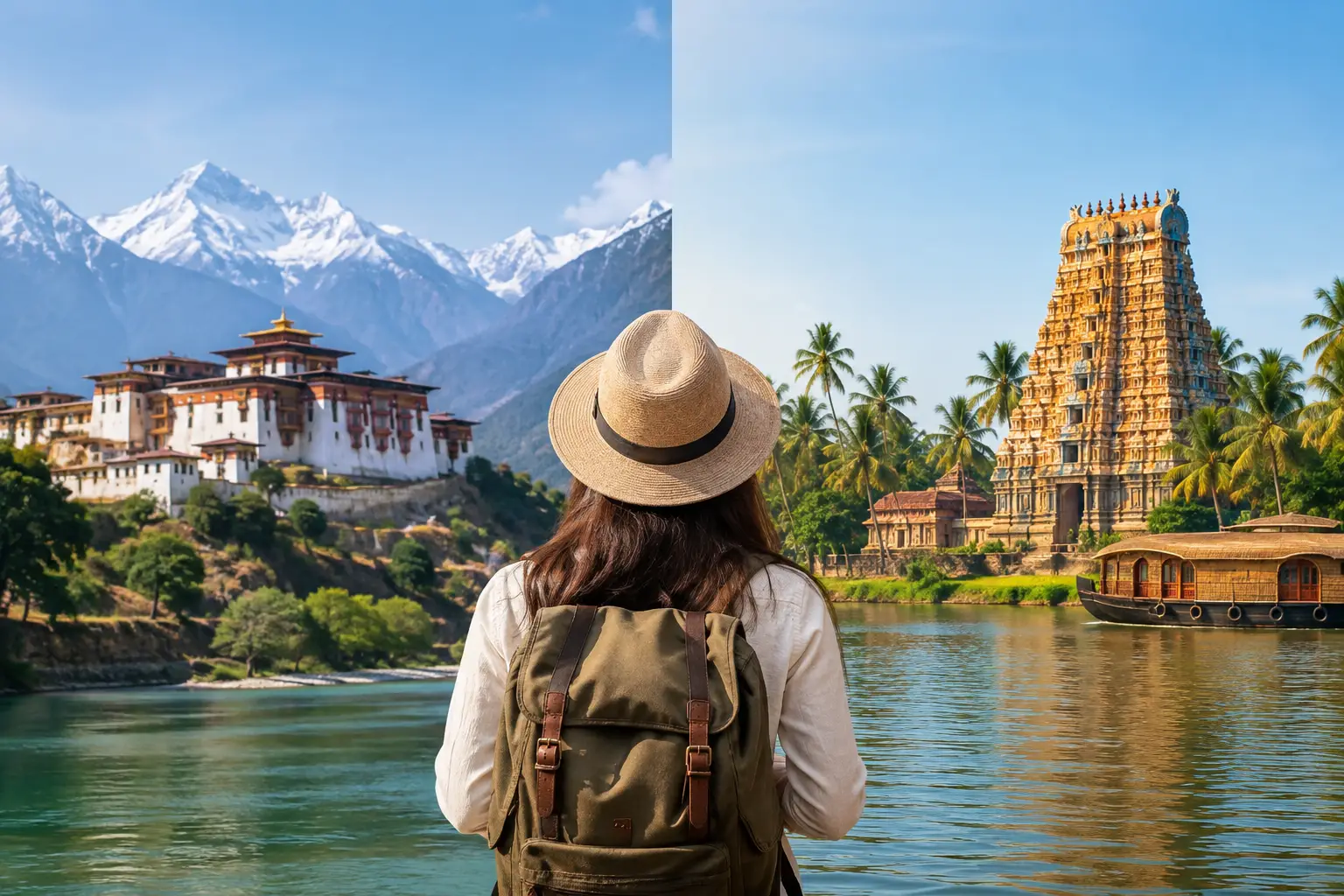
India is not a destination you simply tick off in one visit. For travellers considering north India vs south India: which for your first trip, the better choice comes down to the kind of days you want to have: grand monuments and vivid city life, or temple towns, tropical landscapes and an unhurried rhythm. Both regions are deeply rewarding, yet they create distinctly different first impressions.
For many Australian travellers, North India provides the classic introduction: the Taj Mahal at first light, Jaipur’s palaces, a tiger reserve and the sacred Ganges. South India often feels more spacious and textural, with historic temples, coastal cuisine, tea-covered hills and graceful heritage stays. Neither is more “authentic” than the other. The right first journey is the one that matches your interests, travel style and available time.
North India vs South India for your first trip
North India is generally the stronger choice if you are drawn to India’s most recognisable landmarks and enjoy a journey with variety built into almost every day. In a well-paced itinerary, you can move from Delhi’s Mughal-era architecture to Agra’s marble splendour, then into Rajasthan’s forts, desert landscapes and former royal cities. Add Ranthambore or another national park, and the journey gains a wildlife dimension as well.
South India suits travellers who prefer to spend longer in each place and appreciate the details that reveal themselves gradually. A morning in a vast Dravidian temple, an afternoon cruising Kerala’s backwaters and an evening sampling regional food can be as memorable as any major monument. The region is particularly well suited to couples, repeat visitors to Asia and families who value a calmer flow between experiences.
The distinction is useful, but not absolute. North India includes peaceful Himalayan foothills and rural Rajasthan, while South India has energetic cities such as Chennai and Bengaluru. What changes is the overall emphasis: North India tends towards imperial history, dramatic contrasts and landmark-driven touring; South India leans towards living traditions, nature, food and a gentler pace.
Choose North India if the iconic sights matter most
A first visit to India often begins with the Golden Triangle - Delhi, Agra and Jaipur - because it provides a compelling foundation for understanding the country’s layered history. Delhi introduces ancient dynasties, colonial avenues and contemporary India. Agra offers the Taj Mahal, whose scale and fine craftsmanship deserve more time than a hurried photo stop. Jaipur brings together amber-coloured forts, observatories, bazaars and royal residences.
From there, the itinerary can become more personal. Some travellers continue to Udaipur for lakeside palaces and a more romantic atmosphere. Others prefer Jodhpur’s blue-washed old quarter or a stay near a national park, where early-morning game drives bring a different kind of anticipation. Varanasi is profoundly moving for those interested in spirituality and ritual, though it is best approached with thoughtful guidance and enough time to absorb its atmosphere.
North India is also ideal if you like a journey that changes character often. Distances can be substantial and the cities are lively, so the quality of planning matters. Carefully selected hotels provide welcome calm, while private transport, knowledgeable local guides and sensible touring times turn a complex route into a comfortable, coherent experience. Luxury rail journeys such as the Maharaja Express or Palace on Wheels can also suit travellers who want heritage experiences and multiple destinations brought together with less hotel changing.
The best fit for North India
Choose the north when you want a high-impact first encounter with India’s defining architecture, courtly history, wildlife and sacred places. It is especially rewarding for travellers with around 10 to 14 nights, as this allows the itinerary to breathe rather than becoming a succession of check-ins and long drives.
Choose South India if you favour depth and ease
South India invites a different kind of attention. Its temple architecture is among the most accomplished in the subcontinent, yet the experience is often as much about sound, scent and daily life as it is about the buildings themselves. In Tamil Nadu, cities and towns such as Chennai, Mahabalipuram, Thanjavur and Madurai reveal centuries of artistic, spiritual and trading history.
Kerala offers an especially appealing balance after temple touring. You might move from Fort Kochi’s layered colonial and maritime heritage to the cool slopes of Munnar, then continue to the backwaters for a quiet night on the water or a stay beside the canals. The food is a highlight in its own right, with coconut, pepper, tamarind, seafood and regional vegetarian dishes bringing a clear sense of place.
Karnataka adds another dimension, from Bengaluru’s contemporary energy to Mysuru’s palace heritage and the extraordinary ruins of Hampi. For travellers interested in rail, the Golden Chariot offers a considered way to experience parts of southern India, combining cultural stops with the comfort of a moving hotel.
South India can be particularly well suited to a first trip if you are concerned less with seeing every famous sight and more with having time for meaningful encounters. The rhythm tends to allow for late breakfasts, longer stays and restorative time at characterful hotels. That said, it should not be mistaken for a passive holiday. Temple visits, local markets, plantation walks and guided heritage experiences can fill the days very nicely.
The best fit for South India
Choose the south when you enjoy cuisine, craftsmanship, natural scenery and cultural traditions that are best understood at a measured pace. It is an excellent option for a 10- to 16-night journey, especially if you would like to include time in the hills, by the coast or on the backwaters.
Weather, timing and comfort
India’s seasonal patterns are regional, so the timing of your holiday can influence the decision. The cooler months are often favoured for North India’s cities, Rajasthan and wildlife reserves, when sightseeing is especially comfortable. South India has its own variations: hill stations can be pleasantly cool, coastal areas are warmer, and monsoon patterns differ between Kerala’s coast and Tamil Nadu’s eastern side.
Rather than applying one broad rule to an entire country, it is better to match each region and route to your preferred travel period. Festival dates, school holiday timing, wildlife park schedules and rail departures may also shape what is possible. A tailored itinerary can account for these practical details while keeping the journey elegant and unforced.
Comfort also comes from pacing. India rewards early starts at major sites, unhurried afternoons and realistic travel days. Combining too many regions in a single holiday can dilute the experience, particularly on a first visit. It is usually more satisfying to understand one part of India well than to rush through several.
Can you combine North and South India?
You can, particularly on a longer holiday, but it works best when there is a clear thread. One approach is to begin with North India’s headline sights, then fly south for a few slower days in Kerala or Tamil Nadu. Another is to pair Rajasthan’s heritage with a restorative coastal or backwater stay. The contrast can be delightful, provided the transition is planned with care.
For a first trip of fewer than two weeks, focusing on one region is usually the wiser choice. You will spend less time in airports and more time noticing the moments that make a journey memorable: a guide explaining the symbolism in a temple carving, tea served on a palace terrace, the changing light over a fort, or the quiet movement of a boat through palm-lined waterways.
A considered first journey
If your heart is set on the Taj Mahal, Rajasthan’s royal cities and a classic route through India’s great historical centres, begin in the north. If you are drawn to temple culture, tropical scenery, regional cuisine and a more leisurely tempo, begin in the south. There is no wrong decision, only a question of where India should first speak to you.
At Taj Voyages, we shape each route around the experiences you value, while coordinating the accommodation, transport, touring and travel support that make a multi-stop journey feel effortless. Begin with the region that feels most compelling now. India has a wonderful way of ensuring there is still much to return for.