
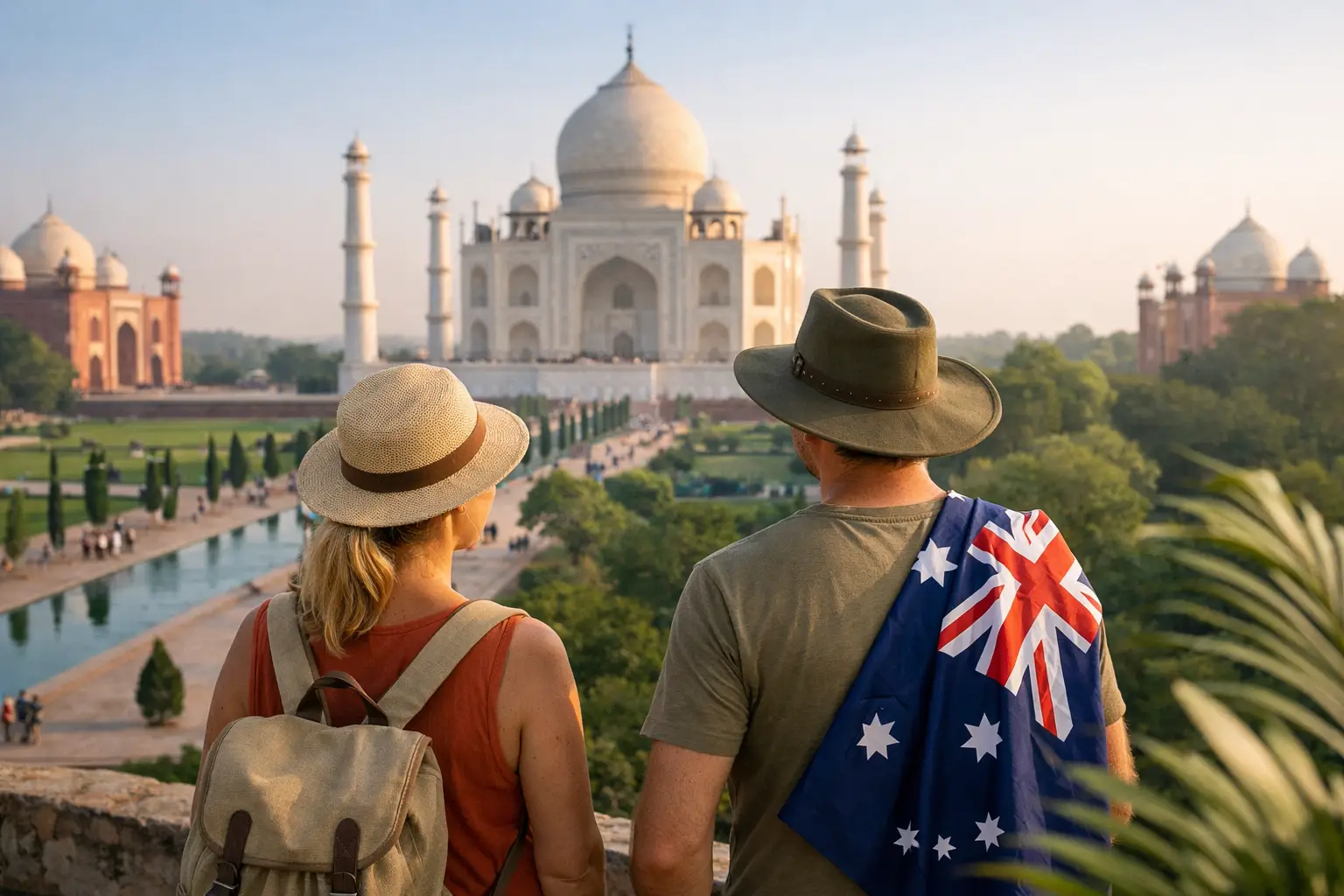
India can feel like several destinations in one journey. While Rajasthan may be crisp and sunlit, Kerala can be warm and tropical; while the Himalayas are at their most accessible, central India may be shifting into its green monsoon season. That is why the question, “when should Australians visit India?”, is less about finding one perfect month and more about matching the season to the experiences you value most.
For many Australian travellers, October to March offers the broadest range of comfortable conditions for a first or multi-region visit. Yet quieter months, regional festivals and green-season landscapes can be equally rewarding when an itinerary is thoughtfully designed. The right timing gives you space to enjoy India at its own pace, with accommodation, transport and experiences coordinated around where you are going.
When should Australians visit India?
The most popular period for visiting much of India is from October through March. Days are generally more comfortable across northern and central regions, making this a particularly appealing window for heritage cities, palaces, forts, wildlife parks and luxury rail journeys. It also aligns well with the Australian summer holiday period, although demand can be high around late December and January.
For travellers who prefer milder temperatures and less intensity, February and March are often excellent choices. North India is warming gently after winter, gardens are colourful, and routes through Delhi, Agra, Jaipur, Udaipur and Jodhpur are especially enjoyable. This is also a lovely time to combine Rajasthan with a tiger safari in Madhya Pradesh or a few restorative days in Kerala.
October and November bring a different appeal. Much of the country has emerged from the monsoon, landscapes retain a fresh green softness, and the festive atmosphere can be wonderfully atmospheric. Availability requires early consideration, particularly where major celebrations shape domestic travel patterns and hotel demand.
The best time ultimately depends on whether you are drawn to history and architecture, wildlife, spiritual traditions, rail travel, coastal relaxation or Himalayan scenery. A well-paced itinerary can make the most of seasonal differences rather than treating India as a single climate zone.
October to March: heritage, rail and classic North India
For a first journey through North India, this is usually the clearest choice. Cooler daytime conditions make it more pleasant to explore the grand forts of Rajasthan, the lanes of Old Delhi, the marble artistry of Agra and the lakeside palaces of Udaipur. Mornings and evenings can be cool, particularly in December and January, so layers are useful, but the daytime light is often ideal for sightseeing.
This is also the principal season for India’s celebrated luxury trains. Journeys such as the Palace on Wheels, Maharaja Express and Deccan Odyssey are designed around destinations that are at their most enjoyable in the cooler months. They offer a composed way to travel between cities, removing the need to repeatedly pack, unpack and manage airport transfers while still allowing time for guided exploration.
December and January suit travellers who enjoy a livelier atmosphere and are comfortable planning well ahead. These months coincide with the Australian festive season and school holidays, as well as strong international demand. The reward is excellent weather in many key regions; the trade-off is that the most sought-after hotels, rail departures and guides should be secured early.
There can occasionally be winter fog in northern plains locations, particularly around Delhi and Agra. This need not define a journey, but it is one of the practical details worth allowing for when arranging flights and overland connections. A specialist-led itinerary builds sensible timing and flexibility into a route, rather than treating each travel day as an isolated booking.
April and May: quieter cities and a stronger wildlife focus
By April, temperatures rise across much of North and Central India. For some travellers, this is a reason to avoid the region entirely. For others, it is an opportunity to travel with a different emphasis: earlier starts, unhurried afternoons at a beautiful hotel, and carefully chosen destinations that suit the season.
Wildlife enthusiasts often consider April and May for central Indian safaris. As water sources become more concentrated, wildlife viewing can be particularly compelling in several national parks. Sightings can never be predicted, of course, but the season can be highly rewarding for those who place safari at the centre of their journey.
This period is also well suited to the Himalayan foothills and selected hill destinations, where cooler air offers welcome contrast to the plains. A tailored journey might pair a short cultural stay in Delhi with the mountain settings of Himachal Pradesh, Uttarakhand or the north-east, depending on your interests and preferred pace.
The key is not to fill a hot-weather itinerary with long midday visits. Considered routing, well-located accommodation and private transport allow the day to unfold comfortably. India remains richly engaging in warmer months, but it calls for a more measured rhythm.
June to September: the monsoon is regional, not a reason to dismiss India
The monsoon changes the character of India rather than closing it down. Rain arrives at different times and with different intensity across the country. Kerala, Goa, Mumbai and parts of the west coast take on lush, rain-washed beauty, while Ladakh, in the high Himalayas, is generally in its travelling season because it lies beyond the main monsoon pattern.
For travellers interested in Ayurveda, wellness, verdant landscapes or a slower stay in southern India, the monsoon can be a meaningful time to visit Kerala. Showers are often interspersed with calm periods, and the backwaters, spice-growing hills and coastal landscapes are at their most vivid. It is a season for allowing more time, embracing a gentler pace and choosing accommodation that feels like part of the experience.
Ladakh and the high-altitude Himalayan regions appeal strongly from roughly June through September, when mountain roads and passes are more accessible. The landscape is strikingly different from tropical India: high desert valleys, Buddhist monasteries, clear light and dramatic mountain scenery. Because altitude requires careful pacing, a thoughtfully arranged stay with gradual acclimatisation is essential.
Monsoon travel also calls for realistic expectations around road conditions and occasional schedule adjustments. Rather than trying to cover every region in one holiday, it is usually wiser to focus on areas that are well suited to the season. This is where coordinated transport, carefully selected hotels and on-the-ground management make a real difference.
Choose your timing around the experience you want
India’s festivals can add extraordinary depth to a journey, particularly when they are approached with context and care. Diwali brings light, family gatherings and a celebratory atmosphere across many parts of the country. Holi is vivid and joyful, while the Pushkar Fair offers a distinctive window into Rajasthan’s rural traditions. Dates shift each year, and celebrations vary by region, so the itinerary should be designed around the festival rather than simply adding it to an already crowded route.
If food, design and heritage are your priorities, the cooler months make long days of exploration feel easy. If wildlife is your principal interest, late winter through early summer may be preferable. If you want South India’s temples, tea country and coastal landscapes, November to March is often especially comfortable, while the monsoon offers a greener and more contemplative alternative.
Families may naturally look to Australian school holiday periods, but this can mean balancing preferred dates with availability and regional weather. Couples and retirees with more flexibility may find that late October, February, March or early September offer an appealing combination of atmosphere and manageable touring conditions.
Planning an India journey from Australia
A journey from Australia deserves enough time to settle in. For North India, around 10 to 14 nights allows for a satisfying route without turning each day into a transfer. For a more expansive trip combining Rajasthan, a safari, Kerala or the Himalayas, two to three weeks creates welcome breathing room.
It is also worth considering the arrival and departure points before choosing destinations. India’s scale makes thoughtful sequencing important. A route that looks straightforward on a map can involve complex flight schedules, lengthy road journeys or train connections that need to work together precisely. Visa requirements, travel documentation, room preferences and special occasions are equally best considered from the beginning.
Taj Voyages designs personalised itineraries around these details, bringing accommodation, transport, guiding and touring into one coherent journey. The result is not simply a list of places to see, but an itinerary with the right seasonal logic, comfortable transitions and time to be present in each destination.
The best time to visit India is the time that lets you experience the India you came to see - whether that means misty mornings near a Rajasthan fort, a quiet cruise through Kerala’s backwaters, a tiger safari at dawn, or mountain light over a Himalayan monastery.