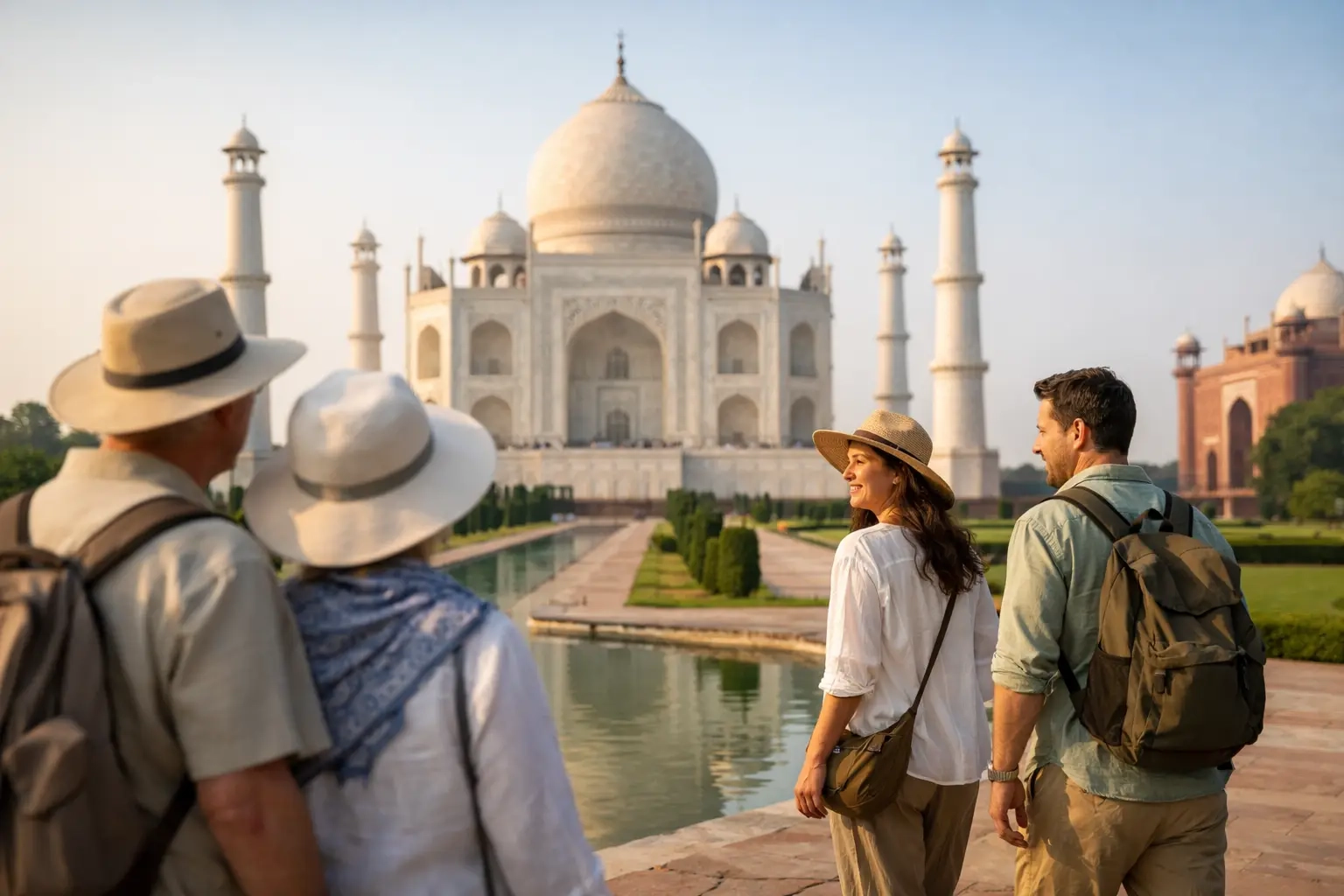
A dawn visit to the Taj Mahal feels very different when you are not being hurried back to a coach. The best small group tours make room for the moments that give a journey its character: a proper conversation with a local guide, time to linger over regional cooking, or an unplanned view from a palace terrace as the light changes.
For Australian travellers, India is wonderfully rewarding precisely because it offers so much in one country — cities, sacred sites, wildlife parks, textiles, architecture and cuisines, often within a single itinerary. That richness also demands coordination. A small group format brings together the ease of an escorted journey and the personal attention that is harder to achieve in a larger party.
Why group size changes the experience
Small group travel is not simply a larger holiday with fewer people in it. It changes the rhythm.
Our groups are capped at twelve travellers. That number is deliberate rather than arbitrary: twelve is about the point at which a guide can still hear and answer everyone's questions, a restaurant can seat you without putting you in a function room, and a jeep safari or a boat doesn't have to be split into separate parties. Beyond that, the logistics start to shape the day rather than the other way around.
With a group that size, far less time goes on assembling everyone, checking into hotels or shuffling through busy sites. Your guide can respond to the group's interests — more time in a museum, a fuller explanation of a temple ceremony, a quieter setting for lunch.
It also creates a more congenial atmosphere. You share memorable moments with like-minded travellers while keeping the space to enjoy a morning at leisure or a quiet dinner with your partner. For couples who want company without being part of a crowd, that balance is usually exactly right.
The practical advantages matter too. India journeys commonly involve several flights or rail sectors, road transfers, hotel changes and timed visits. A well-managed small group moves with purpose, supported by a tour leader and local teams who understand the detail behind each transition.
What a well-curated itinerary includes
A considered itinerary does more than connect celebrated landmarks. It gives each region enough time to feel distinct. In North India, that means pairing Delhi's layered history with Agra's Mughal architecture and Rajasthan's forts, markets and heritage hotels — with time between the major sights to understand the craftsmanship and daily life around them.
Further south, a small group journey might move at a gentler pace through Kerala's backwaters, Kochi's historic quarters and the temple towns of Tamil Nadu. Central India blends ancient sites with serious wildlife, while North-East India rewards travellers drawn to tea country, river landscapes and cultural traditions most visitors never encounter. The right route depends on what interests you, not on fitting every famous place into one holiday.
Accommodation is part of that curation. A characterful heritage property, a refined city hotel and a well-chosen lodge each serve a different purpose. The aim is not uniformity — it is that every overnight stop feels comfortable, well located and appropriate to where you are.
Dining deserves the same attention. Indian cooking changes dramatically by region, from the desert-shaped dishes of Rajasthan to the coconut, seafood and spice of the south. A small group allows more considered dining and experiences that open up local food culture, without making every meal feel scheduled. There should be room for both shared occasions and your own choices.
Guides who add context, not commentary
A knowledgeable guide does far more than point at monuments. They help you read the details you would otherwise miss: the design of a stepwell, the ritual sequence at a place of worship, the difference between a Rajput fort and a Mughal palace, the etiquette of a local market.
This matters because India is not best understood as a collection of photo stops. Its living traditions, regional identities and artistic forms give meaning to the architecture and landscapes you are looking at. A guide attentive to the group knows when to offer historical depth, when to invite a question, and when to let a place speak for itself.
The presence of a trusted local team also brings reassurance. Arrival arrangements, luggage, transport timings and check-ins are handled with care — particularly welcome after a long flight from Australia.
When a small group is the right choice — and when it isn't
Small group touring suits travellers who value expert planning but still want the holiday to feel personal. It works well for solo travellers, couples, friends travelling together, and family members who would rather not be responsible for every arrangement.
It has a different character from a fully private journey, though, and it is worth being clear about the trade-off. A private itinerary gives you complete control over daily timing, hotel choices and pace. A small group follows a shared route and schedule — a good one never feels rushed or impersonal, but it is a shared schedule nonetheless. The choice comes down to whether you value the sociability or the independence.
Luxury rail sits somewhere between the two. Journeys aboard the Maharajas' Express, Palace on Wheels, Deccan Odyssey or Golden Chariot combine a private cabin with a small travelling community and a structured programme of visits. They suit travellers who want several destinations without repeatedly packing and unpacking.
Thoughtful pacing is the real luxury
A well-paced itinerary recognises that India asks for your attention. Early starts are worth it for a sunrise monument, a wildlife drive or a morning walk before the streets fill. But they need balancing with unhurried afternoons, comfortable travel days and time to settle into each hotel.
The most satisfying journeys do not try to cover the whole country in a fortnight. They choose a coherent region or theme, then arrange the flights, road journeys, guides and accommodation so each day has a clear purpose. A Rajasthan itinerary might focus on heritage and design; a southern route on food, spirituality and tropical landscapes. Neither is more complete — they are different ways of understanding the same country.
Season shapes it too. Festival dates, wildlife viewing periods and regional weather all influence the ideal route and timing, and these are best considered early rather than worked around later.
A journey designed to feel looked after
Much of the pleasure of a small group holiday lies in what you don't have to manage. You arrive knowing the route has been thought through, the accommodation chosen with care, and the people meeting you along the way briefed on the plan.
When you are deciding how to see India, consider not only where you want to go but how you want each day to feel. The right small group gives you expert company when it adds something, quiet space when you want it, and the confidence to be present for the country unfolding around you.