
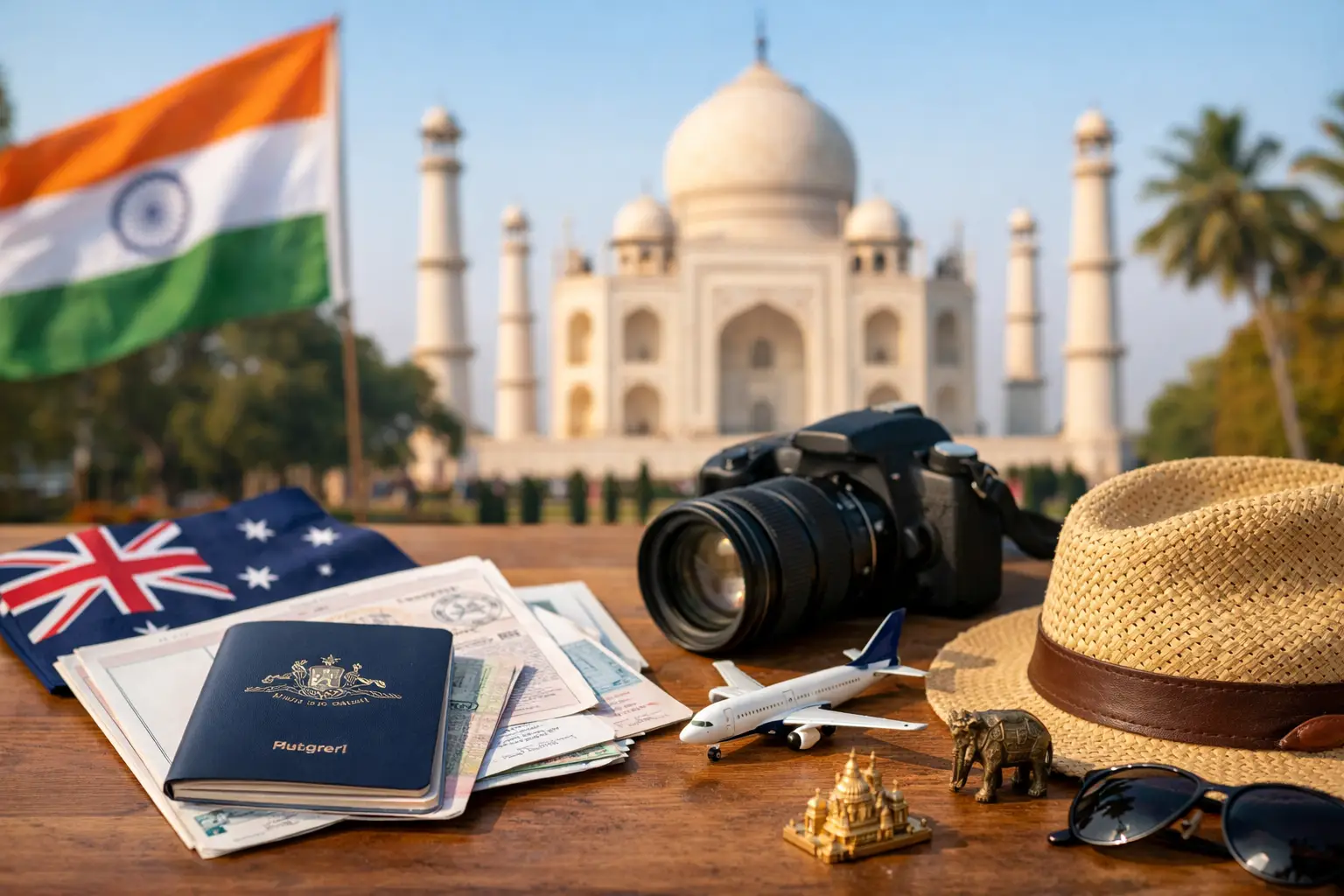
A well-designed India itinerary can include a sunrise on the Ganges, a palace stay in Rajasthan, a tiger reserve in central India and a serene southern backwater cruise. Before those arrangements take shape, understanding the India visa requirements for Australians is essential. Visa rules are manageable, but the details matter: the visa category must suit your purpose of travel, your passport needs to meet entry conditions, and your approval should be in hand before departure.
For most Australian visitors travelling for holidays, the Indian e-Visa is the usual starting point. It is designed for short-term visits and can be practical for travellers arriving by air or sea through eligible ports. However, India’s visa rules, permitted entry points and document specifications can change. Treat visa planning as an early part of your journey, not a task for the final week before you leave.
India visa requirements for Australians: the essentials
Australian passport holders generally need a valid visa before travelling to India. Australia is among the nationalities eligible to apply for an Indian e-Visa for tourism, subject to the conditions in place at the time of application. This is not a visa on arrival in the usual sense: approval must be obtained before you board your flight, then presented on arrival in India.
Your passport should normally be valid for at least six months from your intended date of arrival in India and have at least two blank pages available for immigration stamps. It is wise to check that your passport is in good condition too. A damaged passport, even with a valid visa approval, can complicate airline check-in or border processing.
The visa you choose must reflect why you are travelling. A tourist e-Visa is intended for tourism, visiting friends or relatives, and certain short informal activities. It is not interchangeable with a business, medical, conference, employment or student visa. If your plans include a professional engagement, specialised treatment or another non-tourism purpose, the appropriate visa pathway may be different.
Choosing the right e-Visa for your itinerary
India commonly offers tourist e-Visas with different validity periods and entry allowances. The right option depends on the length and rhythm of your journey, whether you expect to return to India after visiting a neighbouring country, and the conditions attached to the visa available when you apply.
For example, a single India holiday may be straightforward. A wider South Asian itinerary may need closer attention. If you are travelling from India to Nepal, Bhutan or Sri Lanka and then returning to India for a final stay, your visa’s entry permissions become particularly relevant. The same applies to travellers combining India with a luxury rail journey that begins or ends around international flight arrangements.
This is where a coordinated itinerary makes a genuine difference. Flight timings, domestic connections, rail departures and hotel confirmations should all align with the travel dates you enter in your visa application. A small mismatch is not always decisive, but accuracy creates a calmer experience from the outset.
What you will usually need to provide
The e-Visa application typically requires a clear colour scan of your passport’s biographical page and a recent digital photograph that meets the stated format requirements. You will also be asked for personal details, travel information and a local address or accommodation reference in India.
Names, passport numbers, dates of birth and previous travel information should be entered exactly as requested. Do not rely on memory when completing the form. Keep your passport open beside you and use the details shown there, including middle names where applicable. If you have changed your name, hold dual nationality or have previously held another passport, take particular care with the application questions relating to those circumstances.
Once granted, the electronic travel authorisation should be printed and carried with you, even if you also keep a copy on your mobile. Airlines may ask to see it before boarding, and immigration officers will need to confirm the approval on arrival.
Timing your application carefully
One of the most common planning questions is when to apply. The answer depends on the e-Visa validity option selected and the current application window set by the Indian authorities. Applying too early can be as unhelpful as leaving it too late, particularly if the visa validity begins from the date it is issued rather than your arrival date.
Allow time to review your application, respond if further information is requested and resolve any unexpected issue before your departure. Avoid making non-flexible travel arrangements around the assumption that a visa will be granted by a particular date. Visa decisions remain with the relevant authorities.
For a multi-stop journey, begin the conversation about visas as soon as your travel route is being shaped. At Taj Voyages, visa support is considered alongside the practical architecture of the holiday: arrival airport, touring sequence, rail reservations, international sectors and onward travel. That approach helps ensure the paperwork supports the journey rather than becoming a late-stage interruption.
Arrival conditions and eligible entry points
An approved e-Visa can only be used at designated airports and seaports. These entry points are periodically updated, so confirm that your planned arrival port is eligible before finalising your application. Most major international gateways used for tailored India journeys are typically covered, but this should never be assumed for an unusual routing or charter arrangement.
On arrival, you will proceed to the e-Visa immigration area, where your passport, visa approval and biometric information may be checked. Keep your first-night accommodation details and onward or return flight information accessible. Border officers may ask ordinary questions about the purpose and duration of your visit.
Your visa also carries conditions on how long you may stay and how many times you may enter India. These conditions are specific to the visa issued, not simply the visa type you originally requested. Read the approval notice closely and keep a copy with your travel documents throughout the journey.
Special circumstances worth checking early
Some travellers need more tailored advice than a standard tourist e-Visa application provides. This can include people of Indian origin, those who hold or may be eligible for an Overseas Citizen of India card, travellers with dual citizenship, and anyone who has previously held an Indian passport. Children travelling on their own passports require their own visa arrangements, and families should ensure each application is completed consistently.
Travellers visiting restricted or protected areas may also require permits in addition to their Indian visa. This can be relevant for parts of the North-East, high-altitude Himalayan regions and selected island or border areas. A beautifully paced itinerary through these regions requires permits, transport and accommodation to be considered together, well before departure.
If you are transiting through India rather than staying, check the current transit requirements based on your routing, connection time and whether you will need to pass immigration. A same-airport connection and an overnight stop can be treated very differently.
A final pre-departure check
Before leaving Australia, compare every detail across your passport, visa approval, flight booking and itinerary. Confirm the passport expiry date, check the permitted arrival date and entries on your visa, print the approval, and retain copies of your accommodation and onward travel arrangements. If you have renewed your passport after receiving a visa, seek advice before travel rather than assuming the approval can simply be transferred.
India rewards thoughtful preparation. Once the entry details are properly organised, you can focus on what your journey is really for: unhurried encounters with places, people, food, history and landscapes that deserve your full attention.